
When You Need 24 Hour Water Heater Repair Right Now
24 hour water heater repair is available from licensed plumbers who respond to emergencies any time — day, night, weekends, and holidays. Here’s what to know immediately:
- Call a licensed emergency plumber — don’t wait until morning
- Shut off your water supply valve at the heater if it’s leaking
- Turn off the power or gas to the unit right away
- Move valuables away from any standing water
- Do not use hot water until the problem is diagnosed
Most emergency services can dispatch a technician within 1 to 2 hours of your call.
It always happens at the worst possible time. You step into the shower before work, or guests arrive for the weekend, and there’s no hot water — or worse, water is pooling on the floor around your heater. A failing water heater isn’t just inconvenient. It can waste more than 3,600 gallons of water a year from even a small leak, and in serious cases, it can pose real safety risks. The good news is that 24-hour emergency repair services exist precisely for moments like this, and a fast response can mean the difference between a simple fix and a full replacement.
I’m Tiffany Miley, owner of Level Up Plumbing, and with over 21 years of experience in Southern California’s trades — including dedicated work in water heater and solar services — I’ve handled hundreds of the exact emergencies that make homeowners search for 24 hour water heater repair at 2 a.m. In this guide, I’ll walk you through exactly what to do, when to call, and how to make the smartest decision for your home and budget.
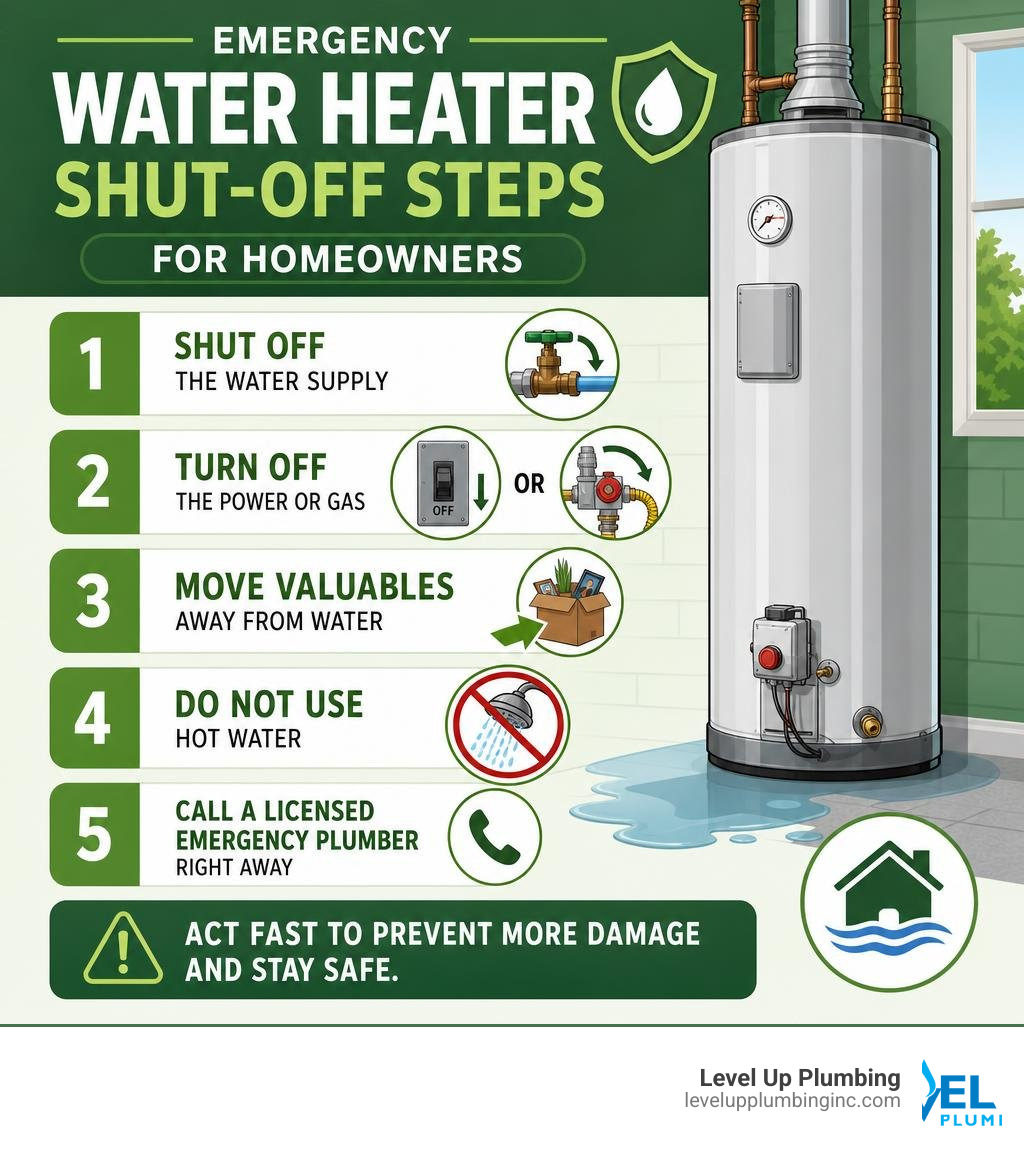
Simple guide to 24 hour water heater repair:
What to Do in a Water Heater Emergency
Discovering a failing or leaking water heater can be incredibly stressful, but taking immediate, organized action is the best way to protect your property and limit costly water damage. Before our team of emergency technicians arrives at your home, there are several critical steps you should perform to get the situation under control.
Step 1: Turn Off the Heat Source (Power or Gas)
Your first priority is safety. If you have an electric water heater, head straight to your home’s main electrical panel and switch off the dedicated circuit breaker. This prevents the heating elements from burning out if the tank drains, and it eliminates any electrical shock hazards.
If you have a gas water heater, locate the control dial on the unit’s thermostat and turn it to the “OFF” position. You should also shut off the gas supply line by turning the manual gas valve (typically located on the gas pipe leading to the unit) so that it is perpendicular to the pipe.
Step 2: Shut Off the Water Supply
Next, you need to stop the flow of water. Locate the cold water shut-off valve on the pipe entering the top of your water heater. This is usually a wheel-style gate valve or a lever-style ball valve.
- If it is a lever valve, pull it 90 degrees so it is perpendicular to the pipe.
- If it is a gate valve, turn it clockwise until it stops.
If this valve is stuck, rusted, or also leaking, do not force it. Instead, locate your home’s main water shut-off valve—usually located near the street or where the main water line enters your home—and turn off the water to the entire property.
Step 3: Mitigate Water Damage
Once the water and power sources are secure, clear any personal belongings, boxes, or valuables away from the area surrounding the unit. If water is pooling, use towels, a wet/dry vacuum, or a mop to clean up as much standing water as possible. This prevents moisture from seeping into drywall, baseboards, and flooring, which can quickly lead to mold growth.
Step 4: Handle Leaking Components
In some cases, the leak isn’t coming from the tank itself, but from a specific component. If you notice water trickling from the bottom valve, you may need to learn how to replace hot water heater drain valve in 7 days or call us to handle it immediately. A plastic drain valve can become brittle over time and crack, whereas brass valves can lose their seal. Our technicians carry high-quality brass replacements on their trucks to swap these out in a single visit.
When to Call for 24 Hour Water Heater Repair
Not every water heater issue requires you to wake up a plumbing technician in the middle of the night, but certain situations demand immediate professional attention. How do you distinguish between a minor annoyance that can wait until standard business hours and a true plumbing emergency?
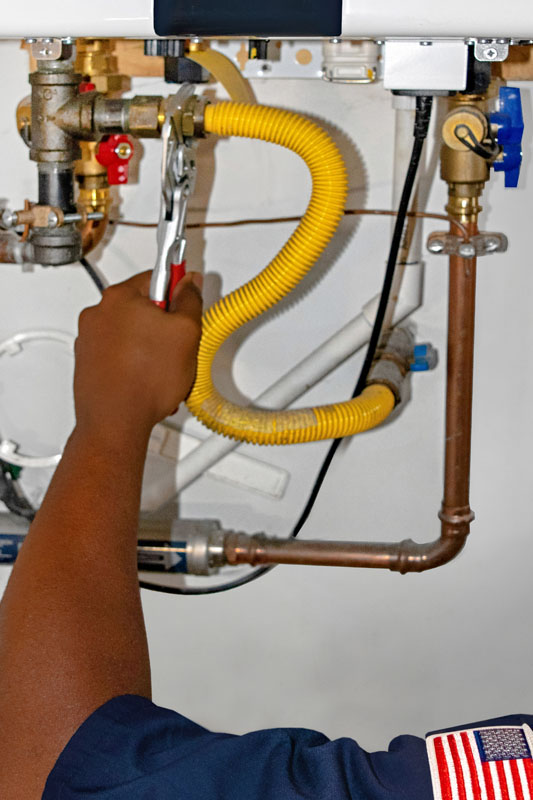
Recognizing a True Water Heater Emergency
You should call for 24 hour water heater repair immediately if you experience any of the following:
- Active, Uncontrollable Leaking: If water is actively spraying or pouring from the tank, or if your shut-off valves fail to stop the flow, you need an emergency plumber right away.
- The Smell of Gas: If you smell rotten eggs near a gas water heater, leave your home immediately, call your utility provider, and then call us. This indicates a highly dangerous gas leak.
- Signs of Scorching or Smoke: If you see burn marks near the base of a gas unit or smell burning wires near an electric unit, shut off the power/gas and call for emergency help.
- Complete Loss of Hot Water on a Holiday or Weekend: If your household has elderly family members, young children, or medical needs that require hot water, a sudden outage is a legitimate emergency.
Emergency Plumbing Services and Response Times
When you contact a reputable 24-hour plumbing support team, you shouldn’t have to wait half a day for relief. Our local dispatchers work around the clock, even on holidays, to get a technician to your door as quickly as possible—typically within 1 to 2 hours of your call.
Our service trucks are fully stocked with advanced diagnostic equipment, common replacement parts, and even complete replacement units so that we can resolve your issues during the initial visit. Whether you are dealing with complex gas hot water repairs or need to quickly secure a commercial property, rapid response is our standard.
If you are looking for local solutions, we proudly serve the entire region. Reach out directly to our team for personalized, local care.
Common Signs You Need Urgent 24 Hour Water Heater Repair
Many major water heater failures don’t happen overnight; they drop hints for weeks before completely breaking down. Recognizing these warning signs early can save you from a major flood and the stress of a cold shower.
1. Strange Noises
If your water heater sounds like a boiling kettle or a hammer hitting metal, you have a problem. Over time, hard water minerals settle at the bottom of the tank, forming a thick layer of sediment. When the burner or heating element turns on, water gets trapped beneath this sediment, boils, and pops. This knocking or rumbling sound indicates that your heater is working twice as hard to heat your water, which can eventually crack the tank’s inner lining.
2. Rusty or Discolored Water
If your hot water looks rusty, muddy, or metallic, it is a clear sign of internal corrosion. This usually means your sacrificial anode rod has completely degraded, and the water is now eating away at the steel tank itself. If the rust is only coming from the hot water taps and not the cold ones, your water heater is nearing the end of its life.
3. Inconsistent Temperatures
Are you constantly adjusting the dial just to get a lukewarm shower? Or perhaps you find yourself asking how to stop running out of hot water with Level Up Plumbing? Sudden fluctuations between freezing cold and scalding hot water point to failing heating elements, a broken thermostat, or a malfunctioning mixing valve. You can learn how to adjust hot water heater mixing valve in 5 easy steps to see if it resolves minor temperature issues, but sudden, extreme changes require professional diagnostics.
What to Expect During a 24 Hour Water Heater Repair Diagnostic Visit
When our emergency technician arrives at your home, they will follow a structured, step-by-step diagnostic process to pinpoint the exact root of the problem. We believe in transparency, so we always explain what we find before starting any repairs.
Step 1: Visual and Physical Inspection
The technician will first inspect the exterior of the tank for signs of structural failure, corrosion, and active leaks. They will also inspect the surrounding pipes, valves, and venting systems.
Step 2: Electric Element and Thermostat Testing
For electric water heaters, the technician will use a multimeter to test the upper and lower thermostats and heating elements. If an element has burned out, they can perform a professional water heater element replacement to restore your hot water quickly.
Step 3: Gas Burner and Pilot Assembly Inspection
For gas units, we check the thermocouple, pilot light assembly, gas control valve, and electronic ignition systems. Quite often, electronic ignitions can become clogged with dust or carbon and require a thorough, professional cleaning rather than a costly parts replacement.
Step 4: Tankless System Diagnostics
If you have a tankless unit, the technician will check the digital error codes on the system’s control panel. They will inspect the flow sensor, heating chamber, and check for mineral scale buildup that might be blocking heat transfer.
Repair vs. Replacement: Making the Right Choice in an Emergency
When your water heater fails, you are faced with a major decision: should you pay to repair the existing unit, or invest in a brand-new system? Making this decision under the pressure of an emergency can be tough, but keeping a few key guidelines in mind will help you make the right choice.
| Factor | Choose Repair | Choose Replacement |
|---|---|---|
| Unit Age | Under 8 years old | Over 10–12 years (Tank) or 20 years (Tankless) |
| Frequency of Repairs | First or second minor issue | Constant breakdowns, rising utility bills |
| Cost of Repair | Less than 50% of replacement cost | Exceeds 50% of a new system installation |
| Tank Integrity | Tank is solid; leaking parts are replaceable | Tank is actively leaking, rusted, or cracked |
| Energy Efficiency | Operating efficiently with low bills | Upgrading to save money on monthly energy costs |
Lifespan and System Types
Traditional tank water heaters generally last between 8 and 12 years, according to Energy.gov. Gas models tend to experience slightly more wear and tear, often lasting around 10 years, while electric models can push a bit further. If your tank unit is over a decade old and experiences a major component failure, replacing it is usually the most cost-effective long-term move.
On the other hand, tankless water heaters can operate for up to 20 years with proper care. If you are ready to upgrade, you can check out our options for Tankless Water Heater Installation to see if a modern, on-demand system is right for your home. You can also take advantage of our Limited Time Save Up to $1900 on a New Tankless Water Heater promotion to make the transition even easier on your budget.
If you are still weighing your options, explore our guides on Water Heaters: Which is Best for Me? and Exploring the World of Water Heaters to compare storage tanks, hybrids, and tankless units.
Preventing Emergencies with Regular Water Heater Maintenance
The absolute best way to handle a water heater emergency is to prevent it from happening in the first place. By dedicating just a little bit of time to preventative maintenance, you can reduce your repair costs by up to 50% and extend your system’s life by several years.
1. Perform an Annual Tank Flush
Over time, calcium, magnesium, and sediment build up at the bottom of traditional tank heaters. This creates a thermal barrier that forces your heater to run longer and hotter, which damages the tank. Flushing your tank once a year clears out this sediment, keeps your water clean, and ensures quiet, efficient operation.
2. Check the Sacrificial Anode Rod
The anode rod is a metal rod (usually made of magnesium or aluminum) suspended inside your tank. Its sole job is to attract corrosive elements in the water so they eat the rod instead of your steel tank. You should inspect this rod every 2 to 3 years and replace it when it has rusted down to half its original thickness. Replacing a worn anode rod is incredibly affordable and can easily double the lifespan of your heater.
3. Test the Temperature and Pressure (TPR) Relief Valve
The TPR valve is a vital safety feature designed to release water if the temperature or pressure inside the tank gets too high. To test it, lift the lever briefly to let a small amount of water drain out, then release it. It should snap back and seal completely. If it continues to drip or won’t open, it needs to be replaced immediately.
To learn more about keeping your system running safely and efficiently, read about the importance of annual maintenance to your water heater.
Frequently Asked Questions About Emergency Water Heater Services
How quickly can a 24-hour repair service respond to an emergency?
Most professional 24-hour plumbing companies can dispatch a technician to your home within 1 to 2 hours of your initial call. Because we are locally based right here in Orange County, we can navigate local traffic quickly to reach your home in Huntington Beach, Cypress, or Garden Grove without delay.
Our team is dedicated exclusively to Southern California residents, ensuring you receive prompt, reliable service when you need it most.
What warranties or guarantees are typically offered on emergency repairs?
A trustworthy emergency plumbing company should always stand behind its work. At Level Up Plumbing, we provide a 1-year workmanship warranty on all of our water heater repairs, giving you complete peace of mind that the job was done right. If we install a brand-new water heater in your home, it will typically come with a 6- to 10-year manufacturer warranty on the tank and parts, depending on the model you choose.
Can a malfunctioning water heater explode or cause a fire?
While it is extremely rare, yes, a severely neglected water heater can pose explosion or fire risks. If sediment completely blocks the TPR safety valve and the thermostat fails, pressure can build up inside the tank until it ruptures violently.
Additionally, gas water heaters carry a small risk of fire if flammable vapors accumulate near the pilot light or burner assembly. Regular professional maintenance and safety inspections are the best ways to ensure your system remains completely safe to operate.
Conclusion
A water heater emergency doesn’t have to ruin your week or drain your savings. By taking fast action to shut off your water and power supplies, recognizing the early warning signs of system failure, and keeping up with simple annual maintenance, you can protect your home and keep your hot water flowing reliably.
When you need a team you can count on, Level Up Plumbing is here to help. As a proud, woman-owned business with over 21 years of local expertise in Orange County, CA, we have built our reputation on award-winning customer service, transparent communication, and exceptional plumbing work. Whether you need residential repairs or a complete system replacement, we have you covered.
We also provide dedicated commercial services across our service areas, including Commercial Water Heaters in Huntington Beach, Commercial Water Heaters in Cypress, and Commercial Water Heaters in Garden Grove.
For fast, friendly, and expert service, visit our main Level Up Plumbing Water Heaters page or explore our regional services at Orange County Water Heaters. Contact us today to schedule your maintenance visit or get immediate help with an emergency!