
When to Replace Your Hot Water Heater Drain Valve (And How to Do It)
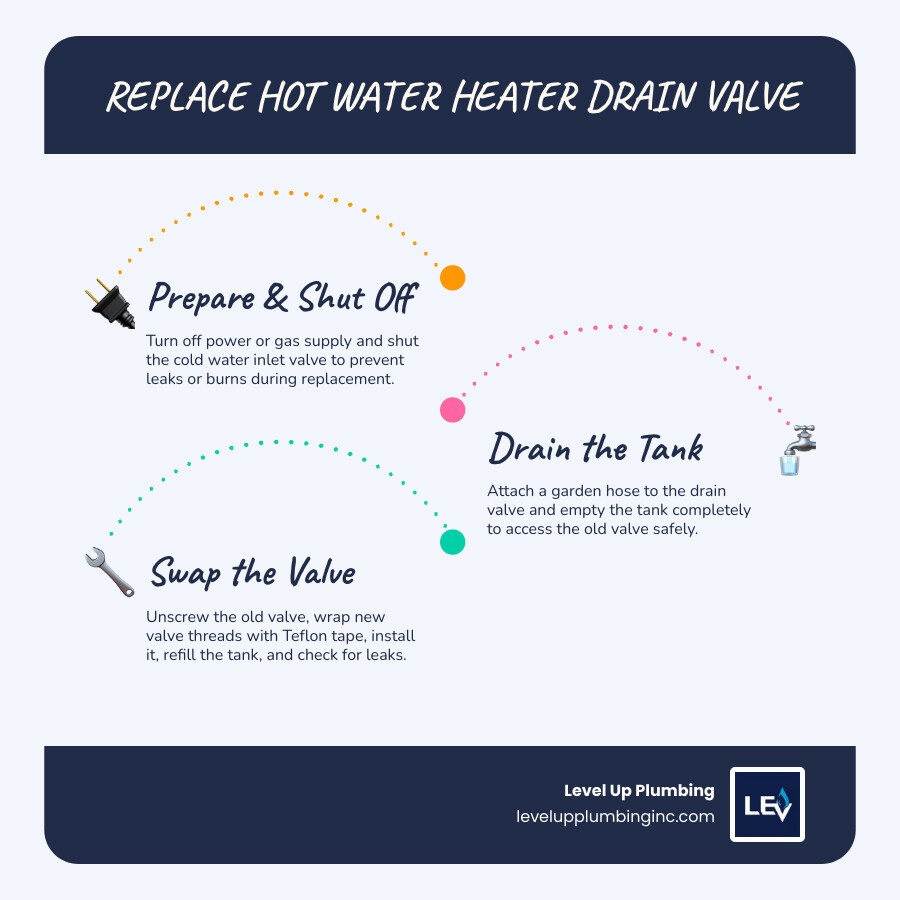
Replacing a hot water heater drain valve is a straightforward DIY repair that most homeowners can complete in under two hours. Here’s a quick overview:
- Turn off the water heater’s power or gas supply
- Shut off the cold water inlet valve
- Drain the tank completely using a garden hose
- Unscrew the old valve with an adjustable wrench
- Wrap the new valve’s threads with Teflon tape
- Install the new valve and refill the tank
- Restore power or gas and check for leaks
Most homeowners never think about their water heater — until something goes wrong. A drain valve is one of those small parts that quietly does its job for years. It lets you flush sediment, perform maintenance, and keep your water heater running efficiently.
But when it starts leaking, dripping, or simply won’t close all the way, it’s time to act. Left alone, a faulty drain valve can cause water damage, mold, and bigger headaches down the line.
The good news? Drain valves are one of the least commonly replaced parts on a water heater — so if yours needs attention, a simple swap is usually all it takes.
Understanding the Water Heater Drain Valve
Before we grab our wrenches and dive into the step-by-step process of replacing hot water heater drain valve, let’s understand exactly what this little component is and why it’s so critical to your home’s plumbing system.
What is a Water Heater Drain Valve and Why is It Important?
Think of your water heater’s drain valve as the oil pan drain plug on your car. Its primary function is to allow you to empty the tank for routine maintenance, repairs, or replacements. Over time, municipal water carries heavy minerals, calcium, and sand into your tank. As the water heats up, these minerals settle at the very bottom of the tank as sediment.
If you don’t periodically flush this sediment out, it creates an insulating barrier between the burner (or heating element) and the water. This forces your water heater to work twice as hard, driving up your energy bills and eventually causing the tank to overheat and crack. The drain valve is your gateway to flushing out this debris and ensuring your system operates at peak efficiency.
Where is the Drain Valve Located and How Long Does It Last?
The drain valve is located at the very bottom of your water heater tank. On standard gas and electric models, it is typically positioned near the bottom rim, slightly off to the left or right. On heat pump (hybrid) models, you will usually find it centered near the base.
A standard water heater’s drain valve is designed to last the entire duration of the unit’s life (typically 8 to 12 years). Because it is rarely operated by most homeowners, it is one of the less commonly replaced parts on a water heater. However, when it does fail — usually due to mineral corrosion, a cracked plastic body, or debris trapped in the seal — it must be replaced immediately. If you notice water pooling at the base of your unit, check out this guide on Water Heater Leaking from Drain Valve? Here’s What to Do to diagnose the source.
The Different Types of Drain Valves
When you head to the hardware store in Huntington Beach or Cypress, you will encounter three main types of drain valves:
- Plastic (Composite) Valves: Most manufacturers install cheap white plastic drain valves at the factory to keep production costs low. They are highly prone to cracking, their handles break easily, and they clog frequently because they have very narrow internal openings.
- Standard Brass Valves: A major step up from plastic. Brass is highly durable, handles high temperatures beautifully, and is much less likely to crack when tightened.
- Full-Port Brass Ball Valves: The gold standard of drain valves. Instead of a narrow internal stem, a full-port ball valve uses a straight-through design with a lever. When open, it allows large chunks of sediment to flow out freely without clogging.
| Valve Type | Durability | Clog Resistance | Lifespan | Best For |
|---|---|---|---|---|
| Plastic | Low (Prone to cracking) | Poor (Narrow opening) | Short to Medium | Budget-conscious temporary fixes |
| Standard Brass | High (Durable metal) | Moderate | Long (Unit lifetime) | Reliable standard replacement |
| Full-Port Brass | Excellent (Heavy-duty) | Excellent (Straight-through flow) | Extremely Long | High-sediment areas & easy flushing |
Step-by-Step Guide to Replacing Hot Water Heater Drain Valve
Replacing the valve is a highly rewarding DIY project, but it requires patience and strict adherence to safety protocols. Working with hot water and high pressure is no joke!
Tools and Materials Needed
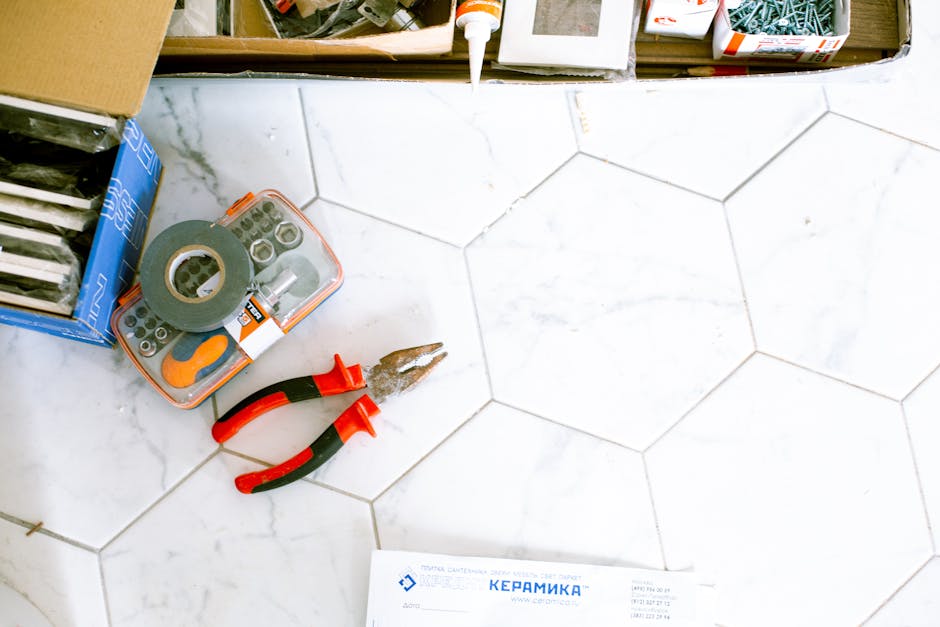
Gather these essential tools before you begin:
- A replacement drain valve (we highly recommend a 3/4-inch brass full-port ball valve)
- Teflon tape (pipe thread sealant)
- A standard garden hose
- An adjustable wrench or pipe wrench
- A large bucket
- Old rags and towels
- Screwdrivers (flathead or Phillips, depending on your valve handle)
Step 1: Safety First — Shut Down the System
Never attempt to work on a pressurized, hot water heater.
- For Electric Water Heaters: Go to your home’s main electrical panel and flip the circuit breaker dedicated to the water heater to the “OFF” position. Use a non-contact voltage tester to verify the power is completely off.
- For Gas Water Heaters: Turn the gas control dial on the front of the unit to the “OFF” or “PILOT” position.
- Let it Cool: Wait at least 30 minutes to an hour for the water inside the tank to cool down. Water inside a residential tank sits between 120°F and 140°F, which is hot enough to cause severe third-degree burns instantly.
Step 2: Shut Off the Water Supply
Locate the cold water inlet pipe entering the top of your water heater. Turn the shut-off valve clockwise to stop the flow of cold water into the tank. If you have an older gate valve that won’t budge, you may need to shut off the main water supply to your home.
Step 3: Drain the Tank Safely
To replace the valve, you must empty the tank below the level of the drain opening.
- Attach your garden hose to the existing drain valve threads.
- Run the other end of the hose to a safe drainage spot, such as a driveway, floor drain, or lawn.
- Open a hot water faucet upstairs or nearby. This introduces air into the plumbing system, breaking the vacuum and allowing the water to drain out quickly.
- Open the drain valve. If it is a plastic valve, you may need a flathead screwdriver to turn the stem counterclockwise.
- Let the water drain completely. If the valve is severely clogged with calcium and sediment, the water might only trickle out. Be patient.
For more detailed tips on managing your water heater’s health, read about The Importance of Annual Maintenance to Your Water Heater.
Step 4: Remove the Old Drain Valve
With the tank completely empty, it is time to remove the old valve.
- Disconnect the garden hose.
- Place a towel and a shallow bucket directly under the valve to catch any residual water.
- Fit your adjustable wrench or pipe wrench onto the base of the valve (look for the hexagonal flat section closest to the tank).
- Turn the valve counterclockwise to unscrew it.
- Note: If you are removing a factory plastic valve, apply steady, gentle pressure. Plastic becomes brittle over time and can easily snap off inside the tank threads if twisted too aggressively.
Step 5: Install the New Drain Valve
Now, prepare your new, high-quality brass valve.
- Clean the female threads on the water heater tank opening with a rag to remove old rust or sealant.
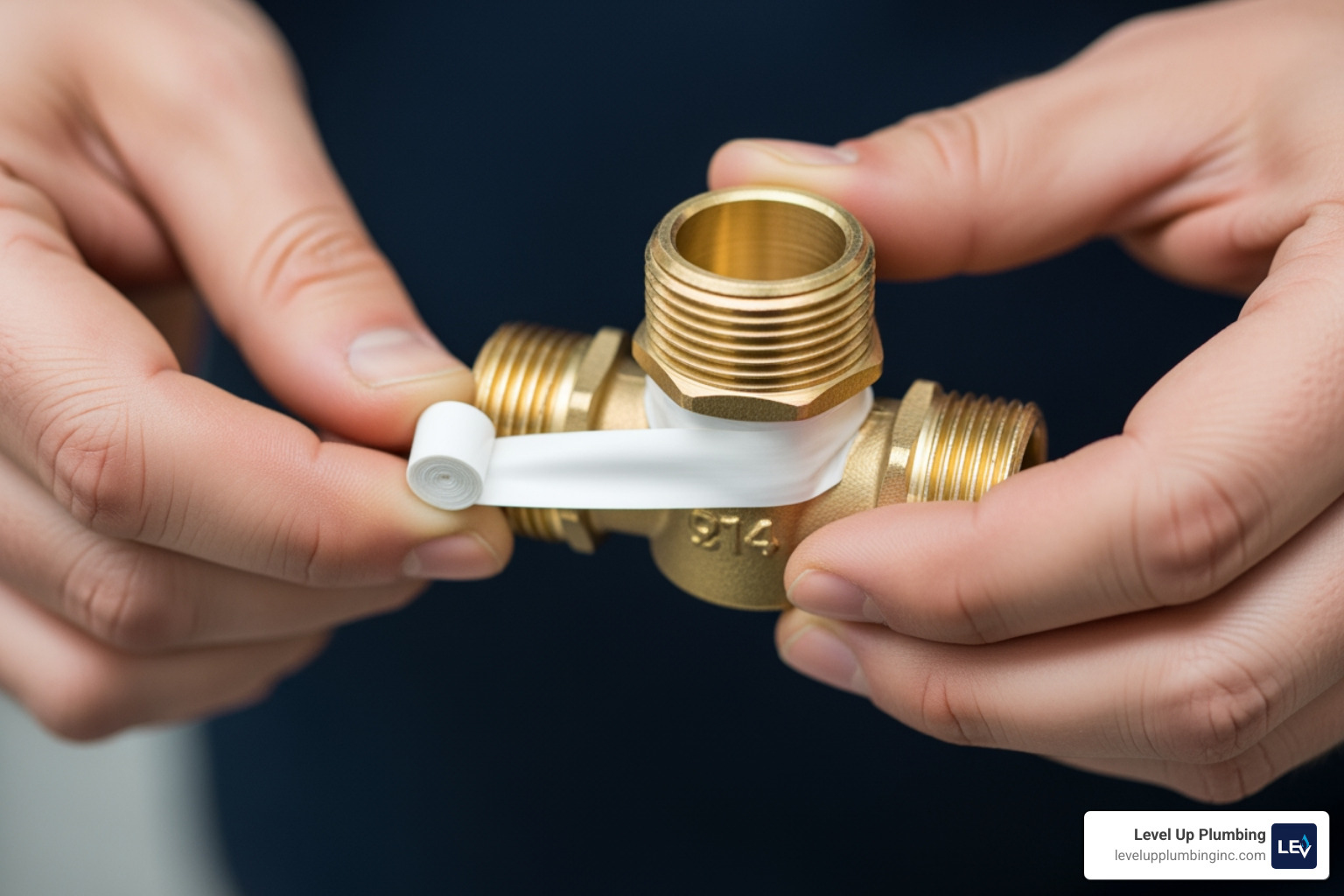
- Wrap the male threads of your new brass valve with 4 to 5 wraps of Teflon tape in a clockwise direction (the same direction you will turn the valve to tighten it).
- Thread the new valve into the tank by hand to ensure you do not cross-thread it.
- Once hand-tight, use your wrench to turn it clockwise until it is snug and pointing straight down. Do not over-tighten, as you could crack the glass lining inside the steel tank.
Step 6: Refill the Tank and Restore Power
Crucial Step: Never turn the power or gas back on while the tank is empty! Doing so will instantly destroy the heating elements in an electric unit (dry fire) or crack the tank in a gas unit.
- Ensure the new drain valve is fully closed.
- Keep a nearby hot water faucet open.
- Slowly turn the cold water inlet valve back on. You will hear water rushing into the tank.
- Watch the open hot water faucet. At first, you will hear sputtering air. Once a steady, solid stream of water flows without air pockets, the tank is completely full.
- Turn off the hot water faucet.
- Inspect your new drain valve closely for any signs of weeping or dripping.
- If everything is dry, restore the electrical breaker or relight your gas pilot light.
For a comprehensive walkthrough of this DIY repair, check out this guide on How to Change Water Heater Drain Valve: A Complete DIY Guide.
Troubleshooting Stuck Valves and Preventing Leaks
Plumbing repairs rarely go perfectly. If you run into a stubborn component or a post-installation drip, here is how to handle it like a pro.
What to Do If the Old Valve is Stuck or Breaks
If you have an older water heater in Garden Grove or Cypress, the original drain valve might feel like it is welded to the tank.
- For Stuck Metal Valves: Apply a small amount of penetrating oil (like WD-40 or PB Blaster) to the threads. Let it sit for 15 minutes. Use a larger pipe wrench to gain extra leverage, holding the water heater stable so it doesn’t twist on its pipes.
- For Broken Plastic Valves: If the brittle plastic valve snaps off, leaving the threaded plastic shank stuck inside the tank, do not panic! You can use a hacksaw blade to carefully make two small cuts on the inside of the stuck plastic ring (be careful not to cut into the metal tank threads). Once notched, use a flathead screwdriver and needle-nose pliers to peel the broken plastic pieces out.
If you find yourself stuck in the middle of a messy extraction, you can consult this step-by-step troubleshooting guide on How to replace a water heater drain valve.
How to Prevent Leaks After Installation
A tiny drip from your new valve can lead to rust and mold. To guarantee a leak-free seal:
- Always use a high-quality thread sealant or Teflon tape.
- Ensure you wind the tape in the correct direction so it doesn’t unspool as you screw the valve in.
- If you notice a tiny seep from the threads after refilling, try tightening the valve another quarter-turn. If the leak persists, you must drain the tank again, remove the valve, clean the threads thoroughly, apply fresh tape, and reinstall it.
Frequently Asked Questions about Water Heater Valves
Are drain valves interchangeable between different brands?
Yes! For the vast majority of residential water heaters (including brands like Rheem, AO Smith, Bradford White, and Kenmore), drain valves are highly interchangeable. Most standard 40-gallon and 50-gallon residential water heater drain valves have a 3/4-inch diameter with standard NPT (National Pipe Thread) threading.
While the thread size is almost always the same, the length of the valve shank can vary. If your water heater has thick insulation, you will need a valve with a longer shank to reach past the outer jacket. Always measure your old valve’s length before buying a replacement.
How does replacing hot water heater drain valve affect my warranty?
Performing basic maintenance like replacing hot water heater drain valve generally does not void your manufacturer’s warranty, provided you use compatible parts and do not damage the tank during the process. However, if you modify the system incorrectly — such as installing an unapproved recirculation pump directly to the drain valve or cross-threading the tank connection — the manufacturer may deny future warranty claims.
If your water heater is brand new and experiencing issues, it is always safest to check your warranty paperwork or hire a licensed professional to perform the repair. If your system is old and constantly giving you trouble, learn how to Stop Running Out of Hot Water with Level Up Plumbing.
Can I upgrade from a plastic to a brass full-port valve when replacing hot water heater drain valve?
Absolutely, and you should! Upgrading from a cheap plastic factory valve to a heavy-duty brass full-port ball valve is one of the best upgrades you can make for your system.
A full-port brass valve features a large, straight-through internal pathway. This means when you perform your annual flush, large chunks of mineral scale and sediment can easily exit the tank without clogging the valve. Furthermore, brass is incredibly durable and won’t degrade under the high temperatures and pressures inside your tank, ensuring you never have to worry about a brittle valve snapping off again.
Conclusion
Replacing a hot water heater drain valve is a highly effective way to extend the lifespan of your appliance, prevent catastrophic leaks, and make annual maintenance a breeze. While it is a manageable DIY project for many hands-on homeowners, it does carry risks of water damage, electrical hazards, or tank damage if done incorrectly.
If you live in Orange County, CA — including Huntington Beach, Cypress, or Garden Grove — and would rather leave this job to the professionals, we are here to help. At Level Up Plumbing, we are a proud woman-owned plumbing company with over 21 years of local expertise and award-winning customer service. Whether you need a simple valve replacement, a professional flush, or a brand-new system, our friendly team is ready to deliver top-tier service.
Ready to level up your home’s plumbing? Explore our comprehensive services for Water Heaters or contact us today to schedule your appointment!