
What a Broken Water Pipe Under a House Can Really Cost
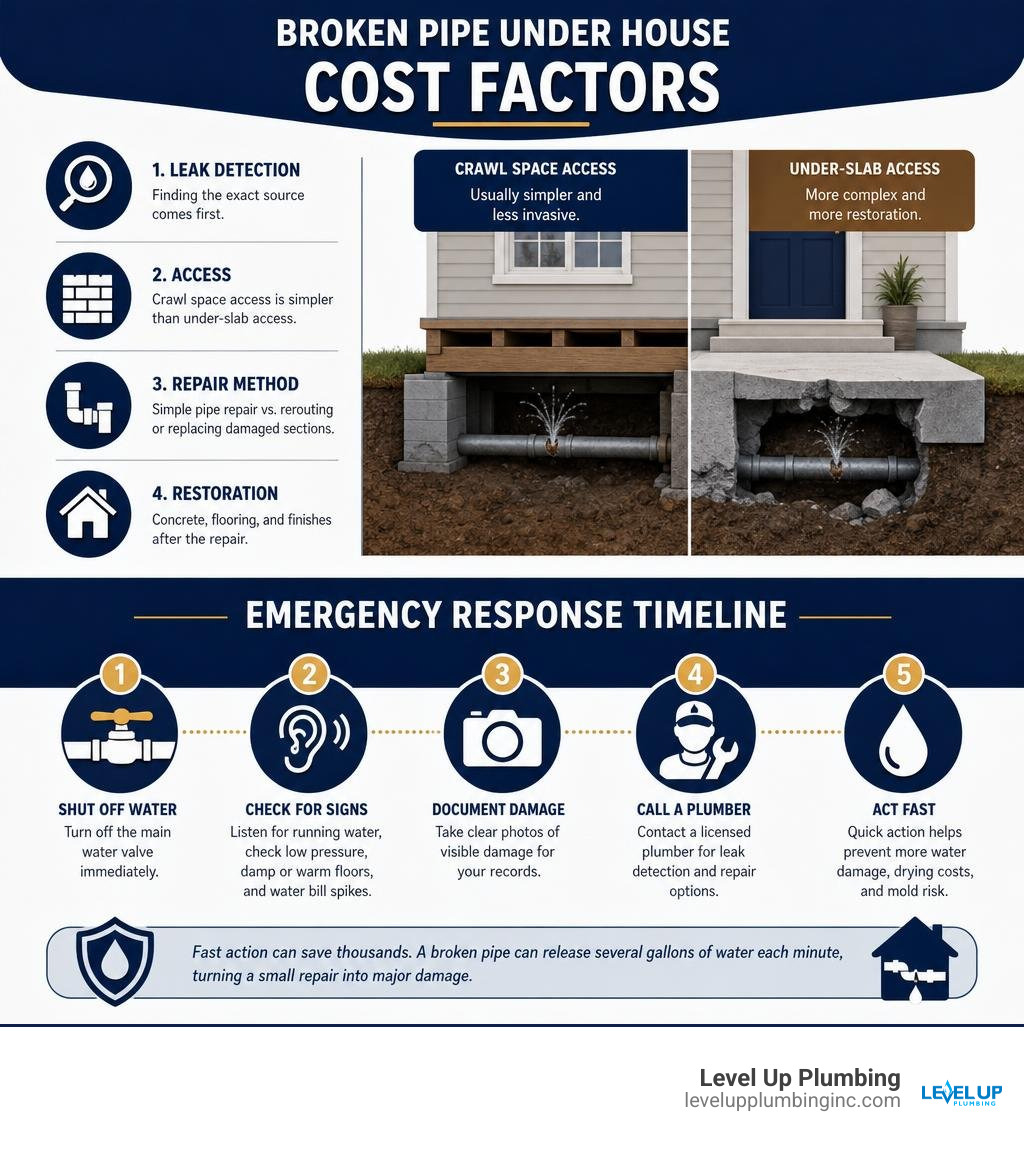
A broken water pipe under a house can be a small repair or a major project. The biggest cost factor is access: an exposed pipe in a crawl space is usually far simpler to fix than a pipe beneath a concrete slab. Under-slab work may also involve leak detection, concrete access, pipe rerouting, and restoration after the plumbing repair.
If you suspect a leak, act quickly:
- Shut off the home’s main water valve.
- Check for running-water sounds, low pressure, warm or damp floors, and an unexplained jump in your water bill.
- Photograph visible damage and contact a licensed plumber for leak detection before approving invasive work.
Fast action matters. A broken supply pipe can release several gallons of water each minute, and the water damage, drying, and mold risk can become more expensive than the pipe repair itself. This guide explains the repair options, the factors that affect your estimate, and when rerouting or replacing old piping may make more sense than another patch.
I am Tiffany Miley, owner and president of Level Up Plumbing, with more than 21 years of experience in Southern California trades and service work. I help homeowners understand broken water pipe under house cost, identify the real source of leaks, and choose durable repairs without unnecessary upselling.
Broken water pipe under house cost word guide:
Broken Water Pipe Under House Cost Breakdown by Repair Method
When water lines fail beneath a home, the chosen method of remediation dictates the scope of labor, equipment needs, and structural disruption. Understanding the distinction between direct invasive excavation, modern overhead reroutes, and exterior tunneling helps homeowners navigate the mechanical options available for Under Slab Plumbing Repair Cost: Price Range by Scenario 2026.
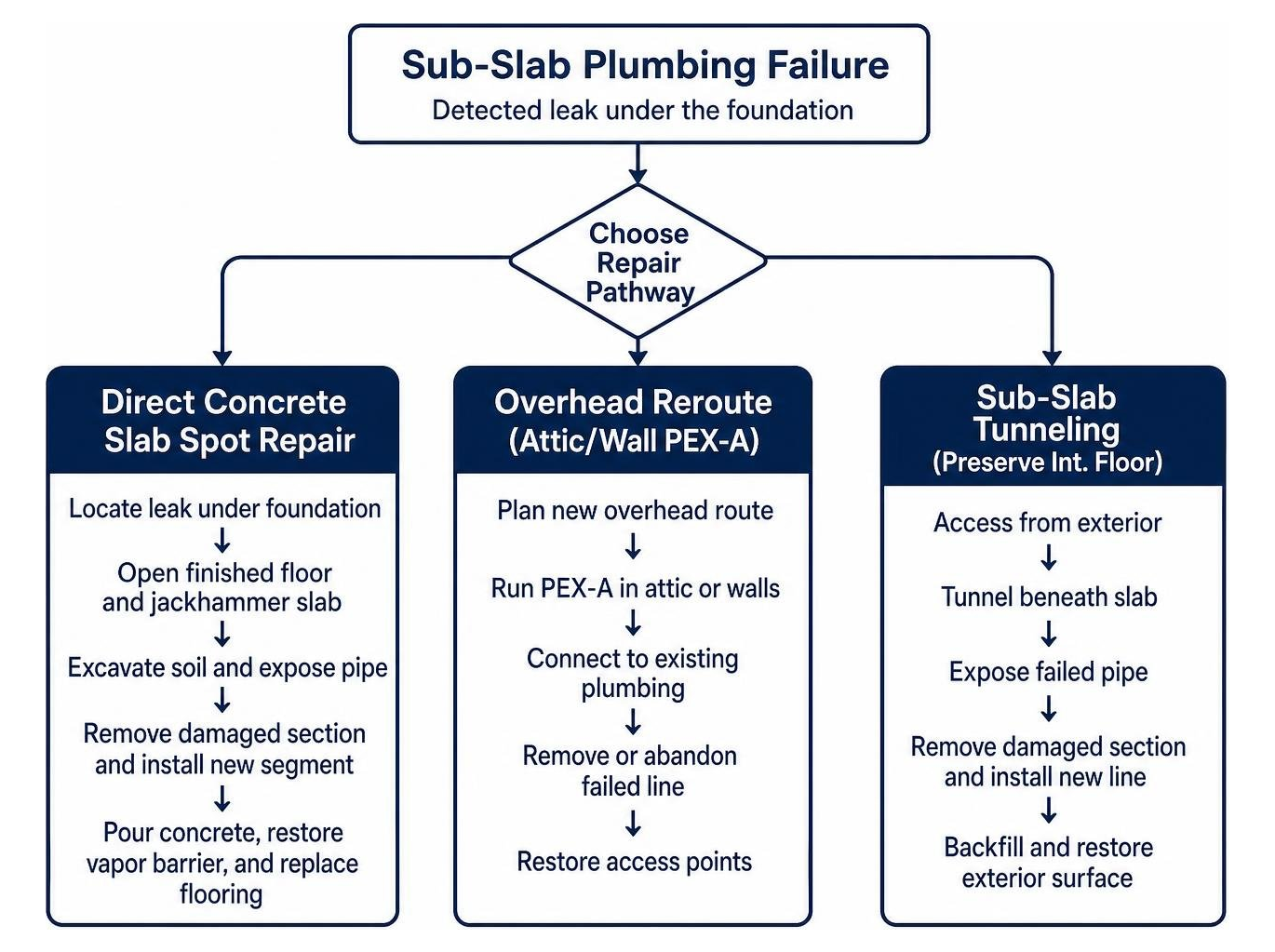
Direct Concrete Slab Spot Repair
A direct spot repair involves pin-pointing the leak beneath the foundation, opening the finished floor, and jackhammering directly through the concrete slab. Once the soil beneath is excavated, our technicians expose the failed section, cut away the damaged copper or plastic line, and solder or fit a new code-compliant segment.
While this technique addresses the immediate structural breach without altering the home’s broader plumbing layout, it requires concrete pouring, vapor barrier restoration, and subsequent finish flooring replacement. If multiple pinhole leaks exist along the same line, jackhammering individual sections can quickly compromise foundation continuity.
Overhead PEX Rerouting vs. Sub-Slab Tunneling
Rather than breaking open interior floors, overhead rerouting completely abandons the compromised subterranean water line. Using flexible PEX-A tubing, plumbers run a new water line through the attic space or behind interior drywall down to the designated plumbing fixture. This eliminates the need for jackhammering interior living spaces and bypasses corrosive sub-slab soils entirely.
Sub-slab tunneling, by contrast, approaches the failed line horizontally from the exterior perimeter of the foundation. Excavation crews dig underneath the concrete slab to allow technicians to make physical repairs from below. This preserves high-end interior floor coverings such as hardwood or custom tile, though it requires structural backfill and specialized mud-jacking to prevent future foundation voiding and soil settlement.
Estimating Accessible vs. Sub-Slab Broken Water Pipe Under House Cost
The physical environment surrounding the pipe determines labor hours and equipment requirements. Accessible lines located in open crawl spaces require minimal preparation, whereas sub-slab leaks require advanced acoustic diagnostics, structural concrete cutting, and specialized trade coordination.
| Repair Category | Access Method | Structural Disruption | Typical Equipment Involved | Primary Scope Focus |
|---|---|---|---|---|
| Accessible Line | Crawl Space / Open Wall | Minimal to None | Hand tools, standard pipe cutters, crimpers | Direct pipe segment replacement |
| Direct Slab Spot Repair | Interior Jackhammering | High (Flooring & Slab) | Rotary hammers, concrete saws, moisture extractors | Soil excavation, pipe soldering, concrete patching |
| Overhead Reroute | Attic & Wall Cavities | Low (Drywall patches) | PEX expansion tools, stud borers, fish tapes | Bypassing subterranean runs via ceiling cavities |
| Sub-Slab Tunneling | Exterior Foundation Dig | Moderate (Exterior only) | Shoring boxes, hydro-vacs, compaction equipment | Perimeter trenching, line repair, structural backfill |
For broader project contexts and pricing dynamics, industry benchmarks detailed in the Broken Water Pipe Repair Cost: 2026 Pricing Guide highlight how physical access drives the overarching plumbing investment.
Major Factors That Drive Plumbing and Foundation Repair Expenses
Every residential property presents unique structural and geotechnical characteristics. Variables such as burial depth, total linear footage of compromised piping, expansive clay movement, municipal permitting fees, and prevailing regional trade labor rates—as tracked in Orange County Plumbing Service Costs & Prices—dictate the full engineering scope of the project.
Pipe Material, Age, and Severity of Damage
The composition of your plumbing infrastructure plays a pivotal role in long-term system integrity:
- Type L vs. Type M Copper: Thinner Type M copper lines installed in older builds are susceptible to pitting corrosion from aggressive soil chemistry, often leading to recurring pinhole leaks.
- Galvanized Steel: Common in mid-century construction, galvanized pipes corrode internally, narrowing the pipe diameter and failing at the threaded joints.
- Cast Iron Drain Lines: Decades of acidic effluent exposure cause the bottom channels of cast iron pipes to crack or collapse under structural loads.
- Polybutylene: Highly prone to sudden micro-fracturing at joint fittings due to municipal water treatment additives, requiring proactive line retirement.
- PEX-A Systems: Modern cross-linked polyethylene offers superior elasticity and thermal resistance, making it the preferred standard for system modernizations.
When dealing with foundation movements in communities like Cypress, addressing aged infrastructure with Slab Leaks repair protocols protects structural integrity.
How to Reduce Your Broken Water Pipe Under House Cost
Homeowners can minimize unnecessary secondary expenses by implementing targeted strategies:
- Regulate Water Pressure: Maintain household dynamic pressure below 80 PSI with an operational pressure-reducing valve to prevent micro-fissures in underground runs.
- Integrate Smart Shutoff Valves: Install systems like Leak Defense smart home systems to automatically isolate supply lines the moment abnormal flow is detected.
- Opt for Comprehensive Upgrades: When subterranean pipes demonstrate systemic degradation, replacing the infrastructure via a planned main line replacement avoids the recurring labor fees of repetitive emergency spot patches. Learn more about long-term planning through The Definitive Guide to Main Line Replacement.
- Consolidate Project Scopes: Schedule non-emergency plumbing modernizations during off-peak windows to take advantage of flexible scheduling.
Secondary Restoration: Water Extraction, Drywall, and Mold Remediation
A ruptured line beneath a foundation releases water into surrounding structural aggregate, insulation, and framing. Beyond the direct mechanical repair, escaped moisture migrates upward through capillary action, saturating baseboards, buckling hardwood subfloors, and encouraging mold proliferation within 24 to 48 hours. Comprehensive remediation involves:
- Continuous moisture mapping and infrared thermal evaluation.
- Industrial structural drying using negative-air scrubbers and commercial dehumidifiers.
- Targeted drywall, baseboard, and flooring replacement to restore interior air quality.
Warning Signs and Diagnostics for Hidden Sub-Slab Leaks
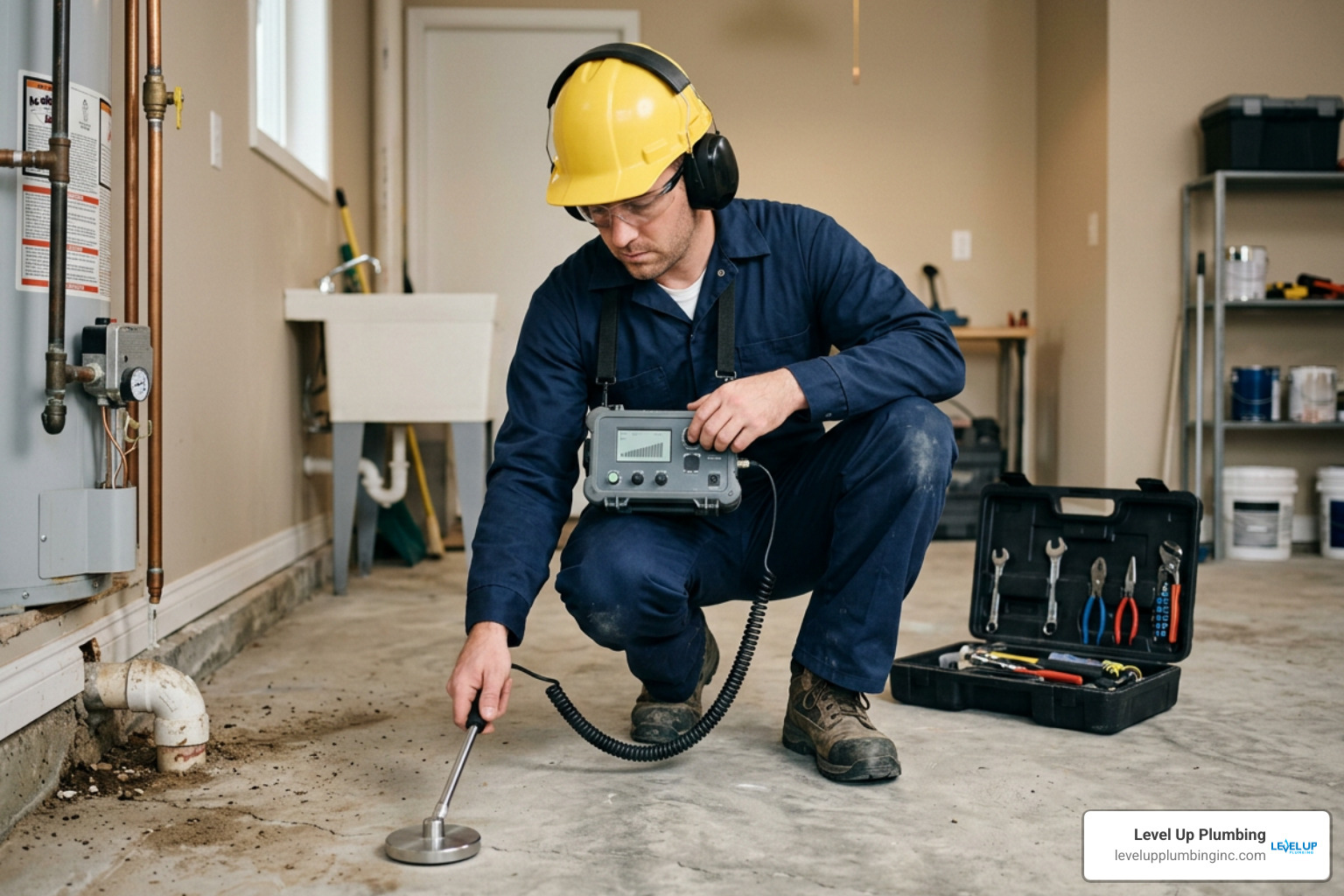
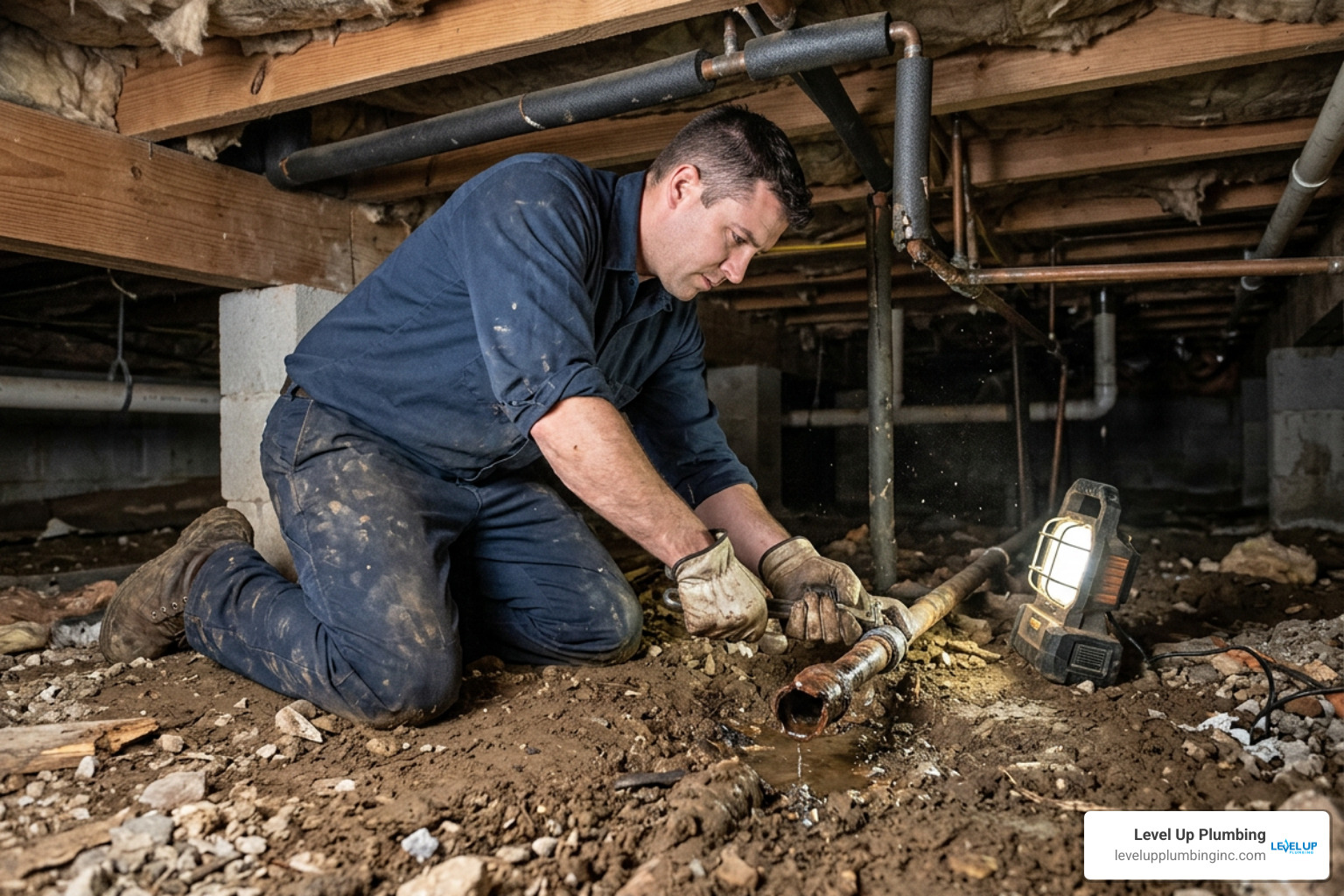
Sub-slab failures often develop out of sight before manifesting inside living areas. Early recognition of structural and environmental cues prevents secondary foundation shifting.
Diagnostic Leak Detection and Camera Inspection
Accurate diagnostics eliminate destructive exploratory digging. Experienced technicians use advanced, non-invasive technology:
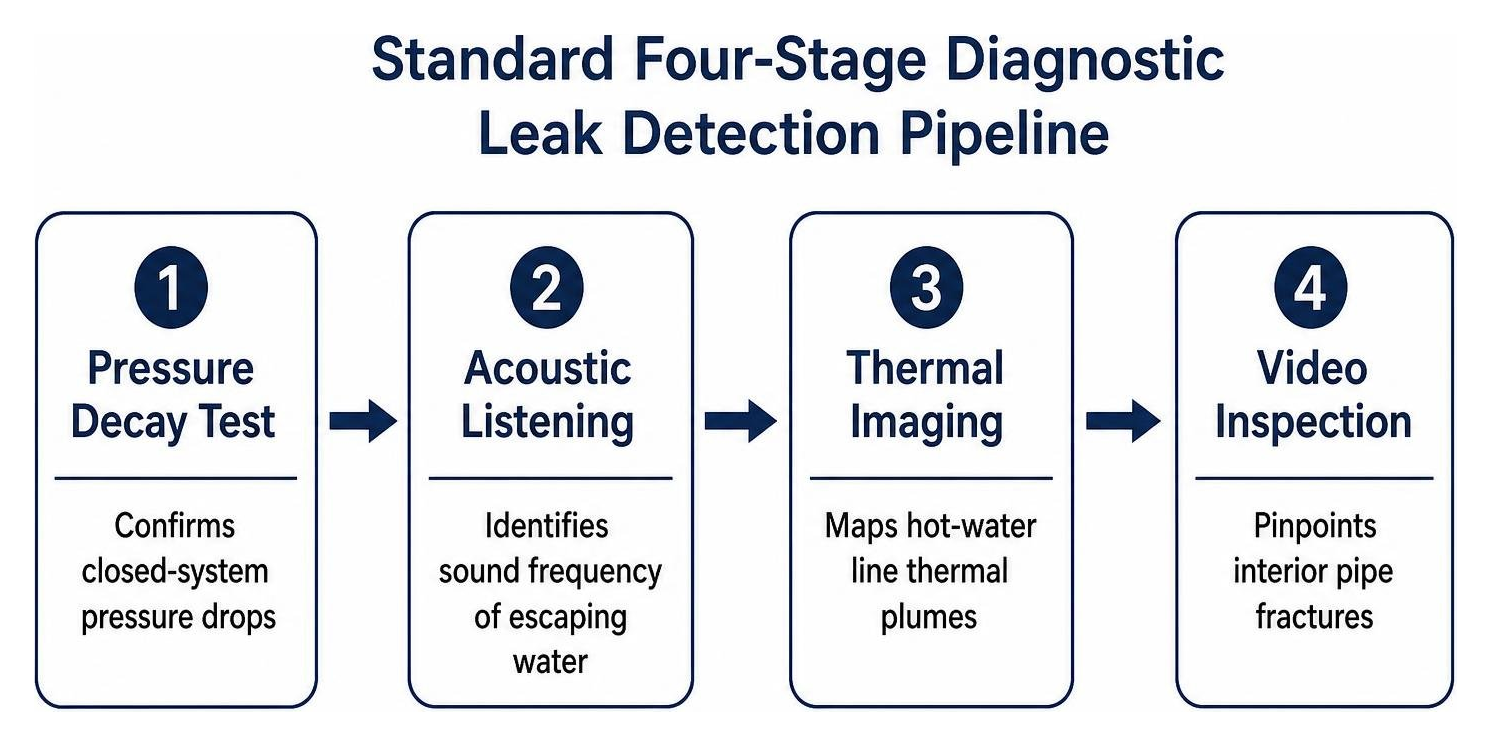
- Pressure Decay Testing: Gauges system integrity by isolating fixture supply valves and monitoring line pressure.
- Electronic Acoustic Listening: Amplifies the sonic frequency of pressurized water escaping through soil and concrete.
- Thermal Infrared Imaging: Identifies subsurface hot-water plumes under tile, laminate, or hardwood.
- High-Resolution Video Camera Inspections: Navigates main drainage lines via sewer cleanouts to visually verify fractures; learn more about diagnostic capabilities through a dedicated camera inspection.
Spot Repair vs. Whole-House Repipe Decision Matrix
When evaluating whether to spot-repair an isolated leak or invest in a whole-home repipe, consider the 60% lifespan rule. If your plumbing system has exceeded 60% of its expected operating life and has suffered multiple leaks in a 12-month period, continuous patching often costs more in the long run than a unified PEX-A retrofit. Isolated spot repairs remain ideal for young plumbing networks that suffered external mechanical damage rather than widespread material corrosion.
For broader drainage systems, review regional compliance through the Sewer Line Replacement Cost 2026: $3,000-$25,000 Guide and general pipe integrity guidelines in the Pipe Repair Cost in 2026: Burst, Slab & Repipe Pricing report.
Insurance Coverage and Emergency Response Protocols
Navigating homeowners insurance policies requires understanding standard coverage boundaries:
- Sudden and Accidental Coverage: Standard policies typically assist with the resulting water damage (such as ruined flooring, wet drywall, and mold remediation) caused by a sudden, unforeseen burst.
- Wear and Tear Exclusions: The direct labor and materials to fix the physical pipe itself are generally excluded if the breakdown stems from age, corrosion, or ground settlement.
- Service Line Endorsements: Many carriers offer specialized underground utility riders that extend coverage to exterior water and sewer lateral failures between the municipal main and the foundation perimeter.
For local utility programs and service line frameworks, review the Sewer Lateral Program – Welcome to Huntington Beach, CA to confirm municipal versus private property maintenance obligations.
Immediate Emergency Protocol for Under-House Leaks
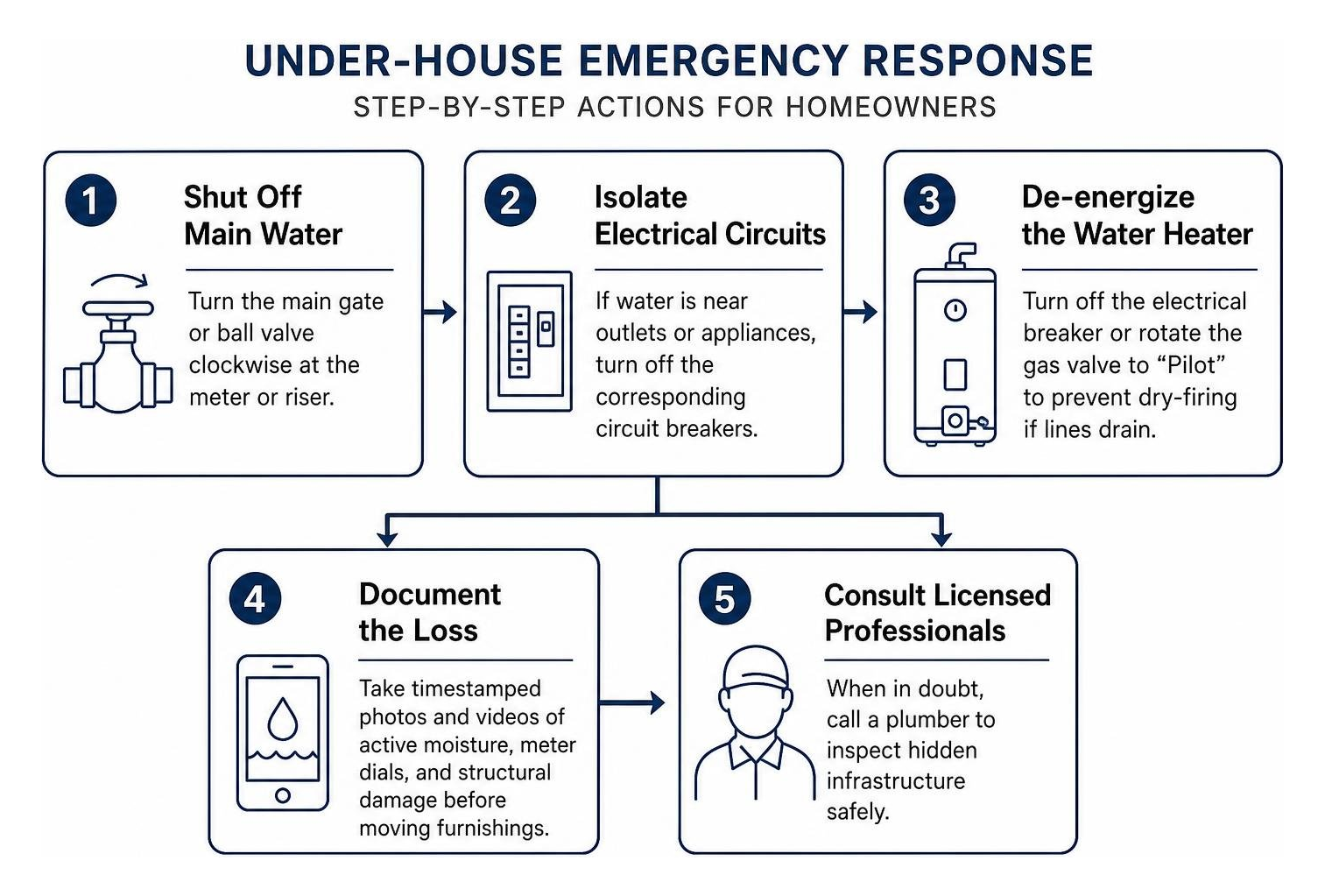
- Shut Off Main Water: Turn the main gate or ball valve clockwise at the front hose bib riser or street meter box.
- Isolate Electrical Circuits: If water surfaces near floor outlets or appliances, turn off the corresponding circuit breakers.
- De-energize the Water Heater: Turn off the electrical breaker or rotate the gas valve to “Pilot” to prevent dry-firing heating elements if lines drain.
- Document the Loss: Take timestamped photos and videos of floor dampness, meter dials, and structural damage before moving furnishings.
- Consult Licensed Professionals: Make informed decisions by remembering that when in doubt call a plumber to inspect hidden infrastructure safely.
Securing Professional Emergency Assistance
During an active leak, securing rapid professional intervention halts moisture migration before structural framing weakens. When facing rising water or unlocatable breaks, contacting a licensed emergency plumber Orange County guarantees that specialized diagnostic equipment arrives on-site quickly.
Accessing an experienced 24 Hour Plumber Orange County ensures that your home is stabilized using permanent, code-compliant plumbing solutions. For localized community discussions on unexpected repairs, homeowners also share regional experiences on forums like Cost to repair a busted pipe under the house.
Frequently Asked Questions About Under-House Plumbing Leaks
Does homeowners insurance cover a broken water pipe under the slab?
Standard homeowners insurance usually covers the secondary water damage caused by sudden and accidental pipe ruptures, including drying services, drywall repair, and flooring replacement. However, policies typically exclude the direct mechanical cost of repairing the plumbing pipe itself if failure resulted from gradual wear, corrosion, or ground shifting, unless the homeowner carries a specific service line rider.
How long does it take to repair a broken pipe under a house?
Accessible repairs in crawl spaces typically take 2 to 4 hours. Under-slab plumbing repairs—including electronic detection, concrete excavation, pipe replacement, and backfilling—usually take 1 to 3 days. If secondary water extraction and structural drying are required, total property restoration may extend from 3 to 7 days.
What are the earliest warning signs of an under-slab leak?
The most reliable indicators include localized warm spots on floor surfaces, the faint sound of hissing or running water when all fixtures are turned off, unexplained increases in your municipal water utility bill, sudden drops in household water pressure, and damp or discolored baseboards.
Conclusion
A compromised water line beneath your foundation requires prompt, methodical action to protect your home’s value and structural health. For more than 21 years, Level Up Plumbing has served communities across Orange County—including Huntington Beach, Cypress, and Garden Grove—with transparent, award-winning service.
Whether you need precision non-invasive diagnostics, an overhead PEX reroute, or comprehensive foundation preservation, our woman-owned team delivers durable workmanship without high-pressure sales tactics. If you suspect an underground leak, connect directly with our Huntington Beach slab leaks specialists to restore safety and peace of mind to your home.