
Why Fast Leak Repair Can Save Your Home — and Your Water Bill
Leak repair is something every homeowner will face at some point — and how quickly you act makes all the difference.
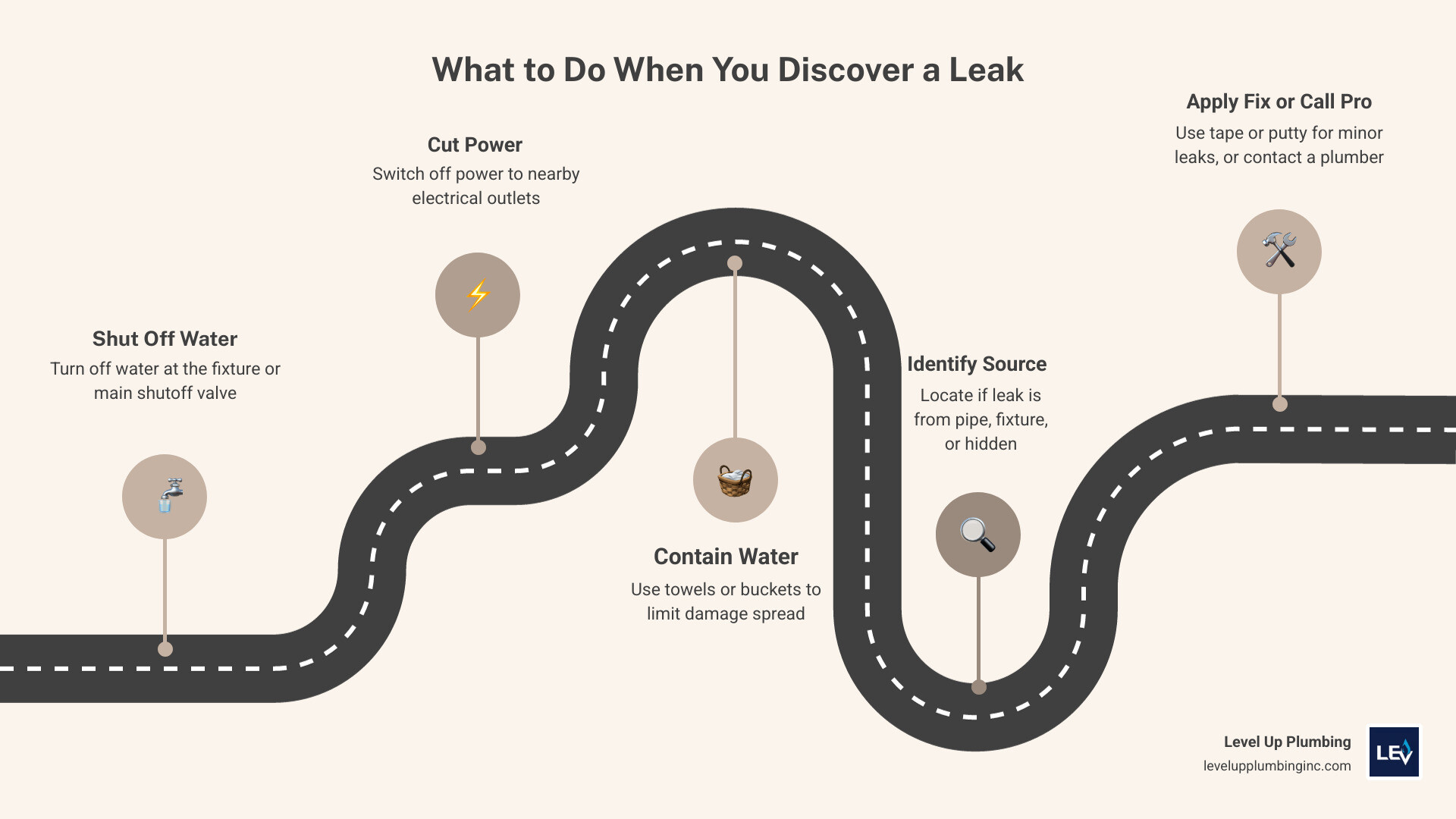
Here’s a quick overview of what to do when you find a leak:
- Turn off the water supply to the affected fixture or at the main shutoff valve
- Cut power to any nearby electrical outlets or fixtures
- Contain the water with towels or buckets to limit damage
- Identify the source — pipe, fixture, toilet, or hidden wall leak
- Apply a temporary fix (tape, epoxy putty) if the leak is minor and accessible
- Call a licensed plumber for anything beyond a simple drip
The numbers tell a sobering story. The average household leaks more than 10,000 gallons of water every year. A single dripping faucet can waste 3,000 gallons annually — that’s roughly the water used in 180 showers. Across the country, we collectively waste one trillion gallons of water per year from household leaks alone.
The good news? Fixing leaks can cut your water bill by up to 10%.
For Southern California homeowners, where water costs are already high and plumbing systems often age faster due to hard water and shifting soils, even a slow drip deserves immediate attention. Left unchecked, a small leak can quietly rot wood framing, feed mold growth, and cause structural damage that costs far more to fix than the original leak ever would have.
This guide walks you through everything — from spotting hidden leaks to choosing the right repair products to knowing when it’s time to call a pro.
Immediate Steps to Take When You Discover a Water Leak

When water is actively spraying or pooling in your home, panic is your worst enemy. Taking immediate, systematic action can mean the difference between a simple clean-up and a devastating insurance claim.
1. Locate and Turn Off the Water Supply
Your first priority is to stop the flow of water. If the leak is isolated to a specific fixture—like a sink faucet or a toilet—look for the local shut-off valve (often a small chrome valve located directly behind or beneath the fixture). Turn it clockwise to shut off the water.
If the leak is behind a wall, coming from a ceiling, or you cannot locate the local valve, you must shut off the main water valve. In Orange County homes, this is typically located:
- Near the street in a concrete box (near your water meter).
- On the exterior wall of your home, often near an outdoor spigot or garage.
2. Prioritize Electrical Safety
Water and electricity are a lethal combination. If the leak is near any outlets, appliances, fuse boxes, or light fixtures, do not touch them. Go straight to your home’s electrical panel and shut off the breaker for that specific area. If there is standing water near the electrical panel itself, do not enter the room—call your utility provider or an emergency plumber immediately.
3. Mitigate the Water Damage
Once the water is off and the area is safe from electrical hazards, start containing the damage. Use buckets, towels, and mops to remove standing water. Use a wet-dry vacuum if you have one. Move furniture, rugs, and electronics out of the wet zone to prevent mold growth and wood warping.
Plumbing emergencies can strike when you least expect them. For a relatable look at how quickly a normal evening can escalate, read about A Quiet Evening Turned Plumbing Nightmare.
Common Household Leaks and How to Detect Them

Many leaks are hidden from plain sight, slowly dripping behind drywall or beneath floorboards. To catch these stealthy water-wasters before they escalate, you can perform a few simple diagnostic tests.
The Water Meter Test
To confirm if you have a hidden leak, use your water meter:
- Turn off all water fixtures, appliances (washing machine, dishwasher), and irrigation systems in your home.
- Locate your water meter box (usually near the sidewalk or curb in front of your home).
- Look at the leak indicator—often a small triangular dial or a digital sweep hand. If it is moving, you have an active leak.
- Alternatively, write down the current meter reading, wait exactly two hours without using any water, and check the reading again. If the numbers have changed, water is escaping somewhere.
The Toilet Dye Test
Toilet leaks are incredibly common and often completely silent. To test your toilet:
- Remove the tank lid.
- Drop a few drops of food coloring or a dye tablet into the tank.
- Wait 15 to 20 minutes without flushing.
- Check the toilet bowl. If the water in the bowl has changed color, your flapper valve is leaking and needs to be replaced.
To permanently protect your home from catastrophic water damage, consider installing a smart monitoring system. Learn more about how these devices work by reading up on Leak Defense Smart Home Systems.
Detecting Slow and Hidden Leaks
Some leaks require a bit of detective work. Keep an eye out for these subtle warning signs:
- Faucet Leaks: Even a slow, rhythmic drip from a bathroom or kitchen sink can add up quickly. This is usually caused by worn-out O-rings, washers, or cartridges.
- Pipe Leaks behind Walls: Look for bubbling paint, peeling wallpaper, or sagging drywall.
- Mold Growth and Musty Odors: Mold thrives in damp, dark spaces. If you smell a persistent musty odor or see dark spots on walls or ceilings, a leaking pipe is likely nearby.
- Water Pressure Drop: If your water pressure suddenly decreases, it could indicate a ruptured pipe diverting water away from your fixtures.
DIY Leak Repair: Quick Fixes and Permanent Solutions
For minor, accessible pipe leaks, a temporary DIY repair can buy you valuable time until a permanent fix can be completed. However, it is vital to understand which materials are suitable for different pipe types.
| Repair Material | Best Used For | Pressure Limit | Durability | Potable Water Safe? |
|---|---|---|---|---|
| Pipe Wrap Tape (Self-fusing) | Minor pinholes, joint leaks, temporary seals | Low to Medium | Temporary | Yes (check manufacturer) |
| Epoxy Putty | Rigid pipes (copper, PVC, iron), small cracks | Medium (up to 150 psi) | Temporary to Semi-Permanent | Yes (UL/NSF 61 certified) |
| Pipe Repair Cast | Structural reinforcement, larger splits | High | Semi-Permanent | Yes (ANSI/NSF Standard 61) |
For professional-grade DIY repairs, products like Quick Seal Pipe Repair offer a knitted fiberglass tape impregnated with polyurethane resin that activates in water and hardens within minutes, making it highly effective for both hot and cold water lines.
Emergency Leak Repair Products for Quick Fixes
When you need to stop a leak instantly, specialized emergency products can save the day:
- Spray Sealants: Products like Polar LeakFix Spray provide an instant waterproof rubberized coating. While excellent for gutters, drainpipes, and non-pressurized lines, they should never be used as a permanent fix on pressurized household water lines.
- Active Leak Kits: The Active Leak Repair Kit is designed to seal active leaks under pressure (up to 150 psi) without requiring system shutdown, utilizing a combination of sealing tape and epoxy putty.
- Cure-on-Command Resins: High-tech options like 30 Second Leak Repair use blue-light-activated resins to cure instantly, even underwater, on copper, PVC, and fiberglass lines.
Step-by-Step Guide to Applying Pipe Repair Tape and Putty
If you choose to use epoxy putty or self-fusing tape, follow these steps to ensure a strong hold:
- Shut Off and Drain: Turn off the water supply and drain the line to relieve pressure.
- Clean the Surface: Wipe away rust, dirt, or grease.
- Score the Pipe: Use sandpaper or a metal file to thoroughly roughen the area around the leak. This gives the epoxy putty or tape a textured surface to grip onto.
- Prep Your Hands: Put on thick nitrile or latex safety gloves.
- Apply the Material:
- For Epoxy Putty: Knead the two-part putty together until it forms a uniform color. Press it firmly over the leak, feathering the edges outward.
- For Pipe Tape: Wrap the tape tightly around the pipe, overlapping each layer by 50% and extending at least two inches past both sides of the leak.
- Curing Time: Allow the product to cure completely (typically 30 to 60 minutes) before restoring water pressure.
Understanding Slab Leaks vs. Standard Pipe Leaks
A standard pipe leak occurs in exposed or wall-contained plumbing. A slab leak, however, is a pressurized water line leak that occurs beneath your home’s concrete foundation.
Slab leaks are particularly common in Orange County due to soil movement (clay soil expansion and earthquakes) and chemical reactions between the local water supply and copper pipes (copper corrosion).
If you suspect you have a leak beneath your home, check out our dedicated guide on Slab Leaks to learn about the warning signs, which include warm spots on your floor, unexplained damp carpets, and the sound of running water when all faucets are off.
Specialized Slab Leak Repair Methods
Because slab leaks are buried under inches of concrete, repairing them requires specialized plumbing techniques:
- Pipe Re-routing: Rather than jackhammering through your beautiful flooring, we often run a new, modern PEX pipe through your walls or attic, completely bypassing and abandoning the leaking line under the slab.
- Spot Repair: If the leak is easily accessible and the rest of the pipe is in good condition, we can open a small section of the concrete slab to repair the damaged pipe directly.
- Epoxy Lining (Trenchless): For pipes with minor pinholes, a liquid epoxy coating can be blown through the inside of the pipe, sealing the leaks from the inside out without excavation.
When to Call a Professional for Complex Leak Repair
While DIY fixes are great for minor emergencies, certain situations demand the tools and expertise of a licensed plumber. Attempting to repair major lines yourself can result in catastrophic water damage or code violations.
Always call a professional for:
- Leaks on main water lines or main sewer lines.
- Slab leaks under concrete foundations.
- Any leak near electrical wiring or gas lines (never attempt DIY repairs on gas lines!).
- Repeated leaks in the same area (which indicates systemic pipe corrosion).
When you are dealing with a complex issue, it is always safest to rely on professional expertise. Remember: When in Doubt, Call a Plumber.
Professional Leak Repair Services and Financial Assistance Programs
If you are worried about the cost of professional plumbing repairs, there may be local resources available. Many municipal water districts and county programs offer assistance to income-qualified homeowners to help repair leaks that cause high water bills.
For instance, programs run by municipal water bureaus or county initiatives (such as those in neighboring metropolitan areas) often help cover repairs for leaking toilets, faucets, and underground water supply lines. However, these programs have strict limitations. They typically exclude repairs to:
- Sewer and drain lines.
- Water heaters and boilers.
- Irrigation systems and swimming pools.
- Damage caused by severe weather.
Frequently Asked Questions about Leak Repair
How much water does a typical household leak waste?
The average household wastes more than 10,000 gallons of water per year due to leaks. A single leaky faucet dripping at a rate of one drip per second can waste over 3,000 gallons of water annually.
Can I use spray sealants for permanent pipe repairs?
No. Spray sealants are designed for temporary, non-pressurized applications (like gutters or drainpipes). They cannot withstand the high pressure of household water lines and will eventually fail, leading to sudden water damage.
What leaks are typically excluded from free repair programs?
Most free or low-cost municipal leak repair programs focus strictly on clean water conservation. Consequently, they exclude sewer line repairs, water heaters, home appliances (like washing machines), and luxury fixtures like hot tubs or swimming pools.
Conclusion
A leaking pipe is a ticking clock. Whether you are dealing with a simple dripping bathroom faucet or a complex subterranean slab leak, addressing the issue promptly is the single best way to protect your home’s structural integrity and keep your hard-earned money from washing down the drain.
At Level Up Plumbing, we bring over 21 years of local expertise, award-winning customer service, and a dedicated, woman-owned perspective to every home we service in Orange County. From Cypress and Garden Grove to Huntington Beach, CA, our team is equipped with the latest non-invasive leak detection technology to find and fix your plumbing issues quickly and safely.
If you suspect a leak under your foundation or anywhere else in your home, don’t wait for a small drip to become a major disaster. Contact us today to learn more about our professional Slab Leak Repair Services and let us help you level up your home’s plumbing safety!