
What Is Main Line Replacement and Do You Need It?
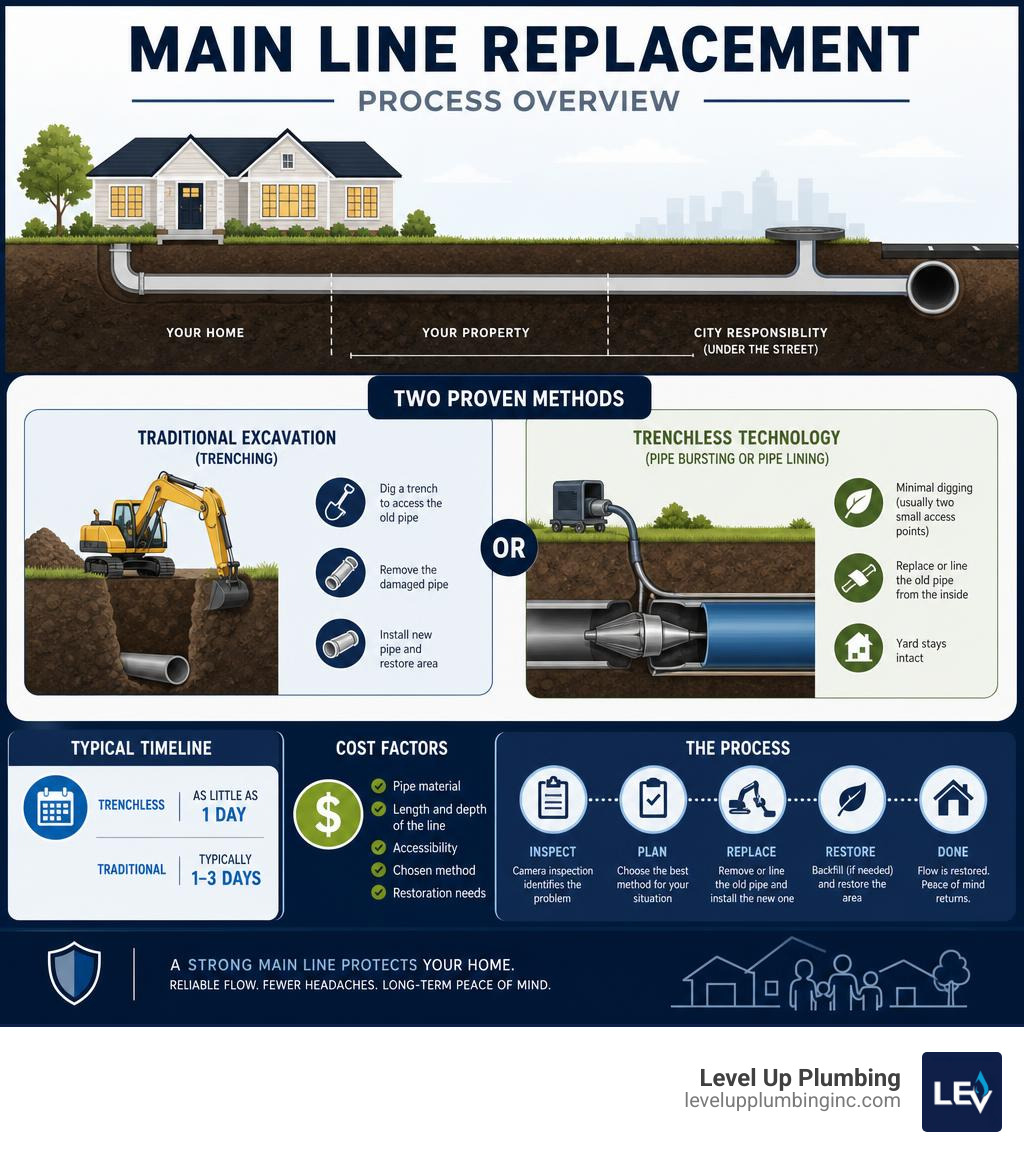
Main line replacement is the process of removing and installing a new primary pipe that carries waste or water between your home and the city sewer or water supply.
Here’s a quick snapshot of what you need to know:
- What it is: Replacing the main sewer line (sewer lateral) or main water line running from your house to the street
- Why it matters: A failing main line can cause sewage backups, water damage, and serious health hazards
- Two main methods: Traditional excavation (trenching) or trenchless technology (pipe bursting or pipe lining)
- How long it takes: As little as one day for trenchless; typically 1–3 days for traditional methods
- Who’s responsible: Homeowners are generally responsible for the pipe on their property; the city owns what’s under the street
- Common warning signs: Slow drains throughout the house, gurgling toilets, wet spots in the yard, discolored water, or a sudden spike in your water bill
Most homeowners don’t think about their main line — until something goes wrong.
And when it does go wrong, it can go very wrong. Sewage backing up into your home. Soggy patches appearing in your yard for no reason. Water pressure that keeps dropping no matter what you try.
The main line is the single most important pipe in your home’s plumbing system. Everything flows through it. When it fails, your entire plumbing system fails with it.
The good news? Modern replacement methods — especially trenchless technology — have made this process faster and far less disruptive than it used to be. In many cases, the job is done in a single day with little to no damage to your yard or driveway.
This guide walks you through everything: how to spot the warning signs, which replacement method fits your situation, what it all costs, and how to find a plumber you can actually trust.
Signs You Need a Main Line Replacement
Because your main line is buried deep underground, you cannot simply look at it to see if it is cracked, corroded, or collapsing. However, your home will drop plenty of hints when things start to go downhill.
Recognizing these signs early can save you from a catastrophic backup that floods your home with raw sewage.

Here are the most common indicators that your main line is in trouble:
- Slow Drains Throughout the House: If a single sink is draining slowly, it is likely a localized clog. But if your kitchen sink, shower, and guest bathroom are all draining at a snail’s pace simultaneously, the blockage is deep in your main sewer line.
- Gurgling Toilets: When you run water in the bathroom sink or washing machine, do your toilets bubble or make a strange gurgling sound? This happens because air is trapped in the drain system, a classic sign of a choked main line.
- Water Pooling in the Yard: Unless it rained recently, a soggy, marshy patch of grass in your yard is a major red flag. If it smells bad, you are likely dealing with a leaking sewer lateral. If the water is clean and odorless, your main water line may have cracked.
- Lush, Green Spots in the Grass: Is one specific patch of your lawn growing faster and looking significantly greener than the rest? Sewage acts as an accidental fertilizer. While your grass might love it, your foundation certainly won’t.
- Discolored Water or Low Water Pressure: If your water looks rusty, brown, or has a metallic taste, your main water line may be corroding. A sudden drop in water pressure also points to a major leak underground.
- Frequent Backups: If you have to call a plumber to clear your drains every few months, you are only treating the symptoms of a much larger issue.
When these warning signs pop up, we recommend scheduling a professional camera inspection immediately. A high-definition camera threaded through your pipes will show us exactly what is happening down there—whether it is simple root intrusion that can be cleared with standard drain cleaning or a collapsed pipe requiring a full Main Line Replacement.
Traditional vs. Trenchless Main Line Replacement
If our camera inspection reveals that your pipe is beyond repair, it is time to choose a replacement method. Historically, this meant bringing in heavy excavators to dig up your entire yard. Today, we have much cleaner, faster alternatives.
| Feature | Traditional Excavation | Trenchless Technology |
|---|---|---|
| Digging Required | Deep, continuous trench along the entire pipe | Minimal (usually just two small access pits) |
| Landscaping Impact | High (destroys lawns, driveways, and patios) | Extremely low (preserves your yard and hardscaping) |
| Average Timeline | 3 to 5 days | 1 to 2 days (often completed in a single day) |
| Equipment Used | Backhoes, excavators, shovels | Pipe bursting heads, hydraulic pullers, epoxy liners |
| Pipe Longevity | 50 to 100 years (using modern PVC) | 50 to 100 years (using seamless HDPE or epoxy) |
Traditional Excavation for Main Line Replacement
Traditional excavation is the time-tested method of Main Line Replacement. It involves digging a continuous trench directly above your existing pipe to physically remove the old line and lay down a new one.
While it may sound outdated, traditional trenching is still necessary in certain scenarios:
- Collapsed Pipes: If a section of your pipe has completely collapsed or “bellied” (sagged deeply due to soil shifting), trenchless equipment cannot pass through it.
- Severe Obstructions: Heavy rock formations, massive root masses, or utility lines crossing directly through the pipe path may require manual excavation.
- Extreme Depth: Pipes buried exceptionally deep beneath the ground sometimes require specialized trenching to ensure the soil is safely shored up during installation.
The primary drawback of this method is the destruction of your property. If your main line runs directly beneath a mature oak tree, a custom-paved driveway, or a beautiful backyard patio, traditional excavation will tear those elements apart, resulting in high restoration costs.
Trenchless Technology for Main Line Replacement
Trenchless technology is a modern plumbing miracle. Instead of digging up your entire yard, we use specialized machinery to replace your pipes from the inside out.
There are two primary trenchless methods used for a Main Line Replacement:
- Pipe Bursting: We dig two small access pits at either end of the line. A heavy steel bursting head is pulled through your old pipe using a hydraulic winch. As it travels, it shatters the old, damaged pipe (whether it is clay, cast iron, or old Orangeburg) and pushes the pieces into the surrounding soil. Simultaneously, it pulls a brand-new, seamless High-Density Polyethylene (HDPE) pipe behind it.
- Pipe Lining (CIPP): Also known as Cured-in-Place Pipe lining, this method involves inserting a flexible, resin-saturated felt tube into your existing pipe. Once in place, we inflate the liner, which presses tightly against the inner walls of the old pipe. We then cure the resin using heat or UV light. Within hours, the resin hardens into a smooth, seamless, jointless “pipe within a pipe” that tree roots cannot penetrate.
Because we do not have to spend days digging and backfilling a massive trench, trenchless projects are incredibly efficient. If you are looking for a fast, clean Main Line Replacement in Cypress, choosing a team experienced in trenchless main line replacement in Cypress is the best way to protect your lawn, driveway, and sanity.
Cost Factors and Pipe Materials
Every home is unique, which means no two main line projects are identical. Several key factors influence the overall investment required to replace your water or sewer line.
Key Cost Factors
- Length and Depth of the Pipe: Naturally, a longer run of pipe requires more materials and labor. Furthermore, deeper pipes require more extensive excavation and safety equipment, which increases the project’s complexity.
- Replacement Method: While trenchless methods utilize highly specialized, expensive machinery, they often save you a fortune in post-project landscaping, driveway, and patio repairs. Traditional trenching may seem simpler upfront, but the cost of putting your yard back together can quickly add up.
- Labor and Location: Labor rates vary by region, and working in tight urban environments with lots of underground utility lines requires extra care and time.
- Obstructions: If we have to navigate around concrete slabs, retaining walls, or heavy tree roots, the project timeline will extend.
Common Pipe Materials
The material you choose for your new main line plays a massive role in its durability and performance:
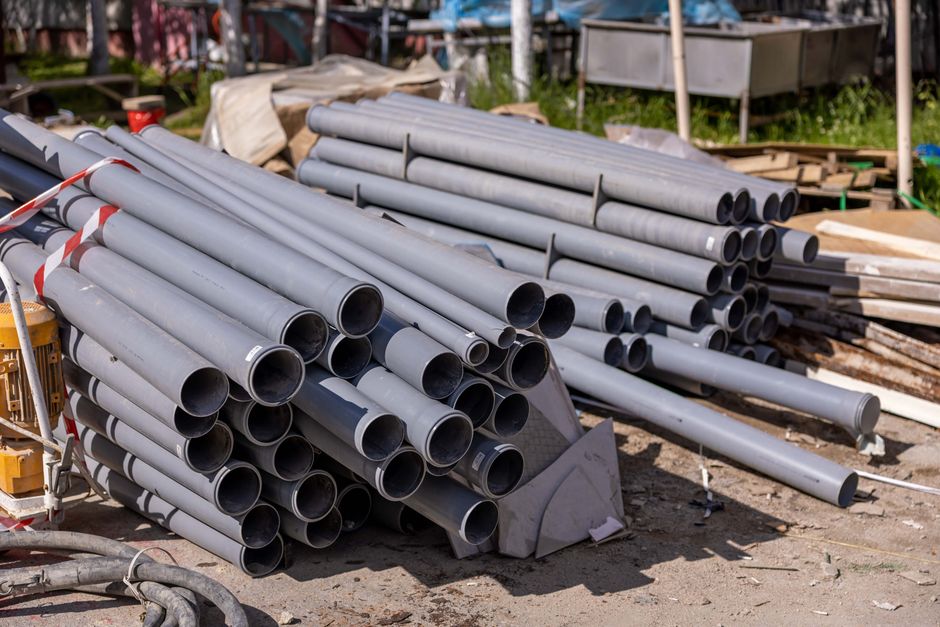
- PVC (Polyvinyl Chloride) & ABS: These are the modern industry standards for sewer lines. They are lightweight, highly resistant to chemical corrosion, and incredibly smooth, which prevents clogs. Best of all, PVC pipes can easily last over 100 years.
- PEX (Cross-linked Polyethylene): Frequently used for water main lines, PEX is highly flexible, resistant to scale and chlorine, and does not transfer heat as quickly as metal, making it incredibly energy-efficient.
- Copper: The gold standard for water supply lines. Copper is naturally antibacterial, highly durable, and resistant to leaks, though it is a more premium option compared to plastic alternatives.
- Cast Iron: While older homes are filled with failing cast iron, modern cast iron is occasionally used in specific commercial applications where soundproofing or extreme structural strength is required. However, it is prone to rusting over many decades.
During a Main Line Replacement, it is also highly recommended to evaluate your main shut-off valve. If your existing valve is old, rusty, or difficult to turn, replacing it while the main line is already exposed is a smart, proactive move that ensures you can easily shut off your water in a future emergency.
Ownership, Permits, and Additional Expenses
One of the most confusing aspects of a Main Line Replacement is figuring out who actually owns the damaged pipe.
As a general rule of thumb: if the pipe is on your property, you own it.
For sewer lines, this means you are responsible for the “sewer lateral”—the pipe that runs from your home’s foundation all the way to the connection point at the city main (which often sits under the street or sidewalk). Even though a portion of this pipe may run under public property, many municipalities require the homeowner to maintain and replace it.
For example, if you live in Huntington Beach, the local Huntington Beach Sewer Lateral Program outlines specific regulations, grants, and responsibilities regarding how residential sewer laterals must be maintained and inspected.
Permits, Inspections, and Extra Costs
Because main lines carry potable water and biohazardous waste, you cannot simply dig a hole and replace them on your own. You must budget for several administrative and environmental steps:
- Permits: Local building departments require plumbing permits before work begins to ensure all installations meet strict local safety and environmental codes.
- Inspections: Once the new pipe is laid but before the trench is backfilled, a city inspector must visit your property to verify that the work complies with local building codes.
- Landscaping Restoration: If you opted for traditional trenching, you will need to budget for replacing ruined sod, replanting bushes, or repaving sections of your driveway.
- Utility Locating: Before any shovel hits the dirt, we must coordinate with local utility companies to mark gas, electric, and fiber-optic lines to avoid dangerous accidental cuts.
Frequently Asked Questions
Navigating a major plumbing project can bring up a lot of questions. Here are the answers to the most common concerns we hear from homeowners.
When is it better to repair a main line instead of replacing it?
Replacing an entire main line is a significant project, so we always explore repair options first. A repair is usually the better choice if:
- The damage is highly localized (e.g., a single tree root punctured one specific joint, but the rest of the pipe is in pristine condition).
- The pipe material is modern and otherwise structurally sound (like relatively new PVC).
- The pipe is not sagging, bellied, or completely collapsed.
If your pipe is structurally strong but simply choked with grease, scale, or minor root intrusion, we can often restore it to like-new condition using high-pressure hydro jetting rather than replacing the whole line. However, if your pipes are made of outdated materials like clay or Orangeburg, or if they are past their expected lifespan, a full replacement is the only permanent solution.
How long does a typical main line replacement take?
The timeline depends heavily on the replacement method:
- Trenchless Replacement: Usually takes just one day. Because there is minimal digging, we can pull the new pipe through and have your water and sewer services back up and running by the time you get home from work.
- Traditional Excavation: Typically takes 1 to 3 days. Digging a deep trench, carefully navigating around underground obstacles, laying the pipe, getting a city inspection, and backfilling the soil takes time.
- Street Excavation Delays: If your pipe damage extends under the public street or sidewalk, we must secure special city permits, set up traffic control, and coordinate with municipal inspectors. This can extend the project timeline to 4 to 5 days.
How can I find a qualified plumber and get a fair price?
A Main Line Replacement is not a job for a handyman or a DIY weekend project. To ensure the job is done safely and legally, look for a plumbing partner who offers:
- Proper Licensing and Insurance: Never work with a contractor who cannot immediately provide proof of their active plumbing license and liability insurance.
- Local Expertise: Local plumbers understand the specific soil conditions (like shifting clay), local building codes, and permit processes in your specific city.
- Advanced Diagnostics: A reputable plumber will always perform a thorough camera inspection to show you the damage before asking you to sign a contract.
- Detailed, Transparent Written Estimates: Avoid vague verbal quotes. Ensure your estimate breaks down the cost of permits, materials, labor, and cleanup.
Conclusion
Dealing with a failing main water or sewer line can feel overwhelming, but you do not have to navigate it alone. Understanding your options—and acting quickly at the first sign of trouble—can prevent a minor leak from turning into a major property disaster.
At Level Up Plumbing, we bring over 21 years of local Orange County expertise, a woman-owned perspective, and award-winning customer service to every single job. Whether you need a quick camera inspection or a complete trenchless overhaul, our team is dedicated to providing clean, efficient, and stress-free plumbing solutions.
If you suspect your main line is struggling, do not wait for a backup to disrupt your life. Schedule your main line replacement today and let our family take care of yours!