
Why Sump Pump Installation Matters in Huntington Park
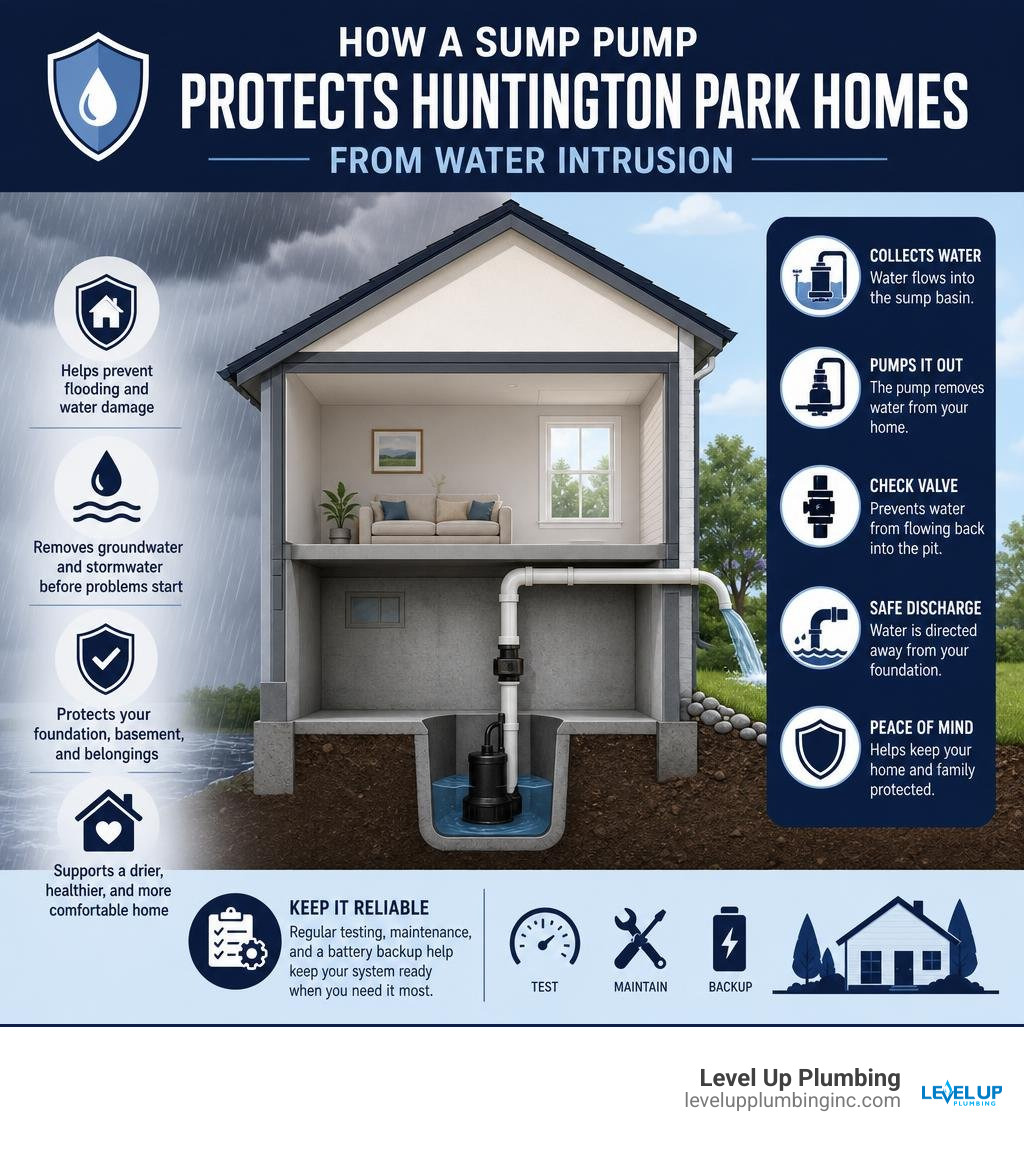
Sump pump installation Huntington Park helps move unwanted groundwater and stormwater away from vulnerable areas of a property before it can cause flooding, moisture damage, or mold concerns. A properly selected and professionally installed system can protect a basement, crawlspace, low-lying room, or other area where water collects during heavy rain or drainage problems.
For a quick answer, a reliable sump pump system should include:
- A correctly sized pump and basin for the property’s water volume.
- A safe discharge line that carries water away from the foundation.
- A check valve to prevent pumped water from flowing back into the pit.
- Professional plumbing and electrical connections.
- Routine testing and maintenance, plus a battery backup where power outages are a concern.
Sump pumps are not only for homes with full basements. In Southern California, they can also support crawlspace moisture control, protect low areas near foundations, and help manage water where site drainage is limited. The right setup depends on the property, its drainage conditions, the pump’s lift height, and how much water may enter the sump pit.
I am Tiffany Miley, owner and president of Level Up Plumbing, with more than 21 years of experience in Southern California trades and service industries. My background helps me approach sump pump installation Huntington Park with clear communication, practical system recommendations, and attention to the plumbing details that protect a home over time.
Basic sump pump installation Huntington Park terms:
- pipe replacement huntington park
- faucet replacement huntington park
- low water pressure huntington park
Sump Pump Installation Huntington Park: Benefits and System Selection
When intense rainstorms roll through Southern California, ground saturation can happen rapidly. Properties with low elevation, sub-grade spaces, or poor natural soil drainage can experience pooling water against foundation walls. Investing in expert sump pump installation Huntington Park offers long-term protection that safeguards your home’s structural integrity, preserves indoor air quality, and protects your property value.
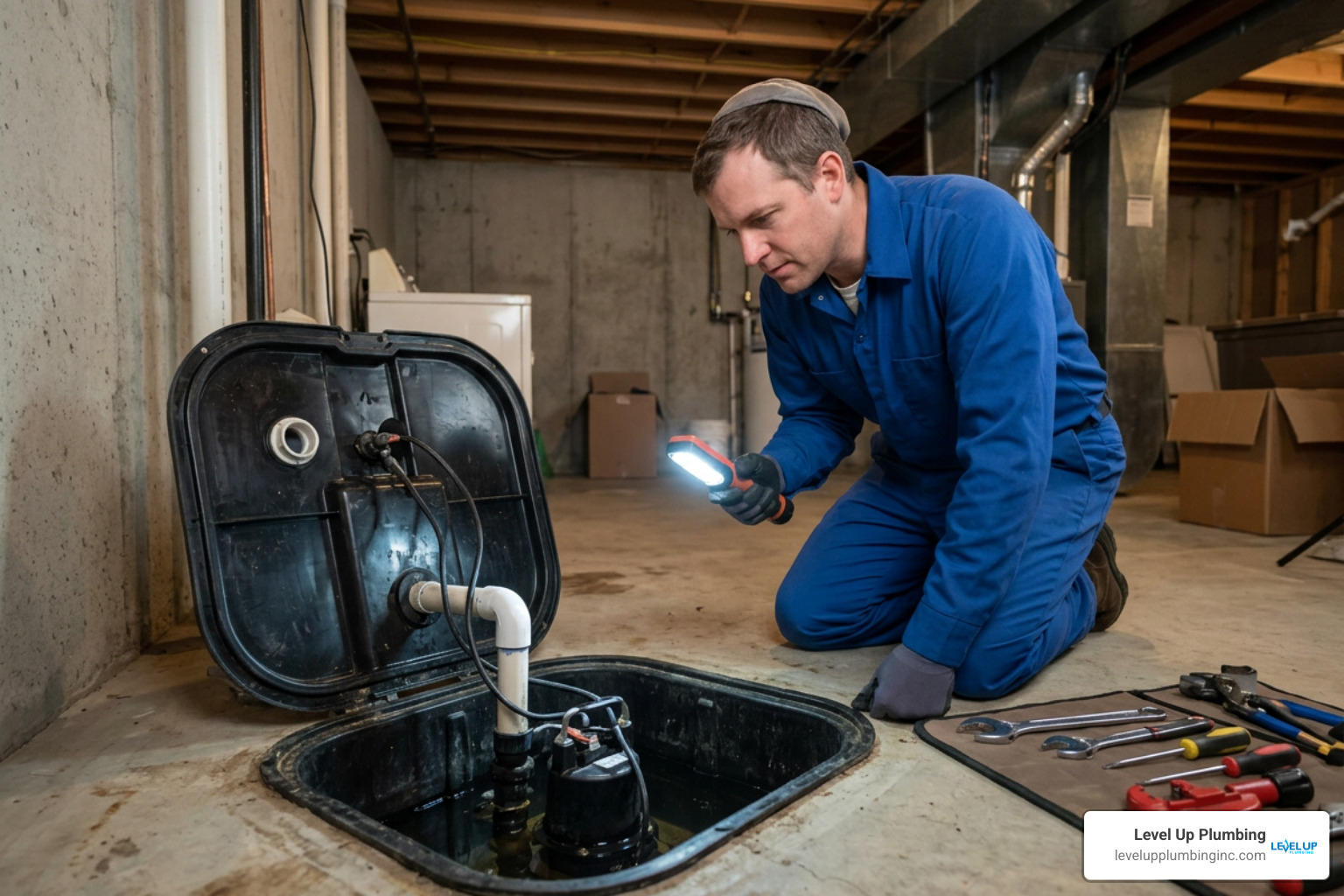
Choosing a professional setup ensures that every mechanical component meets local building codes and regional drainage standards. Professional installation guarantees:
- Proper Hydraulic Sizing: A pump that is underpowered will run continuously during severe storms, risking motor burnout and basement flooding. Conversely, an oversized pump will short-cycle—turning on and off rapidly—which accelerates mechanical wear.
- Code Compliance and Safety: Correct installation of dedicated GFCI electrical circuits and properly routed PVC discharge piping keeps your system safe from short circuits and backflow issues.
- Structural Protection: Ground water pressure surrounding your home’s concrete footings can lead to foundation cracks, slab damage, and basement seepage. Sump systems relieve this hydrostatic pressure by giving groundwater a controlled escape route.
- Moisture and Mold Control: Excess moisture trapped in sub-grade spaces leads to damp air, organic decay, and dangerous mold spore growth. Continuous moisture extraction maintains healthy humidity levels.
By partnering with a licensed plumber, you gain access to decades of field expertise, premium equipment options, and precise installation practices tailored specifically to Southern California soil and precipitation conditions.
Types of Sump Pumps: Submersible vs Pedestal
When selecting a system, the primary hardware choice comes down to two major designs: submersible pumps and pedestal pumps. Both serve the goal of removing excess water, but they operate differently and fit distinct home environments.
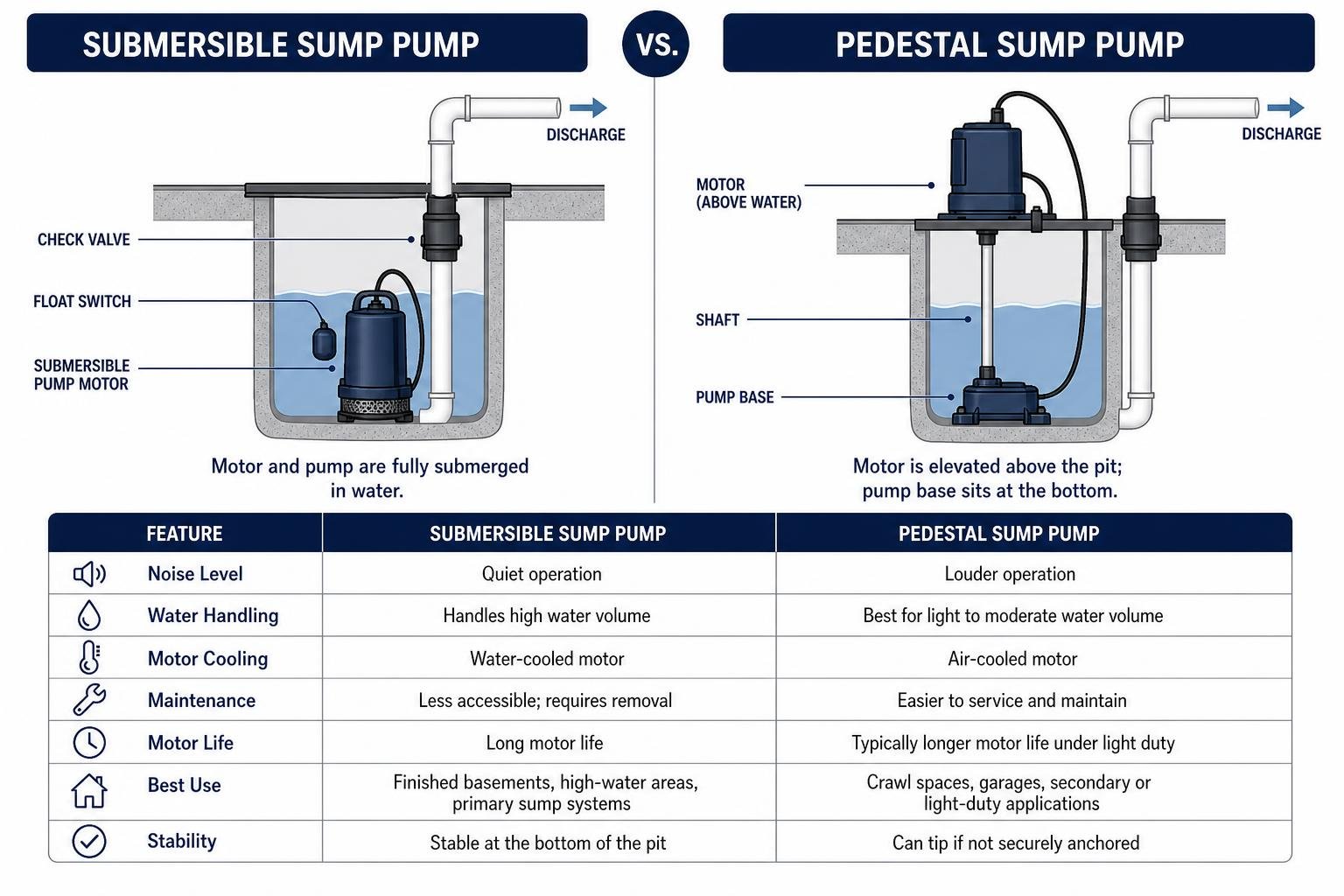
- Submersible Sump Pumps: In a submersible setup, the pump motor and impeller are housed within a sealed waterproof casing. The entire unit sits inside the sump pit, fully submerged in water during operation. Water acts as a natural coolant for the motor, allowing submersible units to handle high volume and operate with minimal noise. They are the standard recommendation for living spaces, finished basements, and high-water-volume areas.
- Pedestal Sump Pumps: Pedestal units feature an elevated motor mounted on a shaft above the pit, while the pump base sits at the bottom of the basin. Because the motor remains above water level, these units are easier to service and typically feature longer motor lifespans under light duty. However, they operate noticeably louder and are prone to tipping if not securely anchored in a narrow basin.
| Feature | Submersible Sump Pump | Pedestal Sump Pump |
|---|---|---|
| Motor Location | Bottom of sump basin (submerged) | Top of shaft above the pit (dry) |
| Noise Level | Very quiet (water dampens sound) | Moderately loud motor operation |
| Lifespan | 7 to 10+ years | 10 to 15 years |
| Cooling Method | Water-cooled design | Air-cooled design |
| Pit Requirement | Deep, wide sump pit required | Works in shallow or narrow pits |
| Best For | Heavy rainfall, finished basements | Light groundwater, tight spaces |
Choosing the Right Pump for Your Property
Selecting the ideal pump requires calculating key performance variables so the system can clear water faster than storm conditions can accumulate it.
- Basin Capacity: Pit dimensions must support the required water volume while giving float switches free room to move up and down without catching on pit walls or power cords.
- Discharge Head Height: This refers to the vertical distance the pump must push water up from the bottom of the pit to the highest point of the discharge line, plus friction loss in the piping. Higher vertical lift requires a motor with greater horsepower.
- Flow Rate (Gallons Per Hour – GPH): Sump pumps are rated by GPH at specific head heights. A standard residential home typically requires a pump capable of moving 2,000 to 3,500 GPH at a 10-foot head height.
- Float Switch Mechanics: Vertical float switches are reliable in small, confined basins because they move strictly up and down on a track. Tethered float switches swing in an arc and suit larger basins, providing longer pumping cycles.
Understanding these technical requirements ensures your property remains protected during seasonal rainfall events. For additional property maintenance solutions, explore our comprehensive residential plumbing services and general service offerings.
The Professional Sump Pump Installation and Replacement Process
A proper installation process requires technical skill, appropriate tools, and precise plumbing techniques to guarantee that water moves away from your property safely.
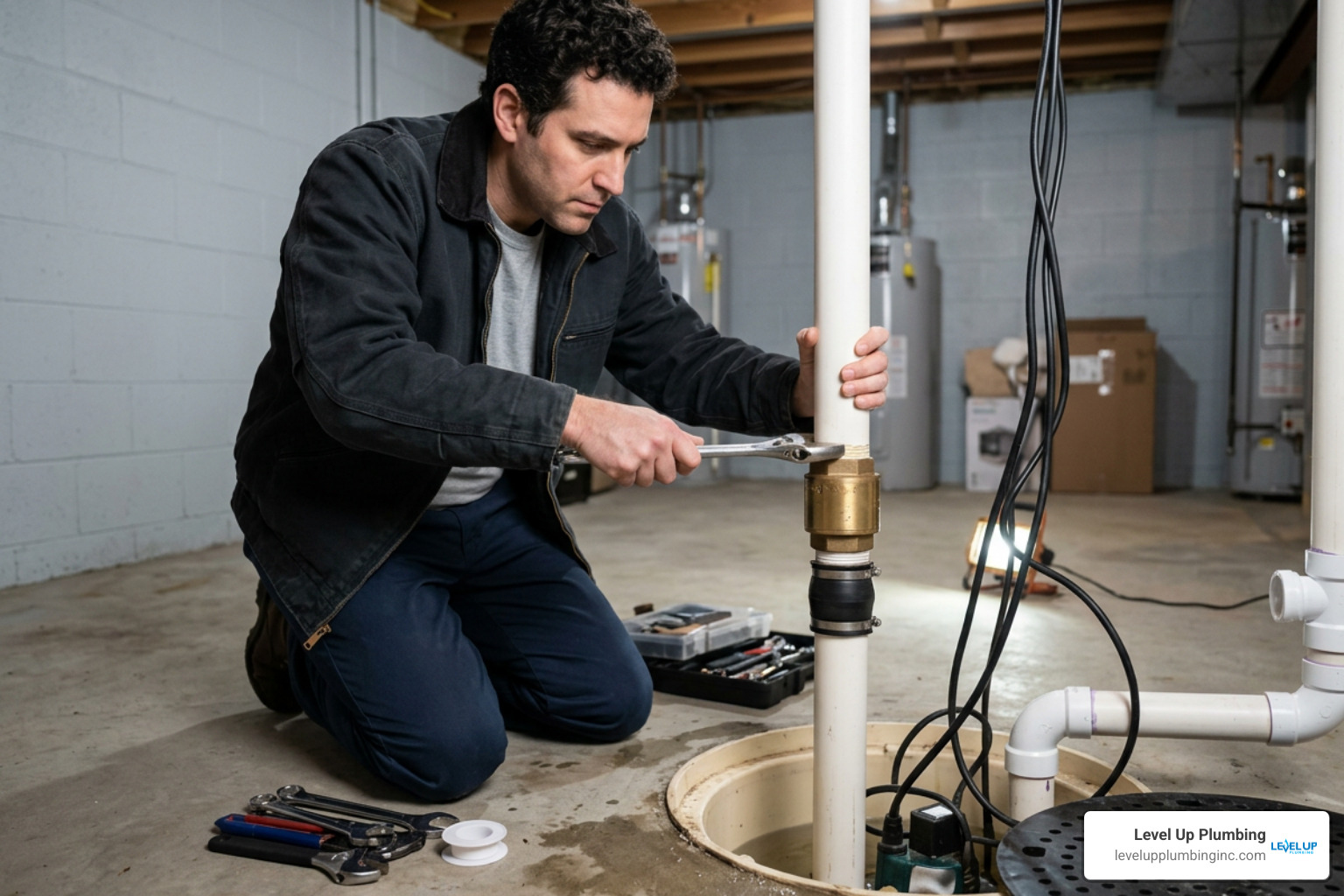
The process begins with evaluating site drainage, locating the lowest point in your foundation or crawlspace, and outlining the exact discharge path. Once the location is confirmed, physical excavation begins:
- Pit Excavation: Plumbers excavate a hole in the concrete floor or earth basin that is deep and wide enough to house a durable basin liner surrounded by aggregate drainage material.
- Basin Setting: A perforated poly basin liner is leveled within the excavation pit. Surrounding the exterior with clean pea gravel allows groundwater to filter into the basin smoothly without silt entering the pit.
- Check Valve Installation: A heavy-duty inline check valve is installed on the vertical discharge pipe directly above the pump. This simple valve allows water to pump out, but closes immediately when the pump stops, preventing water in the pipe from flowing back into the basin.
- Discharge Piping: High-grade rigid PVC schedule 40 pipe is connected to the discharge outlet. To protect your home’s foundation, discharge lines are run through exterior walls or routed outdoors into specialized drainage systems. For detailed advice on structural piping practices, review our guide on how to master pipe replacement in Huntington Park.
Key Steps in Installing a Primary Dewatering Pump
Once the excavation and rough-in work are completed, the primary dewatering assembly is assembled and calibrated.
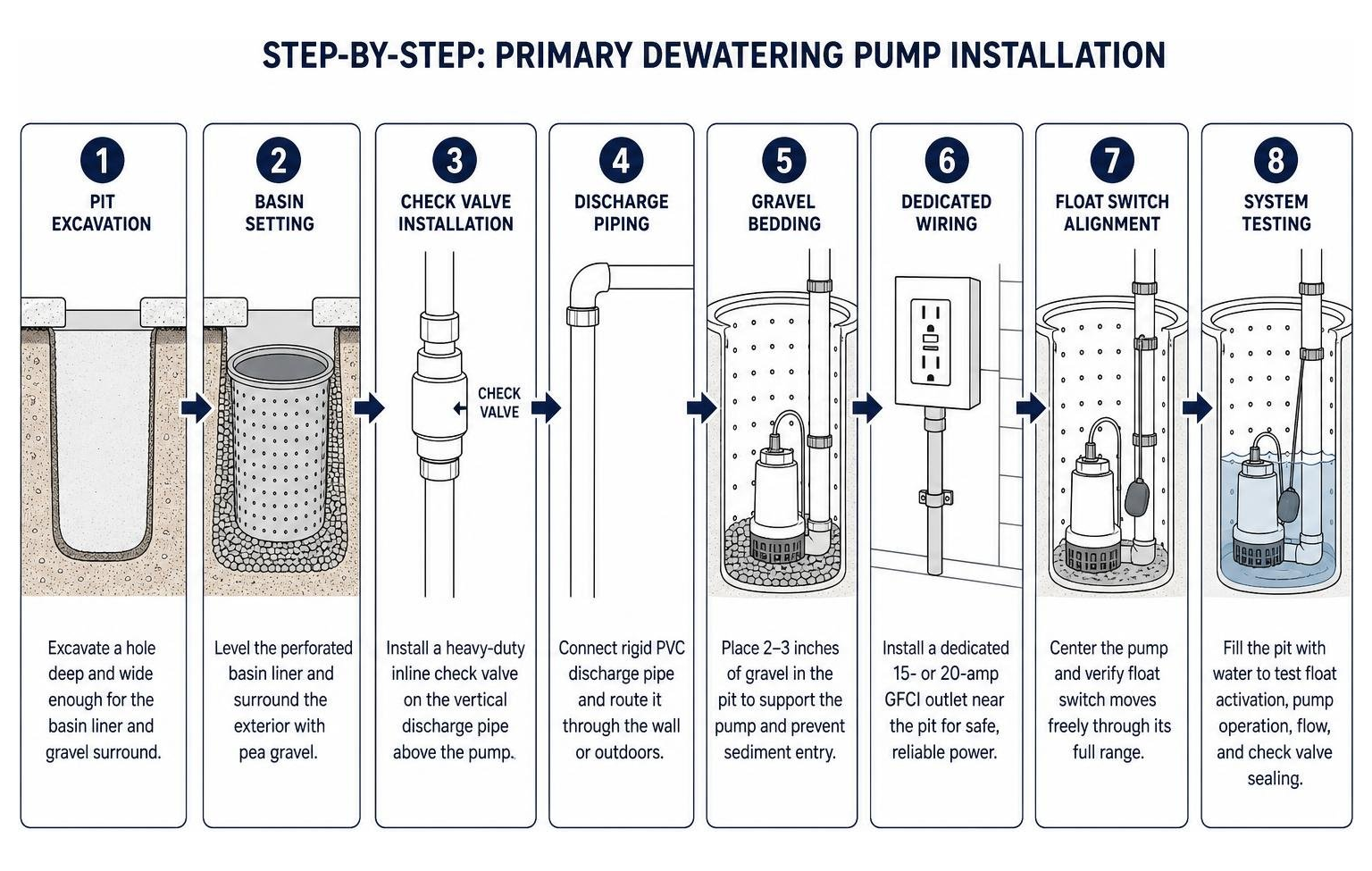
- Gravel Bedding: Placing a 2- to 3-inch gravel base inside the pit supports the weight of the pump, lifts it above settling sediment, and prevents debris from entering the intake screen.
- Dedicated Circuit Wiring: Primary sump pumps require a dedicated 15- or 20-amp GFCI electrical outlet installed near the pit to prevent circuit overloads during continuous pumping cycles.
- Float Switch Alignment: The pump is centered within the basin to verify that float switches operate freely throughout their vertical stroke without rubbing against basin walls.
- System Testing: The pit is manually filled with water to test automatic float activation, pump start, discharge flow rate, and check valve sealing.
Integrating Battery Backup Systems for Storm Protection
Severe atmospheric river storms and heavy rain in Southern California are frequently accompanied by municipal power outages. When high winds or grid failures disrupt electrical service, a primary AC sump pump cannot operate.
Integrating a secondary DC battery backup pump system provides essential redundancy. A dual-pump setup features a secondary, independent pump mounted slightly higher in the pit alongside the primary pump. It operates off a heavy-duty deep-cycle marine battery and includes an smart charger module.
If main power drops out, or if excessive water flow overwhelms the primary pump, the secondary float switch triggers the battery backup pump automatically. This continuous protection ensures your crawlspace or basement remains dry even during multi-day severe weather events.
System Diagnostics, Emergency Services, and Routine Maintenance
Mechanical systems require ongoing care to remain dependable when heavy weather strikes. Having access to responsive, 24/7 emergency response gives homeowners total peace of mind during emergency flooding scenarios.
Whether dealing with sudden pump failure, severe plumbing leaks, or overflow conditions, quick intervention limits structural property damage. If you face unexpected water intrusion elsewhere in your property, read our quick guide on how to fix leaks quickly and safely or consult our guide on how to find kitchen sink unclogging services fast.
Key Signs You Need Sump Pump Installation Huntington Park
Sump pumps rarely fail without giving early warning signs. Identifying these indicators allows you to schedule maintenance or unit replacement before a storm leads to standing water:
- Strange Noises: Grinding, rattling, or loud thumping sounds usually point to damaged impellers, worn motor bearings, or a jammed intake screen.
- Frequent Short Cycling: If your pump turns on and off every few seconds, the float switch may be miscalibrated, the check valve may be failing, or the unit may be drastically oversized for the pit volume.
- System Age Exceeding 10 Years: Most residential sump pumps operate reliably for 7 to 10 years. Continuous exposure to moisture slowly degrades internal electrical seals and motor coils.
- Visible Rust and Corrosion: Accumulations of iron bacteria or rust on the pump casing can bind moving parts and clog discharge lines.
- Failure to Start During Rain: If water rises in the basin without the pump activating, the switch, power outlet, or motor windings have likely suffered failure.
Maintenance Schedule for Long-Term Reliability
Routine preventive maintenance guarantees your dewatering infrastructure remains ready for action year-round.
Follow this standard maintenance schedule:
- Quarterly Float Testing: Pour a bucket of water directly into the pit every three months to verify that the float switch lifts smoothly, triggers the motor, and pumps water down quickly.
- Annual Basin Cleaning: Disconnect power, remove the pump from the basin, and scoop out accumulated silt, gravel, or debris. Clean the pump intake screen with a stiff brush.
- Backup Battery Voltage Checks: Test battery fluid levels and check voltage readings on backup power units twice per year to ensure full charge retention.
- Check Valve and Pipe Inspection: Inspect all discharge pipe connections and test check valve operation to confirm water does not stream back into the basin when the motor shuts off.
Maintaining your drainage infrastructure pairs naturally with caring for other major home systems, including your home’s water heaters, overall water supply, and fixtures. If your home experiences low water flow throughout your plumbing fixtures during routine care, check our helpful tips on how to fix low water pressure fast.
Cost Factors for Sump Pump Installation Huntington Park
Understanding the core variables that affect installation and replacement expenses helps homeowners plan projects effectively.
Investment levels vary based on several property specifications:
- Equipment Selection: Heavy-duty cast-iron submersible pumps with solid-state switches cost more than lightweight plastic pedestal units, but offer superior performance and longevity.
- Electrical Infrastructure: Installing a fresh dedicated 20-amp GFCI circuit through an electrician requires additional labor and materials compared to connecting to an existing code-compliant outlet.
- Excavation Work: Cutting through existing concrete basement floor slabs to dig a brand-new sump pit demands heavy machinery, labor, and proper waste disposal, compared to replacing an existing unit in a pre-formed pit.
- Discharge Line Length: Long exterior discharge pipes requiring trenching, subterranean freeze guard lines, or core drilling through exterior masonry walls add complexity to the final project scope.
Breakdown of Replacement and Installation Costs
When budgeting for a dewatering system upgrade, costs fall into four primary categories:
- Primary Pump Equipment: Prices vary based on motor horsepower ratings, housing materials, and continuous duty specifications.
- Labor and Excavation: Covers professional trenching, pit digging, concrete cutting, gravel bedding placement, and precise system leveling.
- Electrical Upgrades: Direct wiring of dedicated electrical lines and safety GFCI receptacles.
- Battery Backup Add-ons: Dual-pump manifolds, deep-cycle marine batteries, smart charging modules, and high-water alarm systems.
How to Schedule Your Free Inspection and Estimate
Protecting your crawlspace or basement from seasonal water damage should never be stressful. Getting started begins with a clear evaluation of your home’s site conditions.
Our installation process starts with a complete property assessment. We examine your site layout, inspect foundation conditions, calculate required discharge head heights, and recommend the ideal pump setup for your goals. To learn more about disaster preparedness and water safety guidelines, homeowners can also reference official resources like FEMA flood safety guides.
When you are ready to explore system options, our team provides upfront consultation, transparent pricing estimates, and flexible scheduling. You can easily book an on-site consultation by visiting our contact page.
Frequently Asked Questions About Sump Pump Services
How often should a sump pump be serviced or replaced?
A residential sump pump should undergo a basic visual and operational test every three months, alongside a complete professional inspection once per year. During annual maintenance, plumbers clear pit sediment, clean the pump intake screen, test electrical draw, and evaluate check valve performance.
Most primary submersible pumps have a functional lifespan of 7 to 10 years, while well-maintained pedestal pumps can last up to 12 years. If your system is approaching a decade of service, proactive replacement prevents sudden failures during wet weather.
Do Huntington Park homes without basements need a sump pump?
Yes, many Southern California homes built on concrete slab foundations or with low-clearance crawlspaces benefit significantly from sump pump systems.
Low-lying properties often suffer from standing water in crawlspaces, which can saturate wooden floor joists, ruin insulation, promote mold growth, and attract pests. Installing a shallow crawlspace sump pump system, paired with French drain tile, keeps sub-floor spaces dry and stabilizes soil surrounding slab foundations.
How does a battery backup sump pump protect my home during storms?
A battery backup system serves as an independent emergency safeguard. It features a secondary DC-powered pump installed right alongside your primary pump in the sump basin, powered by a dedicated marine-grade battery charger system.
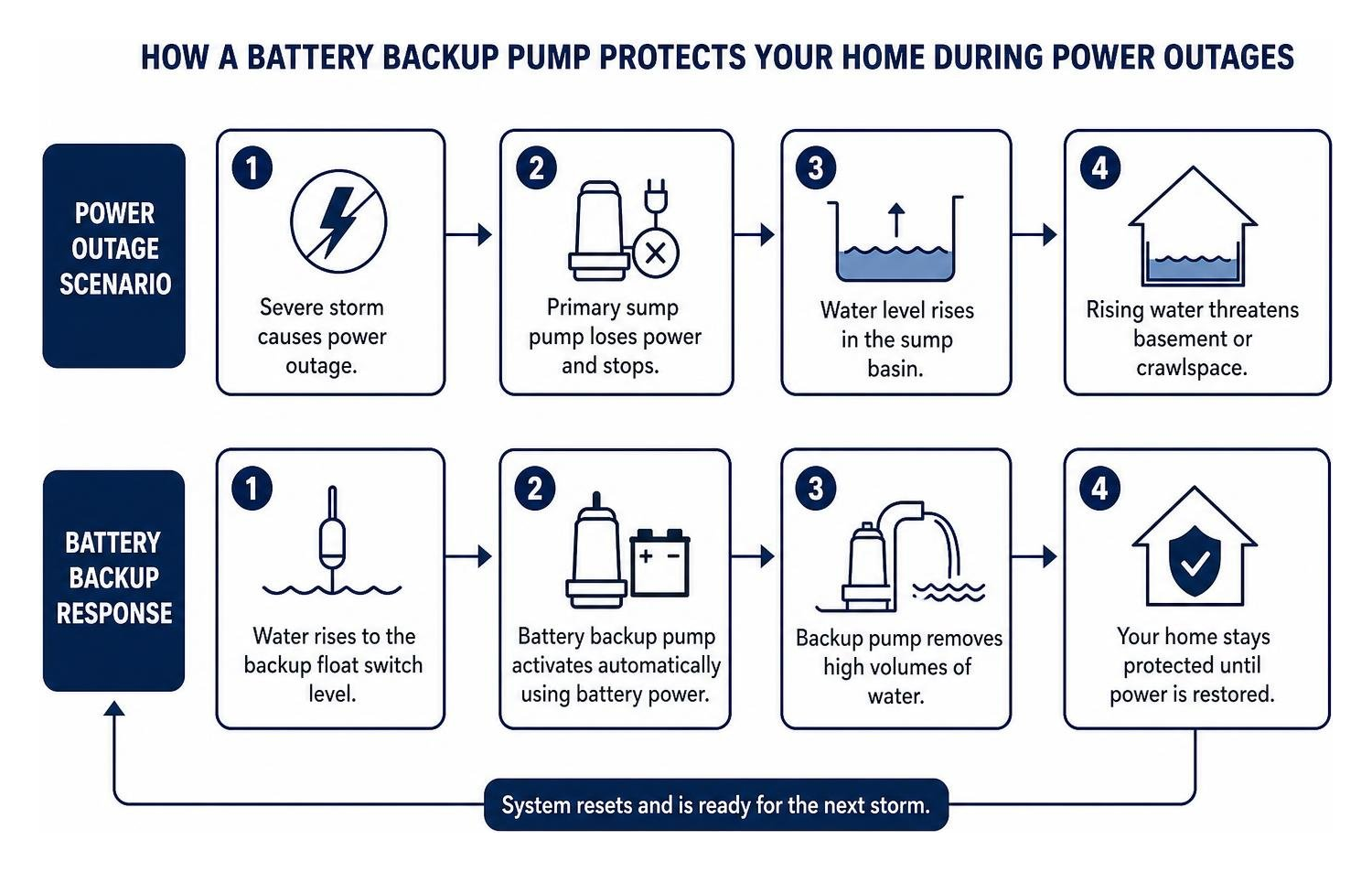
When severe weather causes a electrical power failure, or if an unexpected storm overwhelms your primary pump, the water level rises slightly to trigger the secondary float switch. The battery backup pump activates automatically, pumping away high volumes of storm water without requiring utility electricity.
Protect Your Home with Expert Sump Pump Solutions
Safeguarding your home against standing water, foundation damage, and excess moisture requires proven mechanical solutions and skilled craftsmanship. Whether you are installing a primary dewatering system in a crawlspace, replacing an aging pump, or adding a dual battery backup system for severe weather, selecting experienced local professionals makes all the difference.
Level Up Plumbing brings over 21 years of dedicated trade experience to every home plumbing project in Southern California. As a proudly woman-owned plumbing company, we focus on technical accuracy, clear communication, and award-winning customer care across all our service locations, including Cypress, Garden Grove, and Orange County.
From quick home repairs—like updating fixtures using our guide on how to replace your faucet in Huntington Park—to complex drainage installs, our team delivers long-term solutions tailored to your property.
Don’t wait for heavy rainfall to test your basement or crawlspace drainage. Take control of your home’s flood protection today. Schedule your expert sump pump service today with our skilled team!