
Is It Time to Repipe Your Orange County Home?
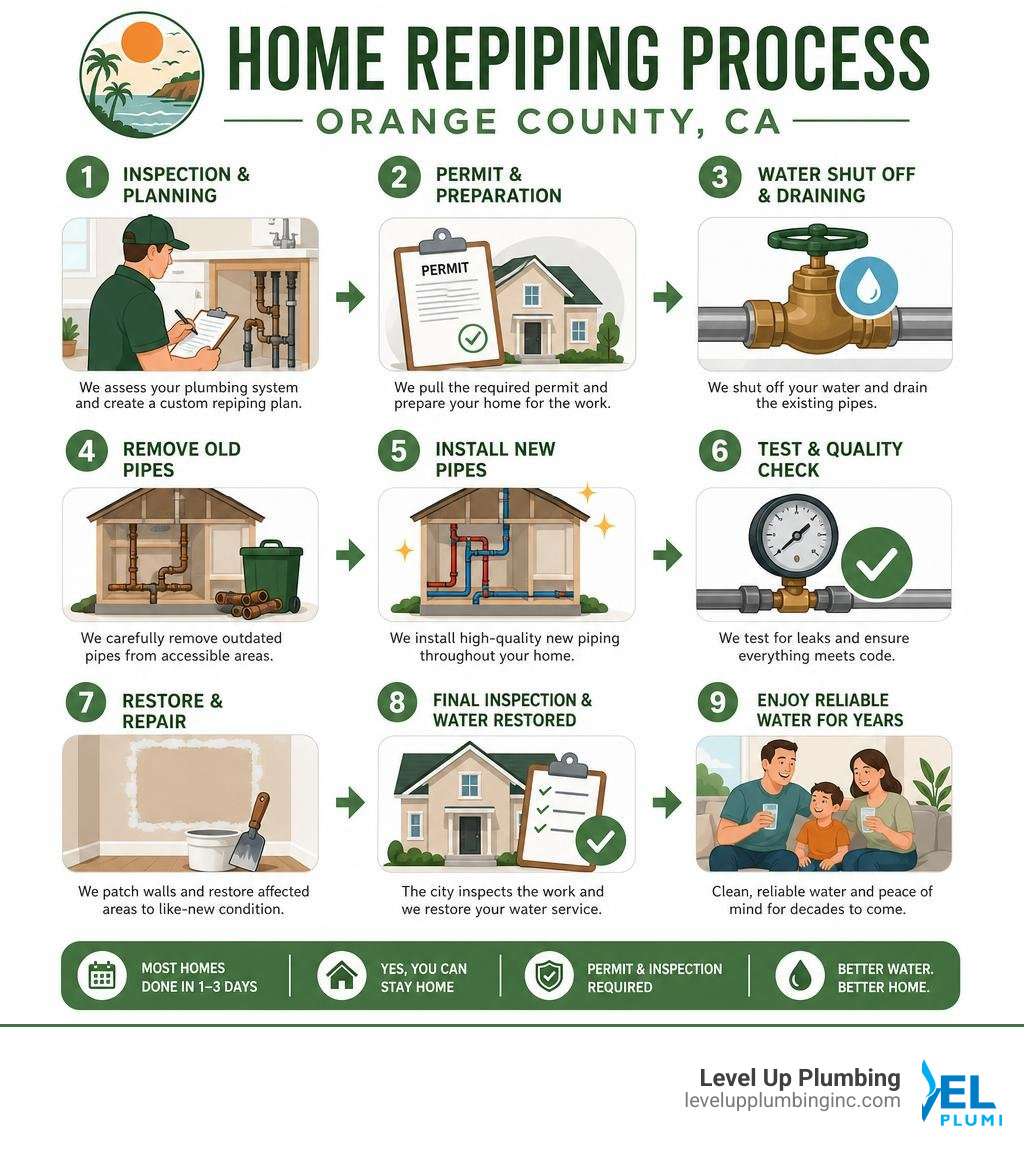
If you’re dealing with repiping in Orange County, CA, here’s what you need to know upfront:
- What it is: Replacing the water supply pipes running through your walls, attic, or slab with new PEX or copper piping
- Who needs it: Homeowners with pipes that are 40+ years old, recurring leaks, low water pressure, or rusty/discolored water
- How long it takes: Most homes are done in 1 to 3 days
- Materials: PEX-A or Type L copper are the two recommended options for Orange County homes
- Permits: Yes — all Orange County cities require a permit and city inspection
- Can you stay home? Yes — water is typically restored at the end of each workday
Orange County is one of the most beautiful places to live in California. But it also has some of the hardest water in the state — rated between 15 and 25 grains per gallon (GPG). That’s a problem if your home has copper, galvanized steel, or polybutylene pipes.
Hard water doesn’t just taste bad. It slowly destroys your pipes from the inside out. Minerals build up on pipe walls, narrowing the flow. Chloramines in the treated water supply accelerate pitting and corrosion. The result? Pinhole leaks. Rusty water. Pressure that drops the second you run two fixtures at once.
Sound familiar? You’re not alone. Thousands of Orange County homeowners face this exact situation every year — especially in homes built before 1990.
The good news: a whole-house repipe is a permanent fix. One project, and the problem is solved for decades.
I’m Tiffany Miley, owner of Level Up Plumbing, a Huntington Beach-based plumbing company with over 21 years of experience in Southern California’s trades — including repiping in Orange County, CA for homes across the region. In this guide, I’ll walk you through everything you need to make a confident, informed decision about your home’s plumbing.
repiping orange county ca helpful reading:
Guide to Repiping Orange County CA
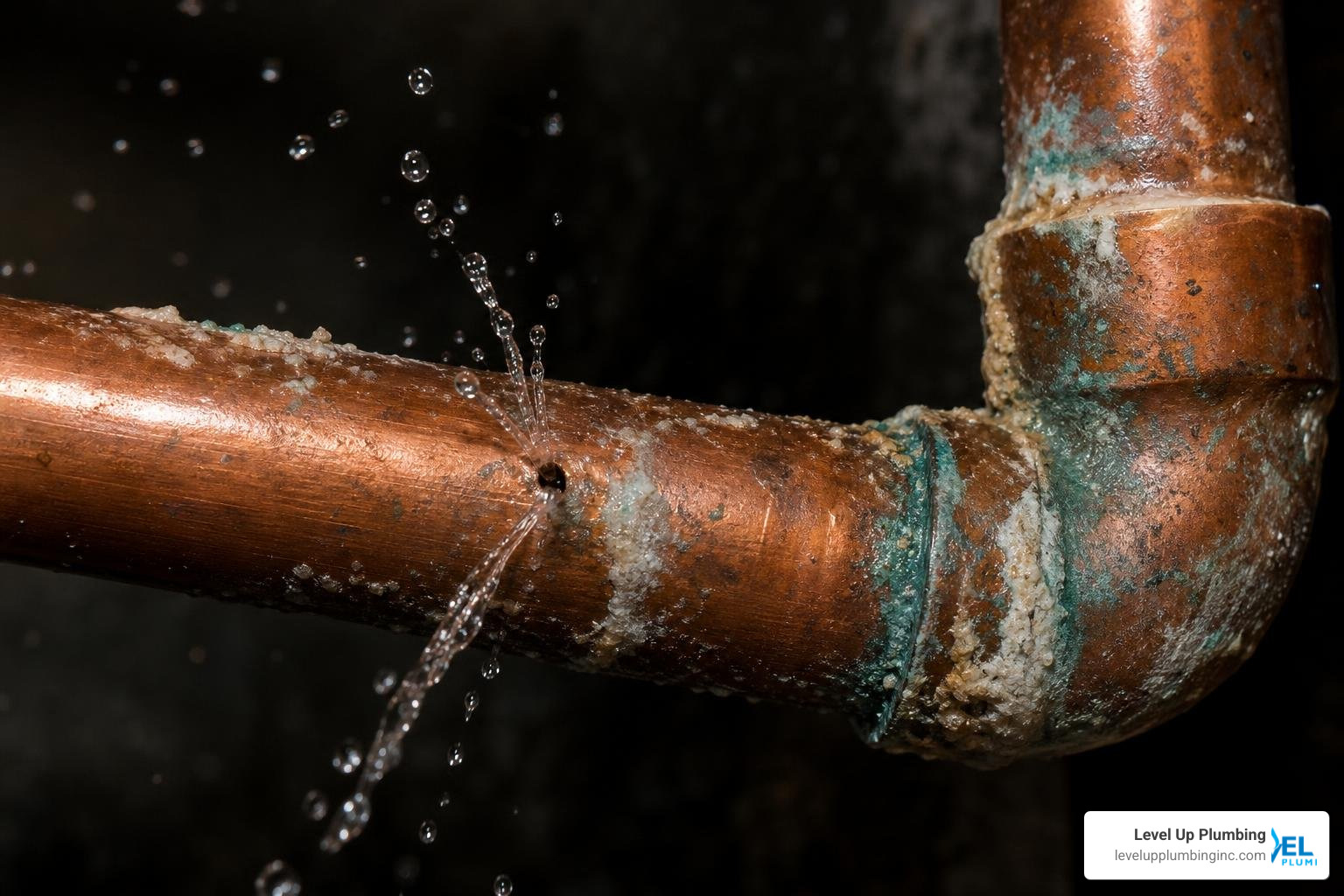
When your home’s plumbing system starts to fail, it can feel like you are playing an endless game of leak “whack-a-mole.” You patch one spot, only for another to burst a few months later. While a quick patch job works for an isolated accident, systemic pipe failure requires a comprehensive solution. If you are constantly worrying about when the next leak will strike, it is time to look into our residential page for a permanent whole-house repipe.
A whole-house repipe is the process of replacing your home’s entire hot and cold water supply network. We route completely new, modern pipes from your main water source to every sink, shower, toilet, and appliance in your home. This does not just prevent water damage; it completely restores your daily comfort, improves water pressure, and ensures your family has clean, clear water for decades to come.
Signs Your Home Needs a Whole-House Repipe
How do you know if your home is trying to tell you that its plumbing is on its last legs? Here are the most common warning signs we see across Orange County:
- Drastic Drops in Water Pressure: If your shower turns into a sad trickle the moment someone starts the dishwasher or flushes a toilet, your pipes are likely choked with mineral scale or internal rust.
- Rusty or Discolored Water: Do you see a brownish, yellowish, or reddish tint in your bathtub when you first turn on the tap? This is a classic sign of internal pipe oxidation.
- Recurring Pinhole Leaks: If you have had more than one pinhole leak or slab leak in the last year, your pipes have thinned to the point of systemic failure.
- Visible Corrosion (The “Green Crust”): Take a look at the exposed pipes in your garage, crawl space, or water heater closet. If you see a green, powdery buildup (calcification) or blue-green staining around the joints, your pipes are actively corroding.
- Skyrocketing Water Bills: An unexplained spike in your monthly water bill often points to a hidden leak beneath your slab or deep inside your walls.
By investing in a whole-house repipe, you will enjoy immediate water quality improvement, robust water pressure, and the invaluable peace of mind that your home is safe from catastrophic water damage.
Identifying Galvanized Steel and Polybutylene Pipes
The age of your home is the biggest indicator of what kind of pipes are hidden behind your drywall. If your home was built before 1970, it likely contains galvanized steel pipes. These pipes are silver-gray, magnetic, and notoriously rust from the inside out. Over 40 to 60+ years, they choke your water flow down to a fraction of its original capacity before eventually rusting through completely.
If your home was built between the late 1970s and the mid-1990s, you might have polybutylene piping. Polybutylene is a gray or blue flexible plastic pipe that was widely used because it was cheap and easy to install. However, the chloramines used to treat municipal water in Southern California react chemically with polybutylene, causing it to become brittle and crack from the inside out without warning. Insurance companies are increasingly refusing to renew or write policies for homes with polybutylene because of its incredibly high rate of sudden, catastrophic failure.
If you suspect you have these legacy materials, we recommend that you schedule a professional camera inspection with us to verify your pipe material and assess its condition before a major failure occurs.
Why Orange County Hard Water Causes Copper Pipe Failure
For decades, copper was considered the “gold standard” of residential plumbing. However, Orange County’s unique water chemistry is exceptionally harsh on copper.
Our local water features extremely high mineral levels (15 to 25 GPG) and is treated with chloramines for sanitation. This combination causes internal pitting and calcification in copper pipes. Hot water lines are particularly vulnerable; pinhole leaks almost always show up first on horizontal hot water runs in the attic where hot water sits, the pipe thins from the inside, and gravity does the rest. Over time, these chemical reactions eat through the copper walls, leading to the pinhole leaks that plague so many local neighborhoods.
PEX vs. Copper: Choosing the Right Material
When preparing for a whole-house repipe, one of the first decisions you will make is choosing between PEX and copper. Both are exceptional, code-approved materials, but they function very differently.
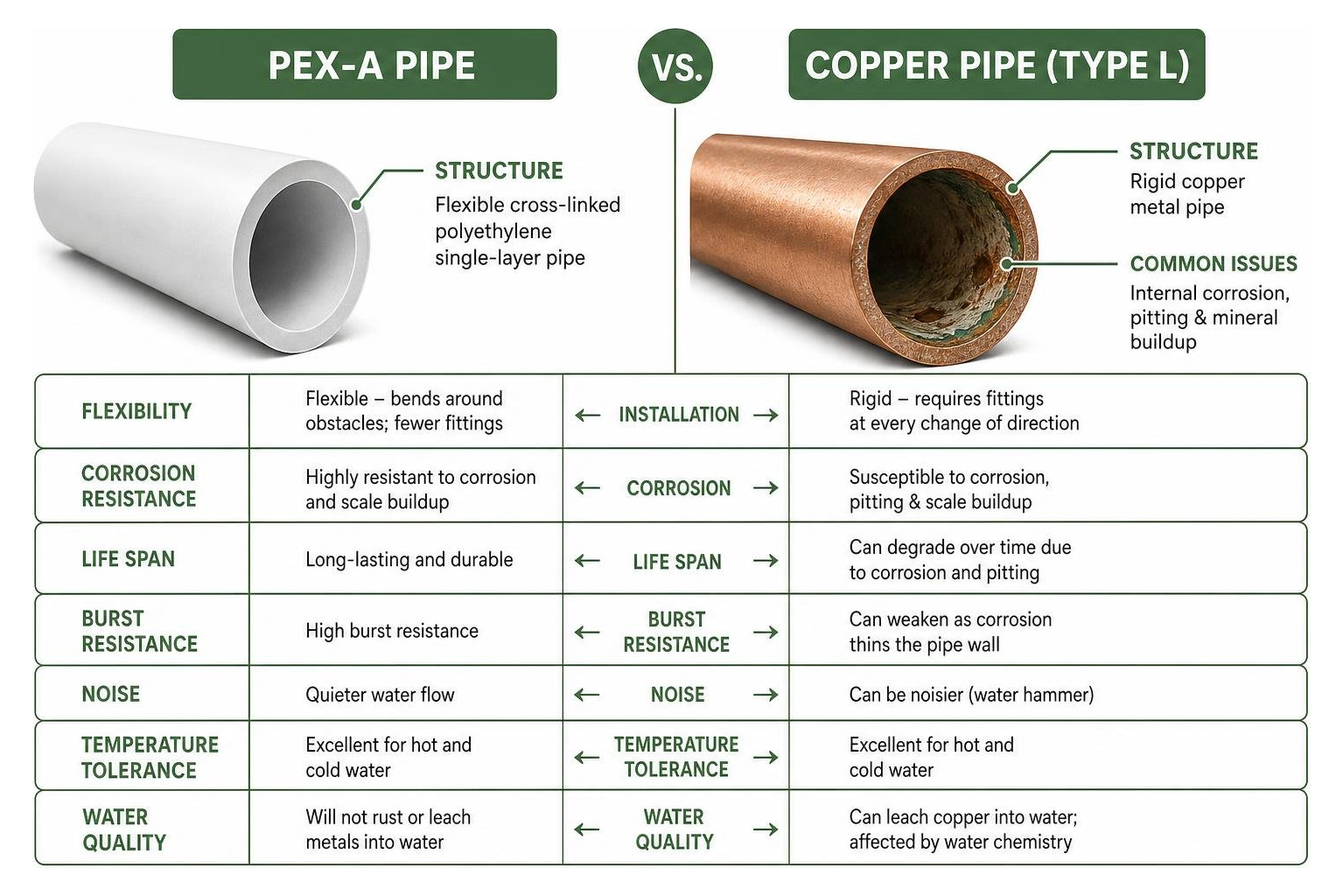
To help you visualize the differences, here is a quick overview of how they compare:
| Feature | PEX-A Piping | Type L Copper Piping |
|---|---|---|
| Material Cost | Highly Cost-Effective | Higher Material Cost |
| Corrosion Resistance | 100% Resistant to Scale/Chlorine | Susceptible to Hard Water Pitting |
| Installation Speed | Fast (highly flexible) | Slower (requires soldering/joints) |
| Connection Reliability | Expansion fittings (virtually leak-proof) | Soldered joints |
| Lifespan in OC Water | Extremely long-lasting | 20-30 years (due to local chemistry) |
| Best For | Flexible routing, hard water, attic runs | Exposed pipes, strict HOA requirements |
If you want to understand how these materials fit into your overall home maintenance plan, you can always learn about our general plumbing services to see how we maintain both types of systems.
The Benefits of PEX-A for Repiping Orange County CA
We highly recommend PEX-A (specifically high-grade options like Uponor AquaPEX) for most residential repipes in Orange County. PEX-A is a cross-linked polyethylene tubing that is incredibly flexible.
Because it can bend around corners, we can snake it through your walls with minimal drywall damage. PEX-A is entirely resistant to scale, chlorine, and chloramines, meaning Orange County’s hard water will never corrode it.
Furthermore, we use PEX-A with expansion fittings. This method uses specialized expansion tools to create factory-correct, code-approved connections that are actually stronger than the pipe itself, eliminating traditional joint failure points.
When to Choose Traditional Copper Piping
While PEX is the modern default, traditional copper still has its place. If you choose copper, we only use thick, American-made Type L copper, which is much more durable than the thinner Type M copper often used in cheaper construction.
Copper is rigid, highly durable, completely recyclable, and has a proven track record spanning over a century. It is also completely fire-resistant and does not degrade under UV light, making it ideal for exposed plumbing lines.
Additionally, some local Homeowners Associations (HOAs) in coastal areas like Huntington Beach still require copper supply lines for multi-family units or high-rises.
The Step-by-Step Whole-House Repiping Process
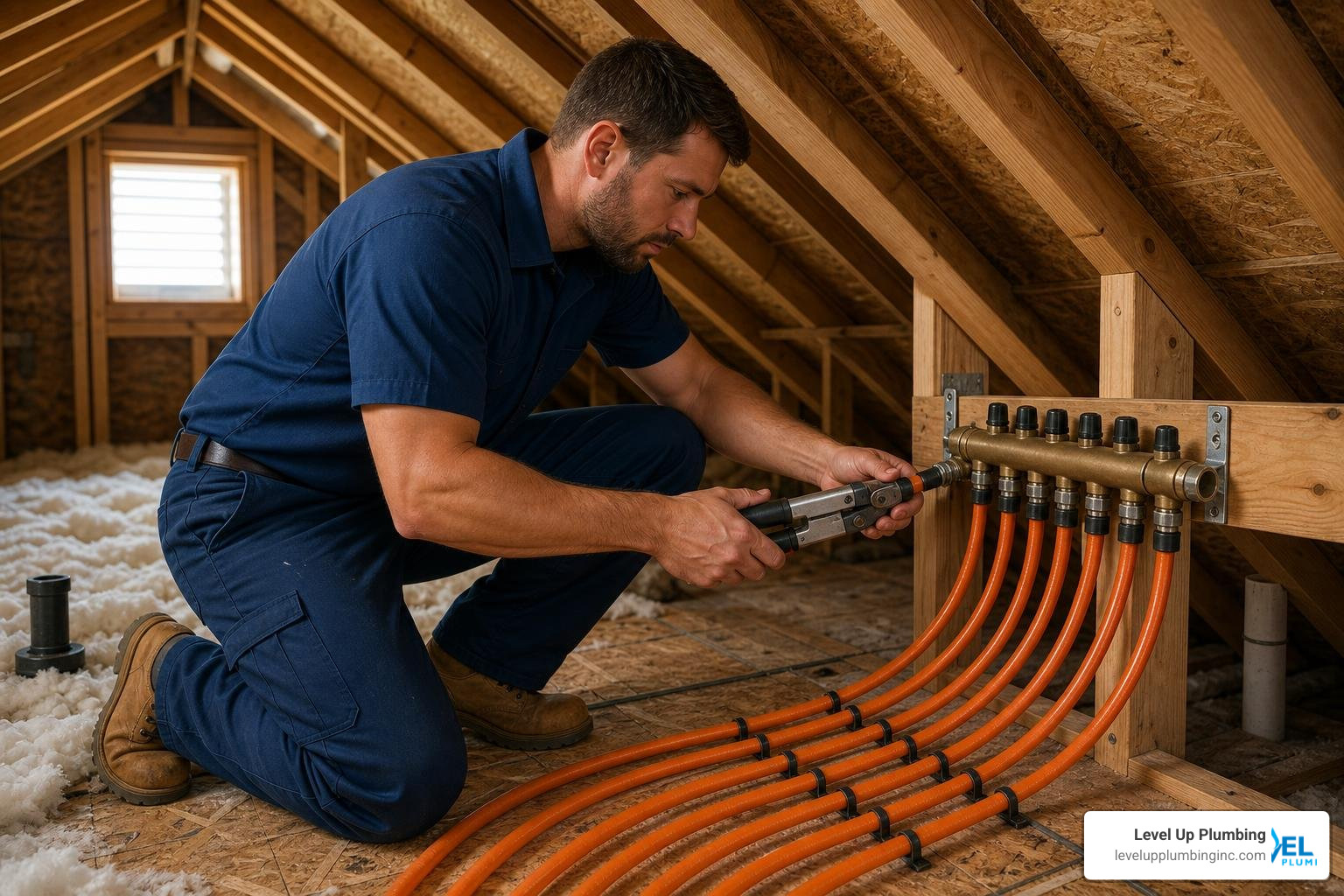
A whole-house repipe sounds like a massive, disruptive ordeal, but with a highly coordinated team, it is a streamlined, worry-free process.
Before we lay a single foot of pipe, we protect your home. We meticulously prep and tape all work areas, using drop cloths, plastic sheeting, and floor runners to prevent construction dust from spreading. Our goal is to leave your home as clean as we found it.
While we are working on upgrading your clean water lines, it is also the perfect time to make sure your waste lines are flowing perfectly. You can check out our Orange County drain clearing services to ensure your entire system is running optimally.
Permits, Inspections, and Wall Patching Logistics
Every reputable repiping project in Orange County must be permitted. All local municipalities require city permits and inspections to ensure the work is safe and up to California building codes.
Our standard process includes two separate municipal inspections:
- The Rough-In Inspection: This happens after the new pipes are installed but while the walls are still open. The city inspector verifies the pipe routing, material quality, and pressure-tests the system to ensure there are absolutely zero leaks.
- The Final Inspection: Drywall is classified as a fire barrier by building codes. Once the plumbing passes the first inspection, we patch the small 4-to-6-inch access holes we cut in your drywall. After the drywall is patched, textured, and painted to match your walls seamlessly, the inspector returns for a final walkthrough.
Unlike general plumbers who leave you with gaping holes in your walls, our all-inclusive repiping service handles both the plumbing installation and the complete drywall restoration.
How Slab Leaks Are Handled During a Repipe
Many post-war tract homes in Garden Grove and older neighborhoods in Huntington Beach were built on concrete slab foundations with copper pipes running underneath. When these underground copper pipes fail, they cause slab leaks that can ruin your flooring and compromise your foundation.
During a whole-house repipe, we do not jackhammer your concrete floors to patch the broken line. Instead, we abandon the old, failing pipes beneath the slab entirely. We run completely new bypass lines overhead through your walls and attic. This attic rerouting protects your new plumbing from ground elements, shifting soil, and concrete corrosion permanently.
Cost, Financing, and Planning Your Project in 2026
In 2026, planning a whole-house repipe is easier and more transparent than ever. The overall cost of your project depends heavily on several factors, including the size of your home, the number of bathrooms and water fixtures, the accessibility of your plumbing, and whether you choose PEX or copper.
Because we believe in honest diagnostics, we provide exact, upfront flat-rate pricing assessments rather than rough hourly estimates. We also partner with premium financing providers to offer flexible payment options (including interest-free terms and affordable monthly plans) to ensure your home remains safe without straining your budget.
If you are curious about local factors that might affect your home’s plumbing needs, read more on our Orange County location page to see how we customize our services to local neighborhoods.
Is a Partial Repipe Sufficient or Should You Replace Everything?
When faced with a pipe leak, homeowners often ask if they can just replace the section of pipe that broke. While a partial repipe might save money in the short term, it is rarely a wise long-term investment.
If one section of your copper or galvanized plumbing has corroded to the point of leaking, the rest of the pipes in your home have been exposed to the exact same hard water and chemical conditions. They are likely just as thin and ready to fail.
Replacing only a portion of your plumbing leaves you vulnerable to future leaks, meaning you will continue paying for emergency repairs and drywall patches. A complete whole-house repipe ends the cycle of temporary fixes and fully protects your home’s resale value.
Frequently Asked Questions About Repiping
Can I stay in my home during a repiping orange county ca project?
Yes! In almost all cases, you can remain comfortably in your home during the repiping process. Our crew only shuts off the main water line during active working hours (typically between 8:00 AM and 4:00 PM). Before we pack up for the day, we hook up temporary connections and restore water functionality overnight so your family can shower, use the restroom, and run appliances normally.
What is the warranty on a whole-house repipe?
We believe in the quality of our work, which is why we offer a comprehensive lifetime workmanship warranty on our installations. Additionally, premium materials like Uponor PEX-A are backed by a 25-year manufacturer warranty. This double-layer of protection ensures you never have to worry about your pipes failing again.
How do I choose a reliable repipe specialist?
When selecting a contractor for repiping in Orange County, CA, always verify that they hold an active C36 plumbing license and carry comprehensive general liability insurance. Look for companies with extensive local experience who understand Orange County’s specific water conditions, and read online reviews to check their track record for clean, punctual, and high-quality work.
Conclusion
A whole-house repipe is one of the most significant upgrades you can make to protect your home’s structural integrity and your family’s health. By replacing aging, corroded pipes with modern PEX-A or Type L copper, you eliminate the threat of hidden water damage, restore your water pressure, and enjoy clean, rust-free water every single day.
At Level Up Plumbing, we are proud to be a local, woman-owned business serving Huntington Beach, Cypress, Garden Grove, and the wider Orange County area. With over 21 years of local expertise, award-winning customer service, and an all-inclusive process that handles everything from permits to final paint, we make repiping your home as smooth and stress-free as possible.
If you are ready to stop patching the same old leaks, Contact Level Up Plumbing for a consultation today, and let us give your home’s plumbing system the upgrade it deserves!