Why Comparing Clogged Toilet Repair Costs Before You Call a Plumber Can Save You Hundreds
Understanding the clogged toilet repair cost before you pick up the phone can mean the difference between a fair bill and a frustrating one. Most homeowners are caught off guard — water rising, panic setting in, and no idea what a reasonable price even looks like.
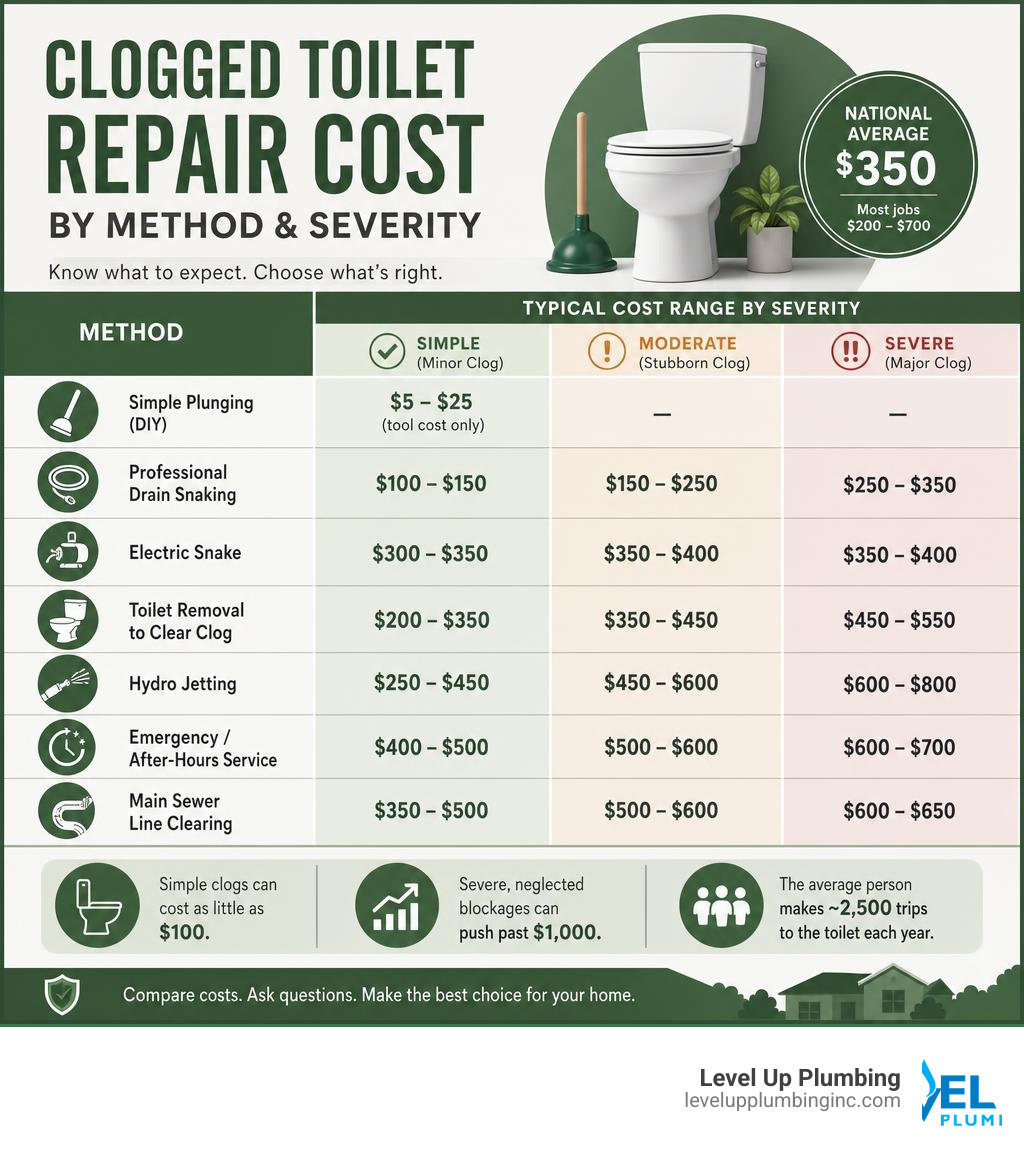
Here is a quick snapshot of what you can expect to pay:
| Repair Type | Typical Cost Range |
|---|---|
| Simple plunging (DIY) | $5 – $25 (tool cost only) |
| Professional drain snaking | $100 – $250 |
| Electric snake | $300 – $400 |
| Toilet removal to clear clog | $200 – $550 |
| Hydro jetting | $250 – $800 |
| Emergency / after-hours service | $400 – $700 |
| Main sewer line clearing | $350 – $650 |
The national average lands around $350, with most jobs falling between $200 and $700. Simple clogs can cost as little as $100. Severe, neglected blockages can push past $1,000.
Consider this: the average person makes roughly 2,500 trips to the toilet each year. Wear, clogs, and the occasional surprise are simply part of homeownership. Knowing the numbers ahead of time puts you in control.
This guide walks you through every cost factor — method, location, timing, and more — so you can compare quotes confidently and avoid overpaying.
I’m Tiffany Miley, owner of Level Up Plumbing in Huntington Beach, and with over 21 years of experience in Southern California’s trades and service industries, I’ve seen how confusing clogged toilet repair costs can be for homeowners. In the sections below, I’ll break down exactly what drives those costs so you know what’s fair before anyone steps through your door.
Relevant articles related to clogged toilet repair cost:
National Averages: What is a Fair Clogged Toilet Repair Cost?
When you begin researching what you should pay to resolve a backup, you will find that the national average fluctuates based on the severity of the blockage. For a standard, straightforward visit during normal business hours, a professional resolution typically falls into a moderate, predictable range. However, when the problem extends beyond the bathroom wall, those numbers can shift.
Plumbing companies generally charge using one of two pricing structures: flat rates or hourly rates.
- Flat Rates: Many modern residential plumbers prefer flat-rate pricing for standard drain clearing. This means you are quoted a single, transparent price for the job before the work begins, regardless of how many hours it takes the technician. This protects you from unexpected fees if a stubborn clog takes longer than anticipated to clear.
- Hourly Rates: Some local contractors bill based on actual time spent on-site, plus the cost of any replacement parts. If you are paying an hourly rate, the final bill will depend entirely on the technician’s efficiency and the complexity of the blockage.
To help you visualize how these pricing models translate to your final invoice, we can look at how the severity of the issue and the selected clearing method dictate the overall cost tier.
| Clog Severity | Common Clearing Method | Relative Cost Tier |
|---|---|---|
| Minor (localized toilet paper buildup) | Manual closet auger / standard snaking | Low-End / Standard Minimum |
| Moderate (stuck foreign object or deep trap blockage) | Electric snake or toilet removal (pull & reset) | Mid-Range |
| Severe (grease, sludge, or tree roots in drain line) | Hydro jetting or main sewer line rodding | High-End |
| Extreme (collapsed pipe or structural line damage) | Excavation / pipe replacement | Premium Project |
By reviewing verified consumer platforms, such as the Yelp Toilet Repair Cost Data, homeowners can see that local market conditions heavily dictate where their quotes will fall within these tiers. In highly populated coastal areas of Southern California, labor rates reflect the higher cost of operating a certified, insured trade business.
Standard Clogged Toilet Repair Cost by Method
The specific tool a plumber must pull from their truck is the primary driver of your overall bill. Different blockages require different levels of mechanical force.
- Closet Auger: This is a specialized manual plumbing snake designed specifically for toilets. It features a protective rubber or plastic sleeve at the curve to prevent the metal cable from scratching the delicate porcelain of your toilet bowl. This method is the standard go-to for simple, localized blockages and represents the lowest cost tier for professional intervention.
- Drain Snaking (Standard Manual): Used for blockages just past the toilet trap, a manual snake is fed down the drain line to break up soft obstructions. If you want to try resolving a minor issue yourself before calling in the pros, you can read our guide on How to Fix Toilet Problems Fast by Using Simple Tools.
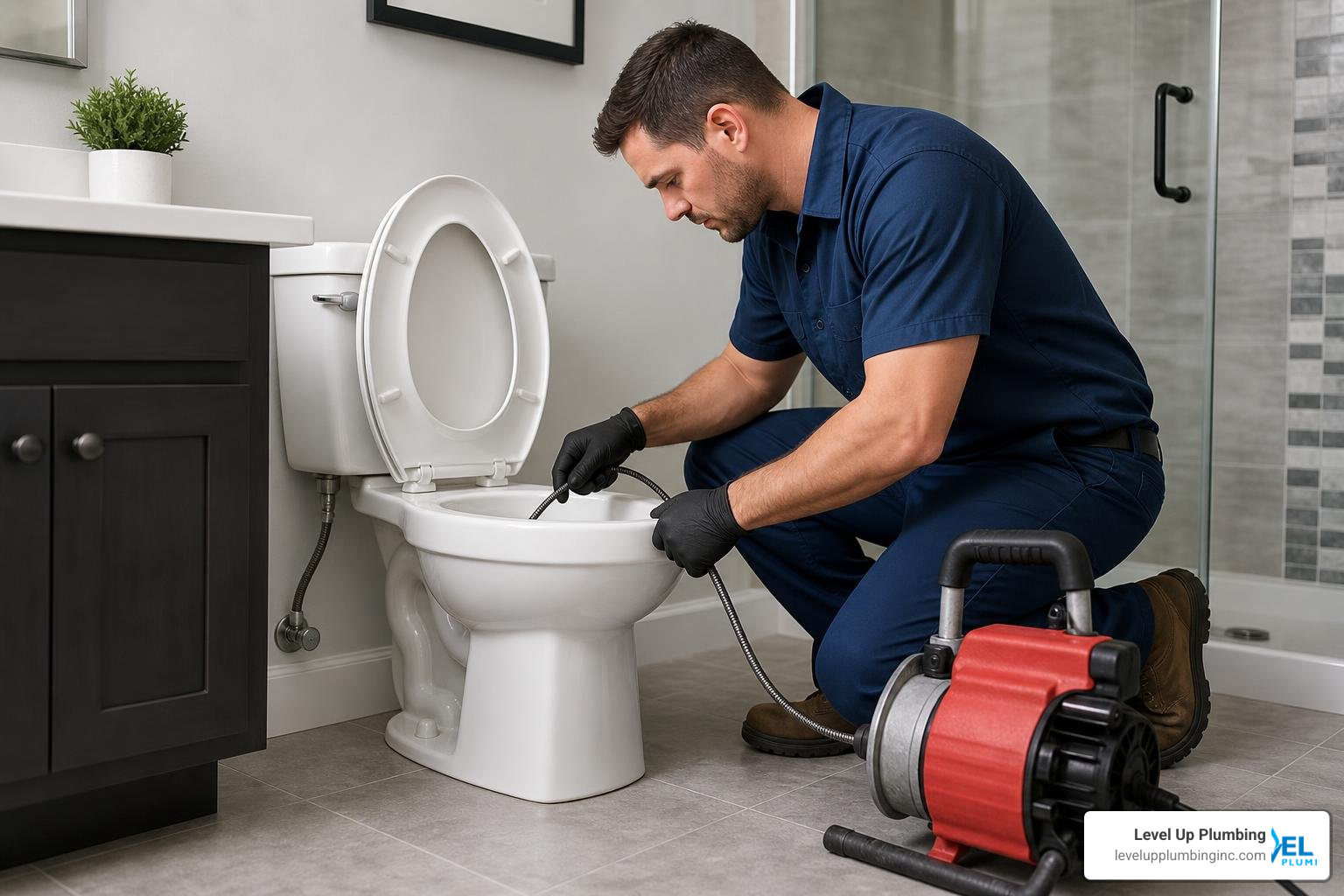
- Electric Snake (Motorized Cable): For tougher clogs deeper in the branch lines, an electric drain snake uses a motorized drum to rotate a heavy-duty steel cable. This added mechanical power allows the cable to cut through dense blockages, hair, and small root intrusions. Because this equipment is expensive to maintain and transport, using a motorized snake pushes the job into a higher cost bracket.
- Hydro Jetting: This advanced method involves blasting the interior of your pipes with highly pressurized water—often up to several thousand pounds per square inch. Hydro jetting does not just punch a temporary hole in a clog; it thoroughly scrubs the pipe walls clean of grease, scale, and organic buildup. It is a premium service reserved for severe, recurring blockages.
- Toilet Removal (Pull and Reset): If an object like a child’s toy, a cosmetic bottle, or a cell phone becomes wedged deep inside the toilet’s internal trapway, it cannot be pushed forward or pulled backward with an auger. The plumber must shut off the water, disconnect the supply line, unbolt the toilet from the floor, and lift the entire fixture to retrieve the object from underneath. This labor-intensive process requires a new wax ring and fresh caulking, which naturally increases the service fee.
How Clog Location Impacts Your Clogged Toilet Repair Cost
Where the blockage physically lives in your home’s drainage system determines the complexity of the repair. The further the clog is from the toilet bowl, the harder it is to reach, and the more you should expect to pay.
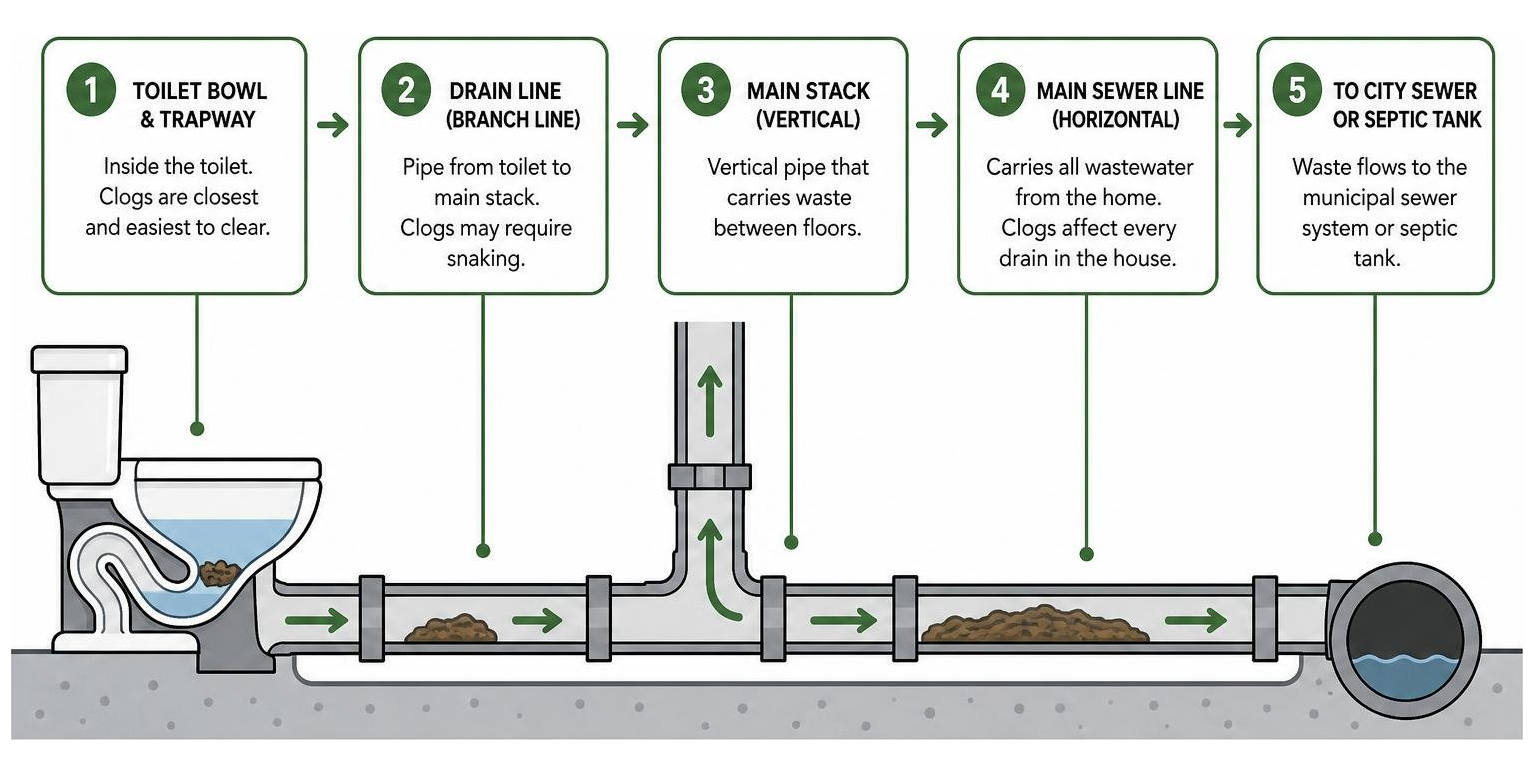
- Toilet Bowl & Trapway: This is the most common and affordable area to clear. The trap is the built-in S-bend at the base of your toilet that holds water to prevent sewer gases from entering your home. Clogs here are easily accessible with a closet auger.
- Drain Line (Branch Line): This is the pipe that connects your individual toilet to the home’s main waste stack. If a clog forms here, it may require a motorized snake to clear the distance between the bathroom and the main line.
- Main Sewer Line: The main sewer line carries all the wastewater from your home out to the municipal sewer system or your private septic tank. When this line is blocked, it affects every drain in your house. Clearing a main sewer line is a major undertaking that often requires heavy machinery, camera inspections, or high-pressure hydro jetting.
- Roof Vents: Your plumbing system relies on vertical vent pipes that exit through your roof to introduce air into the system. This air pressure is what allows water to flow smoothly down your drains. If leaves, dirt, bird nests, or debris block these roof vents, a vacuum is created inside your pipes. This leads to sluggish flushing, gurgling noises, and recurring clogs—even if the waste pipes themselves are completely clear. Clearing a roof vent requires climbing onto the roof, which adds an accessibility surcharge to your bill.
Key Factors That Influence Professional Plumbing Rates
Every home is unique, and a plumber cannot give an exact, binding estimate until they physically assess the situation. Several real-world variables will cause your final quote to shift up or down.
- Labor Rates & Experience: Plumbers are highly skilled tradespeople who undergo years of rigorous training. You are paying for their expertise, licensing, and insurance. A master plumber will command a higher hourly rate than an apprentice, but they also bring the diagnostic speed and advanced tools necessary to solve complex issues correctly the first time.
- Service Fees & Dispatch Fees: Most professional plumbing companies charge a baseline service fee to cover the cost of fuel, vehicle maintenance, and the technician’s travel time to your home. In many cases, this fee is waived or applied toward the cost of the repair if you choose to move forward with the recommended work.
- Geographic Location: Local cost-of-living metrics directly impact local plumbing rates. Operating a licensed trade business in Southern California communities like Huntington Beach, Cypress, and Garden Grove involves higher insurance premiums, fuel costs, and overhead than in rural areas.
- Accessibility: If your toilet is located in a tight, cramped powder room, or if the main cleanout access point is buried under landscaping, the technician will need extra time to set up their equipment. Difficult physical access translates directly to additional labor hours on your invoice.
- Hard Water & Chlorine Damage: Local water quality plays a silent but major role in your toilet’s health. The hard water common in Orange County contains high concentrations of minerals like calcium and magnesium. Over time, these minerals deposit inside your toilet’s rim jets and trapway, narrowing the pathway and reducing flush velocity. Additionally, heavy chlorine in municipal water can degrade the rubber and plastic components inside your tank, preventing a complete flush and making the fixture highly prone to clogging. You can learn more about these factors in the Forbes Toilet Repair Cost Guide.
Standard vs. Emergency and After-Hours Rates
Plumbing emergencies rarely wait for a convenient time to occur. If your only toilet backs up on a Tuesday morning, you can easily schedule a standard appointment during normal business hours. However, if that same toilet overflows on a Saturday night or during a major holiday, you will likely need to request emergency dispatch.
Because emergency services require companies to pay technicians overtime and keep trucks on standby 24/7, these calls carry a premium. Emergency dispatch fees are typically higher than standard trip charges, and the labor rates for after-hours work can increase significantly. Whenever possible, if you have a second functioning bathroom, it is highly cost-effective to shut off the water valve to the clogged toilet and schedule the repair during regular business hours to avoid these surcharges.
Additional Costs: Camera Inspections and Part Replacements
Sometimes, unclogging a toilet is only the first step. If the blockage has caused physical damage to your plumbing system, or if the plumber suspects a deeper structural issue, you may face additional service recommendations.
- Sewer Camera Inspection: If your toilet is backing up repeatedly and standard snaking only provides temporary relief, a plumber will recommend running a fiber-optic video camera down the drain line. This high-resolution camera allows the technician to visually inspect the inside of your pipes in real-time to identify cracked lines, sagging pipes, or tree root intrusions. While a camera inspection adds to the immediate bill, it saves you money in the long run by pinpointing the exact location of the trouble.
- Wax Ring Replacement: The wax ring sits beneath your toilet, creating a gastight and watertight seal between the horn of the toilet bowl and the closet flange on the floor. If a severe clog causes water to back up and pool around the base of your toilet, or if the toilet was pulled to retrieve a foreign object, the old wax ring must be scraped away and replaced with a fresh one to prevent future leaks and sewer gas odors.
- Toilet Flange Repair: The flange is the metal or plastic collar that secures the toilet to the subfloor and connects it to the drainpipe. If the flange is cracked, corroded, or installed at the wrong height, the toilet will wobble. This rocking motion quickly breaks the wax seal, leading to hidden leaks that rot your subfloor. Repairing or replacing a damaged flange is a structural plumbing task that requires specialized tools.
- Subfloor Damage & Flooring Restoration: If a leaking toilet base or recurring overflow is left unaddressed, water will seep into the surrounding flooring. Over time, this moisture rots the wooden subfloor, ruins tile or laminate flooring, and can even cause structural damage to the ceiling below. Remediating mold and replacing rotted subfloors can easily turn a simple toilet clog into a multi-thousand-dollar home restoration project.
- Toilet Replacement: If your toilet is an older, water-guzzling model that requires constant repairs, or if the porcelain bowl or tank has developed a physical crack, spending money on temporary clog clearance is a band-aid fix. In these cases, it is far more cost-effective to replace the entire unit with a modern, high-efficiency gravity-flush model that will actively lower your monthly water bills and reduce clog frequency.
DIY vs. Professional: When to Call a Plumber
When water begins rising in the bowl, your immediate instinct is likely to reach for a tool and handle it yourself. For minor, everyday blockages, a DIY approach is completely appropriate and can save you a service call. However, it is critical to know your limits to avoid turning a simple blockage into an expensive plumbing disaster.
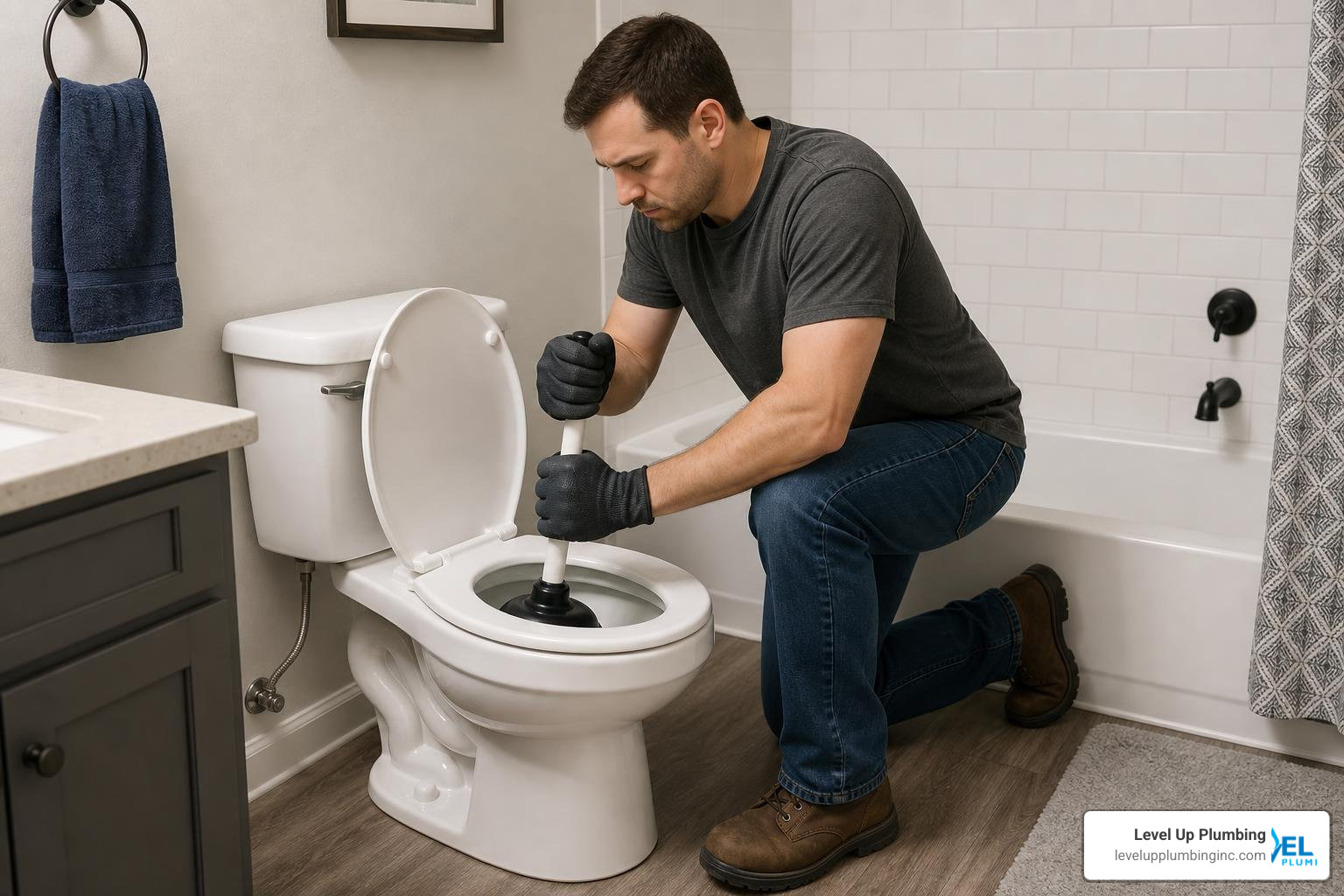
- The Right Tool for the Job: If you are going to plunge a toilet, make sure you are using a flange plunger (which features an extended rubber sleeve on the bottom designed to seal inside the toilet drain) rather than a standard cup plunger (which is flat and designed for flat sink drains).
- Gentle DIY Methods: Safe home remedies include pouring a cup of baking soda followed by two cups of white vinegar down the bowl, letting it fizz for 30 minutes, and flushing with hot (never boiling!) water. The chemical reaction can help break up minor organic waste and hard water scale.
- The Danger of Chemical Cleaners: We strongly advise against using harsh, caustic chemical drain cleaners. These products rely on intense chemical reactions that generate heat. In a toilet, this heat can easily crack the cold porcelain bowl. Furthermore, these chemicals rarely clear deep clogs completely, leaving a highly acidic pool of water sitting in your toilet. If a plumber has to come out later, this chemically treated water poses a severe chemical burn hazard to the technician.
- When to Call a Professional: You should step away from the DIY attempts and call a licensed plumber immediately if you experience any of the following warning signs:
- The toilet backs up repeatedly after multiple plunging attempts.
- You hear persistent gurgling sounds from your shower or sink drains when you flush the toilet.
- Wastewater backs up into your bathtub or floor drains when the toilet is flushed.
- You notice water pooling around the base of the toilet or damp drywall in the room directly below.
- You suspect a heavy, solid object like a toy or a cosmetic lid has been flushed.
If you are facing a stubborn situation and aren’t sure whether it’s safe to continue, you can read our advice on When in Doubt Call a Plumber.
Common Causes of Toilet Clogs and Prevention Tips
The absolute best way to manage clogged toilet repair costs is to prevent clogs from forming in the first place. Most residential blockages are entirely preventable and stem from common household habits.
- The “Flushable” Wipes Myth: Despite what the packaging claims, baby wipes, cleaning wipes, and personal hygiene wipes do not break down in water like standard toilet paper. They remain fully intact as they travel through your pipes, snagging on minor pipe imperfections and binding with household grease to form massive, pipe-choking blockages. Throw all wipes in the trash—never flush them.
- Foreign Objects: Children are naturally curious, and toilets make fascinating “whirlpools” for toy cars, action figures, and bath toys. Additionally, decorative shelving placed directly above the toilet tank is a common culprit; hair clips, toothpaste caps, and cosmetic bottles can easily fall from these shelves and find their way down the drain. Keep toilet lids closed, especially in households with young children.
- Excessive Toilet Paper: Modern low-flow toilets are designed to conserve water, meaning they use less physical force to push waste down the line. If you are using large, tightly packed wads of ultra-plush toilet paper, the reduced water volume may not be enough to carry it through the trapway. If you need to use a substantial amount of paper, flush twice to keep the line clear.
- Mineral & Hard Water Deposits: Over time, the hard water scale common to our region will build up inside your toilet’s rim jets. These tiny holes under the rim release the water that washes waste down the bowl. When they become clogged with calcium, the flush loses its velocity, leading to weak flushes and frequent backups. Periodically cleaning these jets with a vinegar solution or a specialized scale remover will keep your toilet flushing at peak performance.
- Annual Plumbing Inspections: Having a licensed professional perform an annual inspection of your home’s waste lines and roof vents can catch minor issues—like slow-growing tree roots or scale buildup—before they turn into catastrophic backups. For a detailed starting point on maintaining your home’s fixtures, check out our guide on How to Start Toilet Repair in Orange County CA.
Frequently Asked Questions About Toilet Unclogging Costs
Will a clogged toilet eventually unclog itself?
In very rare cases, a minor clog consisting entirely of organic waste and thin toilet paper may soften and dissolve if left to sit for several hours. However, this only applies to simple, soluble blockages. If the clog is caused by wet wipes, foreign objects, hair, or mineral buildup, it will never clear on its own. Waiting to address a slow-draining toilet usually allows the blockage to settle and compact further down the line, increasing the risk of a messy sewer backup and a higher eventual repair bill.
How much does it cost to unclog a main sewer line?
Because the main sewer line is buried underground and carries all of your home’s wastewater, clearing a blockage here is a much larger and more complex task than clearing a simple toilet bowl. If tree roots have invaded your sewer line or if years of grease have restricted the pipe, a plumber must use heavy-duty motorized cable machines or high-pressure hydro jetting equipment. To learn more about how main line clearing is priced compared to standard residential work, you can reference the Fixr Toilet Unclogging Cost Guide.
Can chemical drain cleaners damage my toilet?
Yes, absolutely. Caustic chemical drain cleaners rely on powerful acid or alkaline reactions to generate heat and dissolve organic matter. When poured into a toilet, this heat cannot dissipate quickly through the thick porcelain bowl. The sudden, intense temperature change can easily crack the porcelain, destroying your toilet fixture instantly. Furthermore, these chemicals can corrode older metal pipes, soften PVC joints, and destroy the rubber seals inside your plumbing system. They also present a severe safety hazard to any plumber who must work on the line afterward.
Conclusion
Navigating a clogged toilet is never a pleasant experience, but understanding how professional plumbers evaluate and price these repairs empowers you to make smart, cost-effective decisions. By knowing the difference between simple trapway blockages and deep sewer line issues, you can confidently compare quotes and choose the right level of service for your home.
When you need reliable, professional plumbing support in Orange County, we are here to help. Level Up Plumbing is a proud, woman-owned business with over 21 years of local expertise. We serve homeowners across Huntington Beach, Cypress, and Garden Grove with award-winning customer service and transparent, honest communication. Whether you are dealing with a stubborn clog, need a professional camera inspection, or want to upgrade to a high-efficiency toilet, our experienced team delivers long-lasting, code-compliant solutions.
Don’t let a rising toilet bowl disrupt your peace of mind. Contact us today at Level Up Plumbing Huntington Beach to experience the highest standard of local plumbing care.