When a Clogged Toilet Stops Your Day Cold
If you need clogged toilet repair near me, here is what to do first:
- Stop flushing. Repeated flushing can cause overflow and water damage.
- Turn off the water supply valve behind or beneath the toilet.
- Try a flange plunger if the clog seems minor and localized.
- Call a licensed local plumber if plunging fails, water rises dangerously, multiple drains back up, or sewage odors appear.
Few household problems hit as suddenly or as hard as a blocked toilet. One moment everything is fine. The next, water is rising toward the rim and your morning is derailed.
It is more than an inconvenience. An ignored toilet problem can waste up to 200 gallons of water per day, damage your subfloor, and in serious cases, signal a failure in your main sewer line.
For Southern California homeowners especially, the stakes are real. Hard water buildup, aging clay pipes, and tree root intrusion are all common culprits in this region — and none of them respond to a standard plunge.
The good news: most toilet clogs are fixable fast when you know what you are dealing with and who to call.
I’m Tiffany Miley, owner of Level Up Plumbing, a woman-owned plumbing company serving Orange County and Los Angeles County with over 21 years of experience in Southern California’s trades and service industries. I have seen every version of clogged toilet repair near me searches turn into real emergencies — and I built this guide to help you solve the problem quickly, safely, and without overpaying.
Clogged toilet repair near me basics:
Common Causes of Stubborn Toilet Clogs
To truly banish your toilet worries, we first have to understand what we are fighting. Toilet clogs generally fall into two main categories: simple clogs and foreign objects. However, in our beautiful Southern California communities like Huntington Beach, Cypress, and Garden Grove, the root cause is often hidden deep within the home’s infrastructure.
From aging clay sewer lateral lines to mineral-heavy water, several regional factors make local systems highly susceptible to blockages. To keep your system running smoothly year-round, it helps to practice proactive maintenance. You can read our detailed guide on Drain Preventative Maintenance Tips to Keep Your Plumbing Running Smoothly to protect your entire home.
Simple Clogs vs. Foreign Objects
A simple clog is typically composed of organic waste and excessive toilet paper. These are the blockages that a standard plunger can usually handle. However, even “flushable” wipes—despite what the packaging claims—do not dissolve in water. They catch on pipe imperfections, creating a sticky web that traps other waste.
Foreign objects are an entirely different beast. We have pulled everything from plastic toys and toothbrushes to shampoo bottles and even cell phones out of local toilet traps. This is especially common in households with toddlers who are fascinated by the swirling water.
If you have young children learning proper bathroom habits, we highly recommend installing a childproof lock on the toilet lid. It is also wise to switch to thinner toilet paper and place a small wastebasket directly next to the toilet to encourage the proper disposal of non-flushable items.
Never flush the following items down your toilet:
- Baby wipes and makeup wipes (even those labeled “flushable”)
- Paper towels and facial tissues
- Feminine hygiene products
- Cotton swabs and cotton balls
- Dental floss (which acts like a net inside your pipes)
- Bandages and prescription medications
Flushing foreign objects does more than just stop up the bowl; it can wedge tightly inside the porcelain trapway, requiring the toilet to be completely unbolted and flipped upside down to retrieve the item.
Deeper Sewer Line and Vent Stack Issues
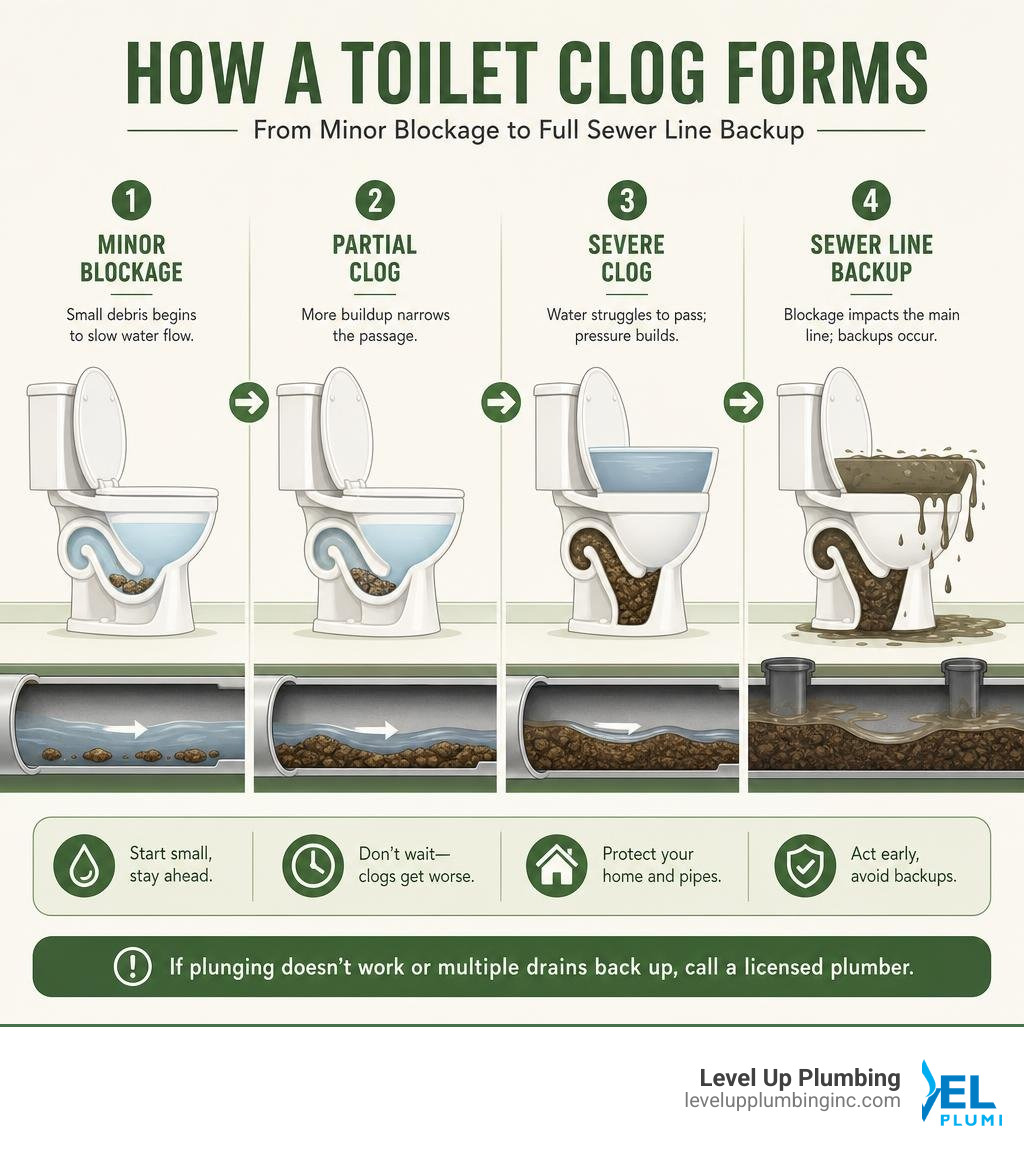
Sometimes, the issue isn’t in the toilet itself, but much further down the line. If you notice your toilet bubbling or gurgling when you run the bathroom sink or shower, you are likely dealing with a blocked vent stack or a main sewer line issue.
When waste water cannot flow freely down the main drain, air gets trapped in the pipes. This air has to escape somewhere, and it usually forces its way up through the standing water in your toilet bowl, causing those mysterious bubbles.
Even worse, if you see sewage standing in or draining out of your home’s outdoor sewer cleanout, you have a main sewer line clog. This is a plumbing emergency that requires immediate professional intervention before raw sewage backs up through your shower drains and ground-floor toilets.
DIY Troubleshooting vs. Professional Intervention
When a toilet backs up, most homeowners instinctively reach for a plunger. But did you know that using the wrong tool—or using it incorrectly—can actually damage your plumbing or scratch your porcelain?
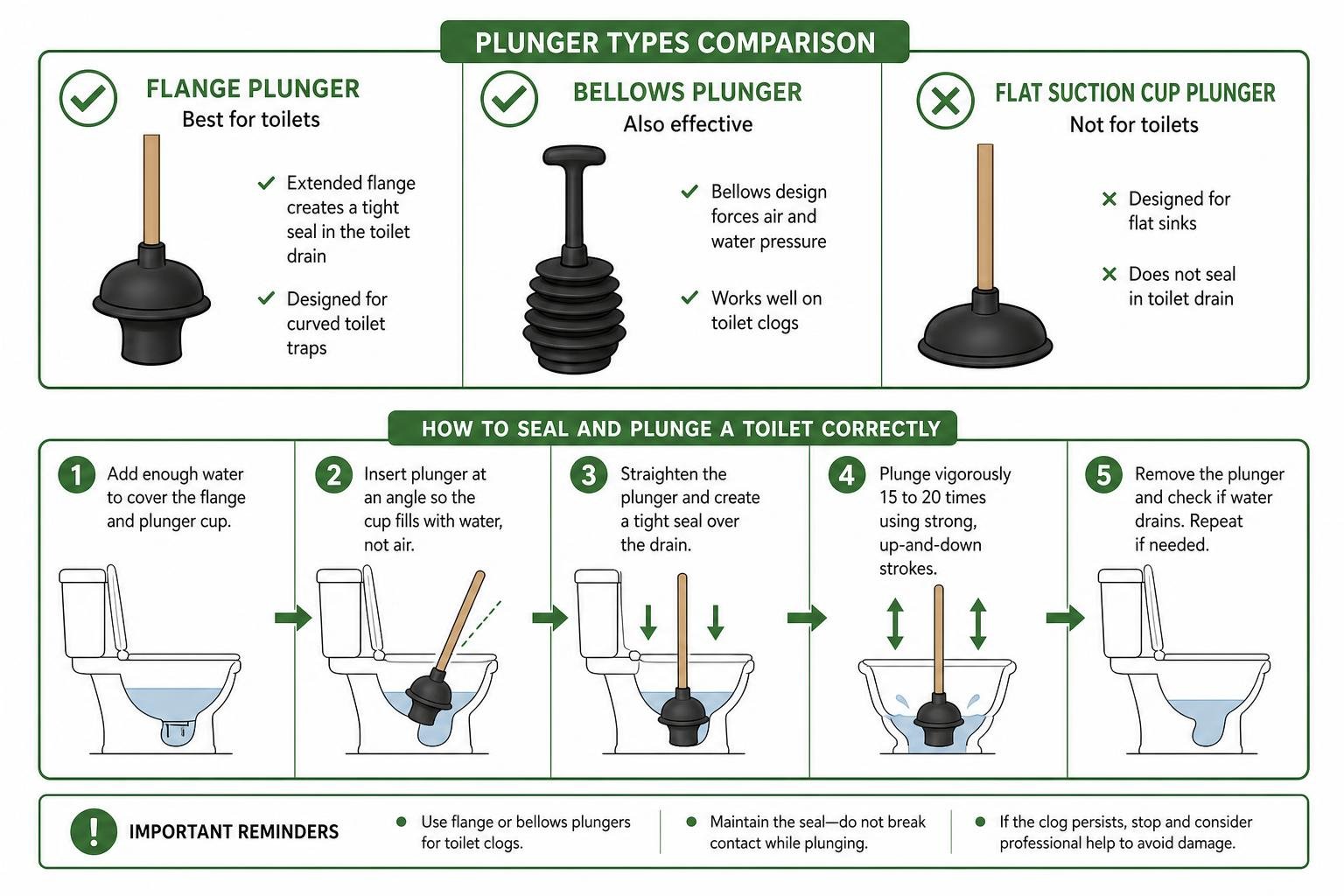
A standard flat suction cup plunger is designed for flat sink drains, not curved toilet bowls. To clear a toilet, you need a flange plunger (which has an extended rubber sleeve at the bottom) or a bellows plunger. These designs allow you to establish a tight seal inside the toilet throat. For a successful plunge, insert the plunger at an angle so the cup fills with water rather than air, maintain a tight seal, and plunge vigorously 15 to 20 times.
If a plunger fails, some homeowners attempt to use a plumbing snake or a closet auger. While effective, a metal auger must be handled with extreme care. Forcing it too aggressively can easily scratch the protective porcelain glaze inside your bowl, leaving permanent grey marks, or worse, cracking the trapway.
We strongly advise against using chemical drain cleaners. These harsh chemical mixtures generate heat to dissolve blockages, which can warp plastic pipes, corrode older metal lines, damage septic systems, and crack fragile porcelain. To learn how to resolve minor blockages safely using household items, see our guide on How to Fix Toilet Problems Fast by Using Simple Tools.
Why You Need Professional Clogged Toilet Repair Near Me
When does a DIY attempt cross the line into a job for the pros? There are several warning signs that indicate you need professional clogged toilet repair near me:
- Recurring Clogs: If you have to plunge your toilet multiple times a week, there is an underlying restriction deeper in your drain lines.
- Water Pooling at the Base: Finding water dampening the floor around the bottom of your toilet is a major red flag. This typically indicates a failed wax ring seal or a cracked toilet base. When a toilet is partially clogged, the backpressure forces water out beneath the wax ring during a flush.
- Soft Spots in the Flooring: If the floor around your toilet feels spongy or the vinyl is discoloring, water has already begun rotting your subfloor.
- Multiple Clogged Fixtures: If your kitchen sink, shower, and toilet are all draining slowly or backing up simultaneously, the issue is in your main sewer lateral, not the individual fixtures.
Ignoring these warning signs can result in structural wood rot, toxic mold growth, and expensive restoration bills. When you are unsure of the severity of the issue, remember: When in Doubt Call a Plumber.
Advanced Diagnostic and Clearing Methods
Professional plumbers don’t just “plunge and go.” We use state-of-the-art diagnostic equipment to find the exact cause and location of your blockage.
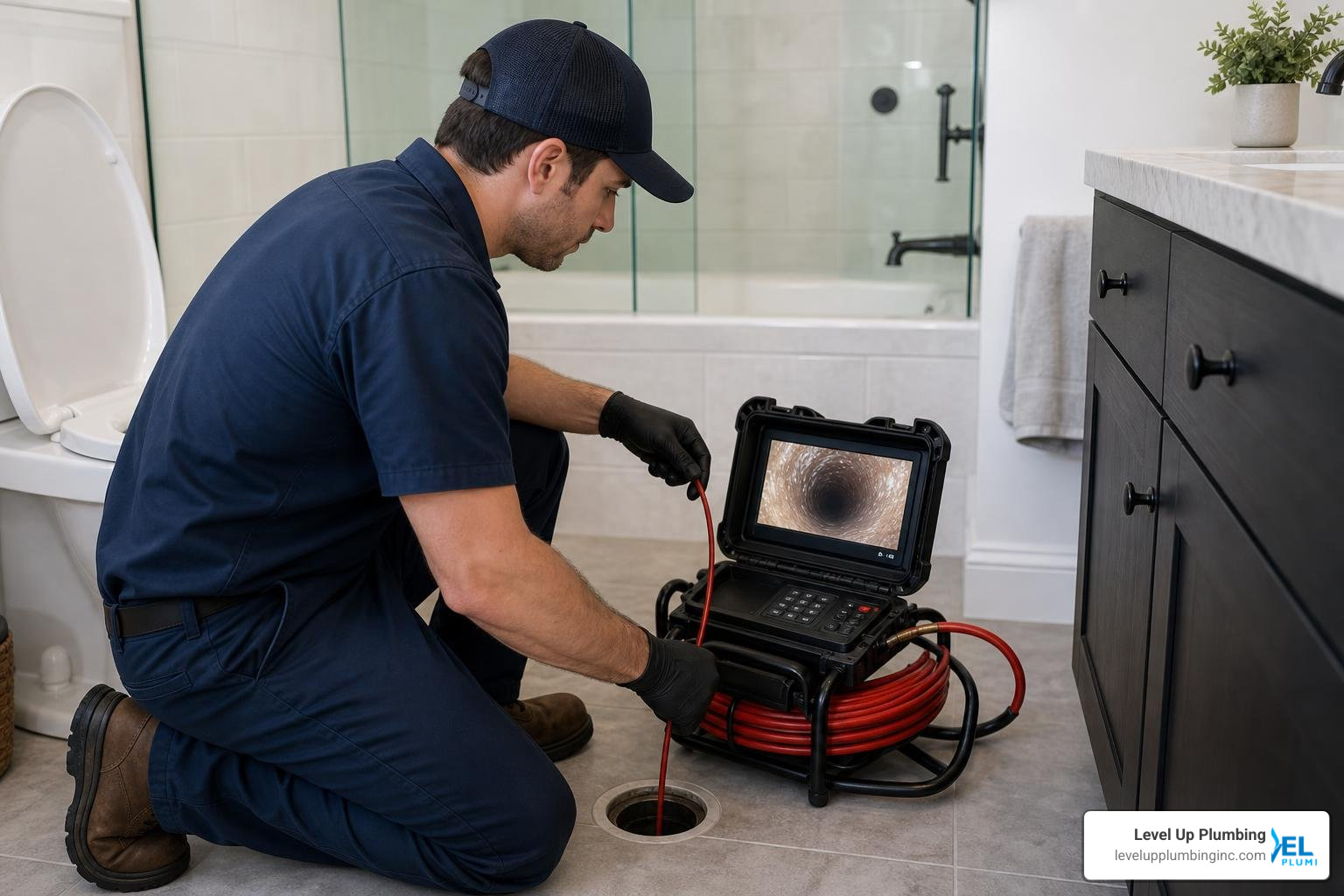
First, we perform a video camera inspection. By feeding a high-resolution, waterproof camera down your toilet or sewer cleanout, we can view the inside of your pipes in real-time. This allows us to pinpoint exactly what is causing the issue—whether it is a child’s toy, a collapsed pipe, or invasive tree roots.
Once we locate the blockage, we use advanced clearing methods. For stubborn clogs, tree roots, or grease buildup in the sewer line, we utilize hydro jetting. This process shoots high-pressure water streams through specialized nozzles to scour the inside of your pipes, restoring them to like-new condition without damaging the pipe walls.
Finding Reliable Clogged Toilet Repair Near Me
When you are facing a plumbing emergency, you don’t have time to research for hours. You need a trusted local team that can arrive quickly, diagnose the problem accurately, and treat your home with respect.
If you are looking for local services, it helps to understand what options are available in your immediate neighborhood. Whether you are in Cypress, Garden Grove, or Huntington Beach, having access to a reliable local plumber who understands the unique challenges of Southern California’s infrastructure is essential for resolving sudden overflows and late-night backups.
Before you begin any work, it is highly beneficial to understand the basics of local plumbing systems. Take a look at our professional tips on How to Start Toilet Repair in Orange County CA to prepare your home for a service visit.
What to Expect from Clogged Toilet Repair Near Me Services
When you call a licensed plumbing service for a clogged toilet, the process should be smooth, professional, and entirely stress-free.
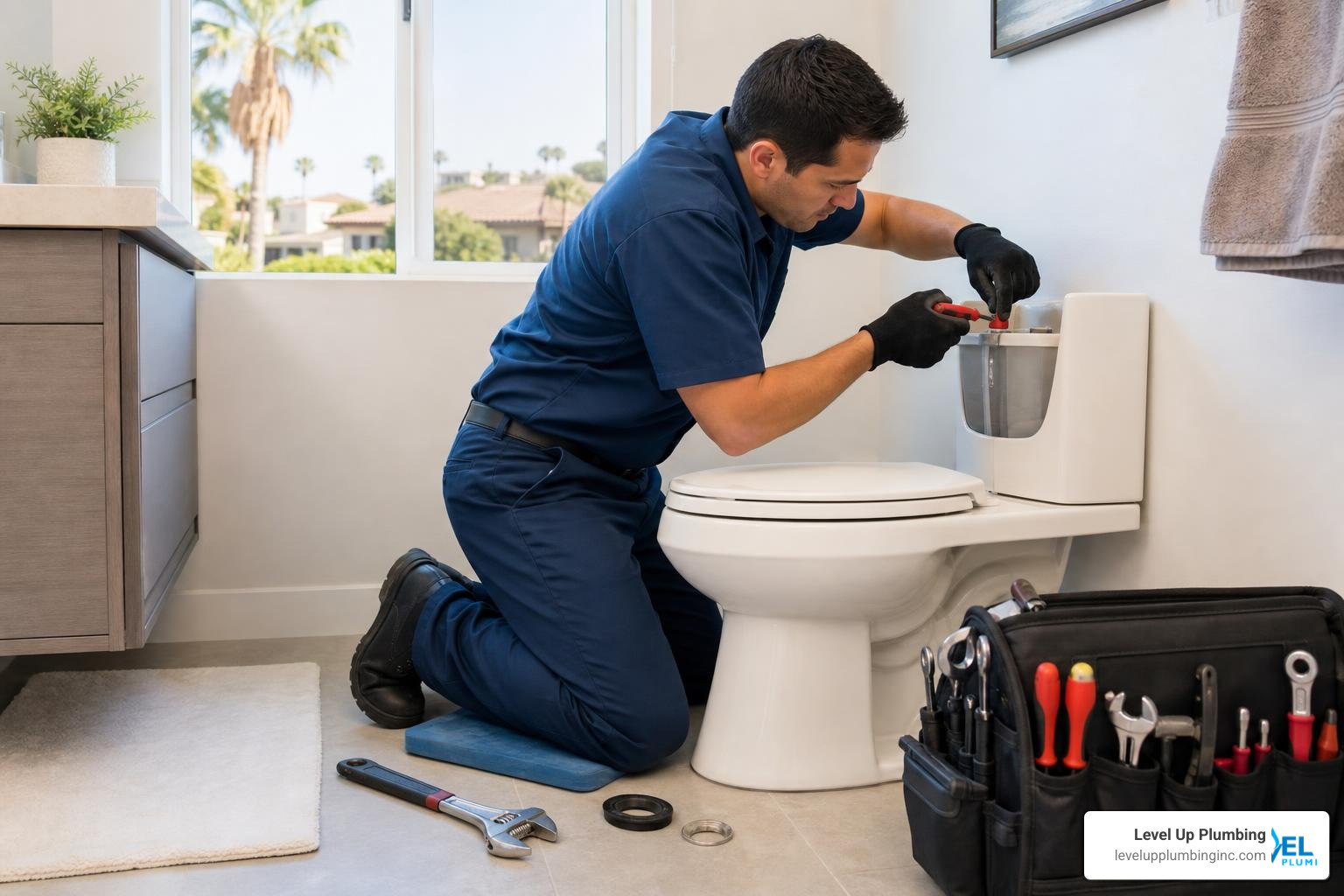
Here is what a professional service call looks like:
- Rapid Response: A customer service representative schedules a convenient window or dispatches an emergency technician if your toilet is overflowing.
- Diagnostic Assessment: The technician arrives in a fully stocked service vehicle, protects your flooring with shoe covers, and performs a thorough diagnostic check of your toilet and surrounding drains.
- Upfront Estimates: Before any work begins, you should receive a clear, straightforward explanation of the problem along with an upfront, flat-rate estimate.
- Expert Repair & Cleanup: The plumber resolves the blockage or repairs the damaged components, tests the system multiple times to ensure proper flow, and thoroughly cleans the workspace.
Simple Unclogging vs. Full Toilet Replacement
Not every toilet issue requires a brand-new fixture. In many cases, we can restore your toilet to perfect working order by replacing a few key internal components.
A constantly running toilet, for example, is usually caused by a worn-out flapper valve, a faulty fill valve, or a misaligned float mechanism. Over time, the soft rubber of the flapper valve becomes warped or rigid due to hard water minerals, preventing a proper seal. This allows water to silently leak from the tank into the bowl, wasting thousands of gallons of water per year.
However, if your toilet is older, constantly clogs despite proper use, or has visible cracks in the porcelain bowl or tank, a replacement is often the smarter financial move. Upgrading to a modern, high-efficiency toilet (HET) that meets EPA WaterSense residential toilet standards can save a household up to 13,000 gallons of water per year. Since a quality toilet can last up to 20 years with proper installation, this upgrade quickly pays for itself in lower utility bills.
If you want to tackle a minor leak yourself before calling us, follow our step-by-step guide on How to Fix a Leaking Toilet Valve in 5 Quick Steps.
Frequently Asked Questions About Toilet Repairs
Do I need to buy my own toilet for a replacement, or can the plumber provide one?
You have complete flexibility! Property owners do not have to purchase a new toilet through their plumber. If you have a specific style, brand, or smart toilet in mind, you can purchase it yourself from any home improvement retailer, and we will gladly handle the professional installation.
Alternatively, we can provide a high-quality, professional-grade toilet from our trusted inventory. Whichever route you choose, we will ensure the installation is perfectly leveled, the wax ring is securely sealed, the water lines meet local plumbing codes, and the float and pressure are calibrated for maximum flushing power.
How much does professional clogged toilet repair typically cost?
The cost of professional toilet repair varies depending on the complexity of the issue. A simple, localized clog that can be cleared with a professional closet auger is highly affordable and can typically be resolved quickly.
If the clog is deep within your main sewer line and requires hydro jetting or camera diagnostics, the cost will be higher. Replacing a toilet entirely involves the cost of the new fixture, a new wax ring, supply lines, and the labor to remove and dispose of your old unit. At Level Up Plumbing, we believe in complete transparency, which is why we provide upfront, flat-rate pricing before we turn a single wrench.
How do I know if a recurring clog is a sign of a bigger sewer line problem?
There are several telltale signs that your recurring toilet clogs are actually symptoms of a main sewer line blockage:
- Multi-Fixture Backups: When you flush the toilet, water backs up into your shower, or when your washing machine drains, your toilet bubbles.
- Persistent Sewage Odors: You smell a strong sewer gas odor coming from your bathroom drains or yard.
- Outdoor Cleanout Overflow: You see standing water or raw sewage pooling around your outdoor sewer cleanout pipe.
- Gurgling Throughout the House: You hear constant gurgling or bubbling noises from multiple drains when water is running elsewhere in the home.
If you notice any of these signs, avoid running water or flushing toilets, and contact a professional plumber immediately to prevent a major backup.
Conclusion
A clogged toilet doesn’t have to ruin your week or threaten your home with water damage. By understanding the common causes of blockages, practicing preventive maintenance, and knowing when to put down the plunger and call in the professionals, you can keep your home’s plumbing running smoothly and reliably.
At Level Up Plumbing, we are proud to be a woman-owned, family-operated business serving Orange County, CA, including Huntington Beach, Cypress, and Garden Grove. With over 21 years of local expertise, we have built our reputation on award-winning customer service, transparent communication, and honest, dependable craftsmanship. Whether you need a simple clog cleared, a running toilet repaired, or a modern high-efficiency toilet installed, our team is here to help.
Don’t let plumbing worries disrupt your peace of mind. Schedule your service today with the trusted experts at Level Up Plumbing, or contact us online to get your home back in perfect flow!