
When Water Hides, the Damage Doesn’t: Your Guide to Orange County Leak Detection
If you need an Orange County leak detection service, here’s what you should know upfront:
- Specialized leak detection uses acoustic sensors and thermal imaging to find hidden leaks without tearing up your home.
- Slab leaks, in-wall leaks, and underground pipe leaks all require professional equipment — a general plumber may not have it.
- Moisture inspections can start as low as $199, and most electronic leak detection runs between $250 and $500.
- Orange County’s hard water (15–25 grains per gallon) accelerates pipe corrosion, especially in homes built between the 1960s and 1980s.
- The longer a leak goes undetected, the more it costs — both in water bills and structural damage.
Hidden water leaks are one of the most destructive problems an Orange County homeowner can face. The trouble is, they’re often invisible. Water silently works its way through concrete slabs, inside walls, and beneath your yard — sometimes for 9 months to a full year before anyone notices. By then, the damage to your foundation, flooring, and indoor air quality can be severe.
Orange County’s unique combination of aging housing stock and notoriously hard water makes this problem especially common here. Homes built decades ago with thinner copper pipes are quietly corroding right now, in neighborhoods all across the county.
The good news? Modern leak detection technology can pinpoint the exact location of a leak before a single tile is broken or a wall is opened.
I’m Tiffany Miley, owner of Level Up Plumbing and a Southern California trades professional with over 21 years of experience — including extensive work providing Orange County leak detection service to homeowners dealing with slab leaks, in-wall leaks, and everything in between. In this guide, I’ll walk you through exactly what to look for, what to expect, and how to protect your home before a small leak becomes a very expensive problem.

Orange county leak detection service word list:
The Hidden Danger of Slab and In-Wall Water Leaks
When water pipes are buried deep beneath a concrete foundation or sealed inside finished drywall, a leak isn’t just a plumbing issue—it is a direct threat to your home’s structural integrity.
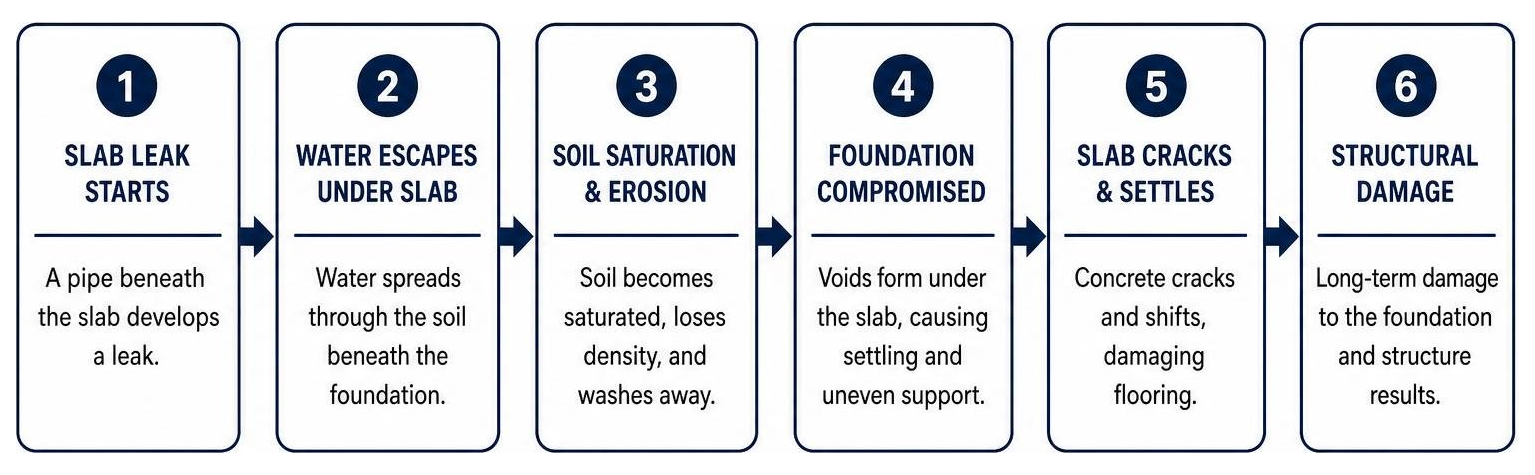
Slab leaks occur when the copper water lines running beneath your concrete foundation develop pinholes or cracks. Because these pipes are under constant pressure, water continuously sprays into the surrounding soil and concrete. Over time, this pressurized water washes away the supporting soil beneath your slab, leading to foundation settling, cracked drywall, and warped flooring.
In-wall leaks, on the other hand, occur within your vertical framing. While they may not threaten your foundation directly, they quickly destroy insulation, rot wooden studs, ruin plaster, and trigger toxic mold growth.
To inspect the deeper sewer and drain lines connected to these systems, advanced diagnostic tools are required. Using an Orange County Camera Inspection allows us to see exactly what is happening inside your drainage system without digging up your yard or breaking through your floors.
Below is a comparison of how slab leaks and in-wall leaks behave and the unique challenges they present:
| Feature | Slab Leaks | In-Wall Leaks |
|---|---|---|
| Primary Location | Beneath the concrete foundation floor | Inside vertical wall cavities and ceilings |
| Typical Pipe Material | Copper (often M-type) or galvanized steel | Copper, PEX, or CPVC |
| Primary Risk | Foundation settling, soil erosion, cracked slabs | Structural wood rot, ruined drywall, mold growth |
| Detection Complexity | High (requires acoustic and thermal equipment) | Moderate to High (requires moisture meters and thermal imaging) |
| Common Repair Method | Pipe rerouting, bypass, or direct slab penetration | Section replacement behind drywall |
Common Causes of Pipe Corrosion in Southern California
Why do pipes fail so frequently in places like Huntington Beach, Cypress, and Garden Grove? The answer lies in a combination of local water chemistry and historical building practices.
Southern California is famous for its hard water. According to the U.S. Geological Survey, water hardness is primarily caused by calcium and magnesium dissolved in the water. Orange County water typically registers between 15 and 25 grains per gallon (GPG) of hardness. This mineral-heavy water contains high concentrations of calcium and magnesium. When combined with the high pH levels of local municipal water, it triggers aggressive chemical reactions inside metal pipes.
Furthermore, many local homes built between the 1960s and 1980s were constructed using Type M copper piping. Type M is the thinnest grade of copper pipe approved for residential construction. Over decades, the combination of thin copper walls, abrasive hard water, and chemical reactions with the surrounding soil causes the metal to pit and fail.
These issues are not limited to cold water lines; thermal expansion and mineral buildup also put immense stress on hot water systems, eventually requiring homeowners to service or replace their Orange County Water Heaters alongside their primary water lines.
Warning Signs of a Hidden Water Leak
Because these leaks are hidden from view, you must rely on secondary clues to catch them early. If you notice any of the following warning signs, it is time to call in a specialist:
- Sudden Water Bill Spikes: If your water usage habits haven’t changed but your monthly bill has steadily climbed, water is escaping somewhere.
- Warm Spots on the Floor: If you walk barefoot across your tile or laminate floor and notice an unusually warm patch, a hot-water slab leak is likely radiating heat upward.
- Musty Odors: Water trapped behind drywall or under floorboards cannot dry out naturally. This creates a damp environment that smells heavily of mildew.
- Visible Mold or Bubbling Paint: Damp drywall will swell, causing paint to blister and peel. Dark green or black mold spots may also begin to appear along baseboards.
- The Sound of Running Water: If you hear water rushing, hissing, or dripping inside your walls when all faucets and appliances are completely turned off, you have an active leak.
How Electronic Leak Detection Saves Your Property
In the past, finding a hidden pipe leak involved a lot of guesswork and destructive demolition. Plumbers would hammer through drywall or jackhammer concrete slabs simply to find the source of the drip.
Today, electronic leak detection has completely changed the industry. By utilizing non-invasive diagnostic tools, we can pinpoint the exact location of a leak within inches, saving your flooring, walls, and sanity.
This process relies on two primary technologies:
- Acoustic Sensors: When water escapes from a pressurized pipe, it creates a distinct vibration and sound. Using highly sensitive ground microphones and acoustic listening devices, technicians can hear these vibrations through feet of concrete and soil.
- Thermal Imaging: Infrared cameras allow us to see temperature differences behind walls and under floors. A hot water leak will show up as a bright, spreading plume of heat, while a cold water leak will appear as a dark, cool shadow.
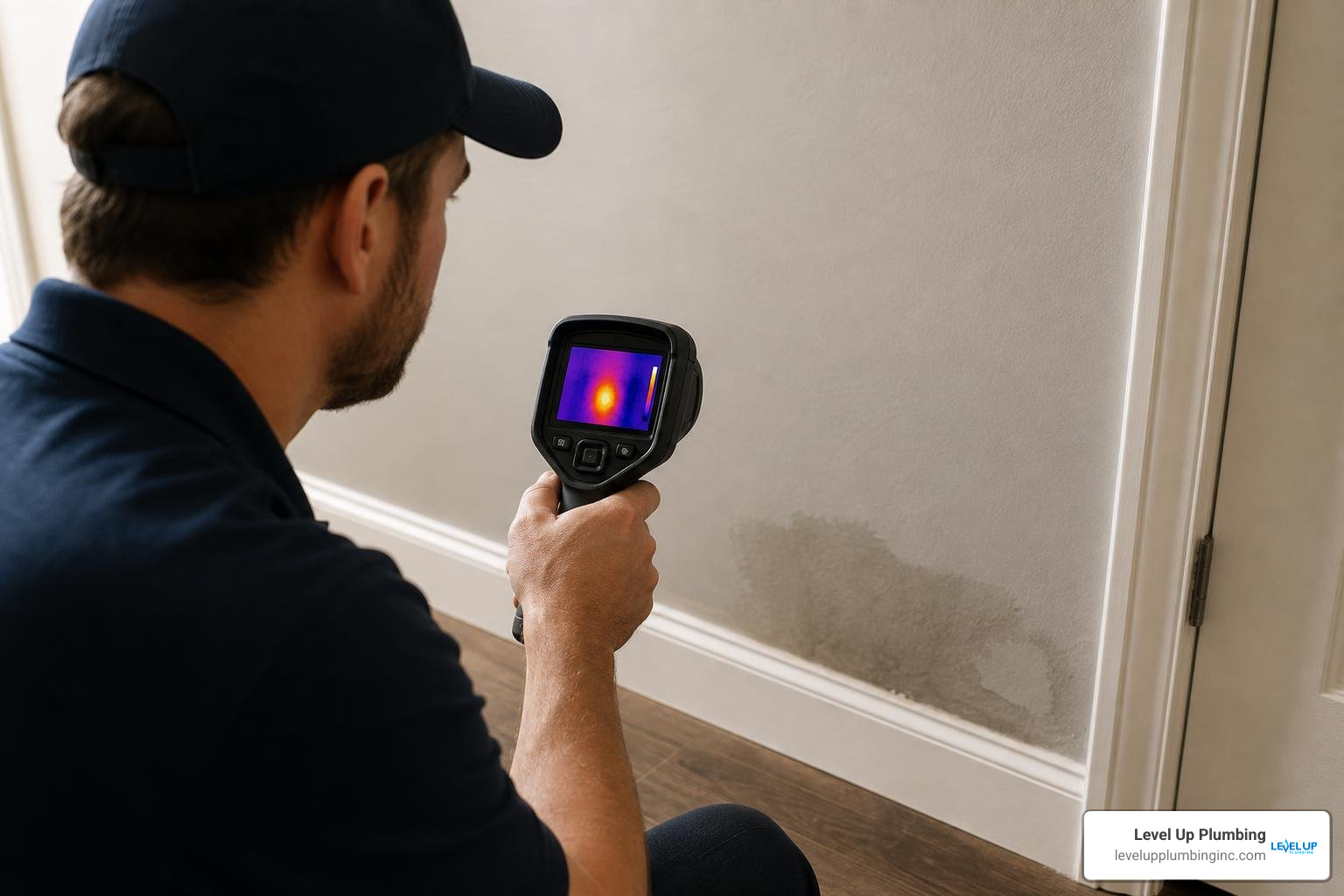
Using these tools means we do not have to guess where the problem is. We find it, mark it, and create a targeted plan for repair. For long-term peace of mind, many local homeowners choose to install Leak Defense Smart Home Systems, which monitor water flow 24/7 and automatically shut off the main water valve if a leak is detected.
What to Do Immediately If You Suspect a Slab Leak
If you suspect your home has an active slab leak, taking immediate action can prevent thousands of dollars in water damage. Follow these steps right away:
- Locate and Shut Off the Main Water Valve: This stops the flow of pressurized water into your home. The valve is typically located near your street curb or where the main water line enters your home.
- Drain the Remaining Water: Turn on the lowest faucet on your property (usually an outdoor hose bib) to relieve pressure and drain the remaining water out of the pipes.
- Turn Off Your Water Heater: If the leak is on a hot water line, turn off the power source (gas or electric) to your water heater to prevent it from overheating or running dry.
- Avoid Water Hammer: Do not turn valves on and off rapidly, as sudden pressure shifts can cause further damage to weakened pipes.
- Call an Emergency Plumbing Specialist: Contact a licensed professional who specializes in electronic leak detection to diagnose the issue.
Choosing the Right Orange County Leak Detection Service
When you are dealing with water actively pooling under your floorboards, you need a local team that can respond quickly. Level Up Plumbing proudly serves communities across Orange County, providing rapid diagnostic and repair services to homeowners in:
- Huntington Beach, CA
- Cypress, CA
- Garden Grove, CA
- Orange County, CA (and surrounding local areas)
If you are located within our service area, you can learn more about our local emergency response and diagnostic services on our dedicated Orange County page.
Why You Need a Specialized Orange County Leak Detection Service
It is a common misconception that any plumber can locate a hidden leak. While general plumbers are excellent at fixing visible pipes, clearing drains, and installing fixtures, they often lack the specialized, expensive electronic equipment required to locate hidden slab or in-wall leaks.
Hiring a general plumber without this equipment often results in “blind demolition”—cutting multiple holes in your walls or jackhammering your slab in search of the leak. A specialized leak detection company uses advanced acoustic and thermal technology to isolate the leak before making a single cut.
To understand how our specialized approach keeps your home intact, read more about our philosophy on finding the Best Plumber Orange County How We Can Help You.
What to Expect During an Orange County Leak Detection Service
When our technician arrives at your home, they will follow a systematic process to identify the leak without damaging your property:
- System Pressure Testing: We hook up pressure gauges to your water system to confirm whether the leak is on the hot water side, cold water side, or sewer system.
- Acoustic Listening: Using electronic microphones, we listen along the path of your plumbing lines to locate the sound of escaping water.
- Moisture Meter Analysis: We use digital moisture meters to scan walls and floors, mapping out the boundaries of the water intrusion.
- Sewer Line Evaluation: If the leak is suspected to be in your drainage system, we may perform an Orange County Drain Clearing followed by a camera inspection to locate structural breaks or root intrusions.
Our local team focuses specifically on the unique soil, hard water, and building codes of Southern California to ensure accurate diagnostics and long-lasting repairs.
Frequently Asked Questions About Orange County Water Leaks
How much does professional leak detection cost in Orange County?
The cost of professional leak detection in Orange County varies depending on the complexity of your home’s layout and the accessibility of the pipes. Basic moisture and leak detection inspections generally have a lower starting rate, while comprehensive electronic slab leak detection utilizing acoustic and thermal equipment is priced higher due to the specialized technology involved.
Local factors—such as whether the home has a single-story or multi-story layout, or if the water lines run through post-tension concrete slabs—will also influence the final diagnostic cost.
What is the difference between leak detection, leak repair, and a whole-house repipe?
These three terms represent different stages of addressing a plumbing failure:
- Leak Detection: This is the diagnostic phase where we locate the exact source of the leak using non-invasive technology.
- Leak Repair: This is the physical fix. It can involve a spot repair (breaking a small section of concrete to fix the pipe directly), a line reroute (abandoning the leaking pipe under the slab and running a new line through your walls or ceiling), or repairing an in-wall pipe.
- Whole-House Repipe: If your home has multiple leaks or aging copper pipes that are corroding due to hard water, a complete repipe is often the safest long-term solution. This involves replacing all the old water lines in your home with durable, corrosion-resistant PEX piping.
If your drainage lines are the source of the issue due to heavy scaling or root intrusion, we may recommend advanced cleaning techniques like Orange County Hydro Jetting to restore your pipes before performing repairs.
How long can a slab leak go undetected before causing major damage?
A slab leak can easily go undetected for 9 months to a full year. Because the water is escaping beneath a thick concrete slab, it often takes months for the water to saturate the soil, pool upward, and finally show visible signs on your flooring or baseboards.
During this time, the continuous moisture can cause structural wood rot, ruin your flooring, and lead to extensive mold growth behind your walls. Catching a leak early is the single best way to protect your home and prevent sky-high water bills.
Conclusion
When you suspect a hidden water leak in your home, time is not on your side. Waiting to address the issue only leads to larger water bills, mold growth, and structural damage to your property.
At Level Up Plumbing, we are proud to be a local, woman-owned plumbing company serving Huntington Beach, Cypress, Garden Grove, and the wider Orange County area. With over 21 years of local expertise, we combine advanced electronic leak detection technology with award-winning customer service to find and fix your leaks with minimal disruption to your home.
Don’t let a hidden leak damage your property. Contact us today to Schedule a Leak Detection Service and let our expert team protect your home.