
Is Using Flex Seal Copper Pipe Patching Safe?
When you discover water spraying from a pinhole leak, the immediate goal is preventing severe water damage. Slapping a rubberized patch onto a flex seal copper pipe joint seems like an easy weekend project. However, safety depends entirely on what kind of pipe you are patching and how much pressure is running through it.
Supply pipes in Orange County homes operate under continuous municipal line pressure. While applying an emergency patch can hold back small droplets temporarily, rubber coatings are simply not engineered to withstand continuous hydrostatic force. You can read more about balancing emergency containment with home safety in our guide on how to fix leak quickly and safely at the same time. Furthermore, independent tests and homeowner discussions on how Flex Seal performs on copper water pipes confirm that while adhesives stick to metal, internal pressure often finds a way out.
Can Flex Seal Copper Pipe Fixes Be Permanent?
The short answer is no. A flex seal copper pipe application should never be considered a permanent solution for home plumbing. Beyond the risk of physical failure, there are health and structural considerations:
- Lack of NSF-61 Certification: Drinking water lines require materials certified under NSF/ANSI 61 for potable water safety. Liquid rubber sealants and sprays are not approved for direct contact with household drinking water, as chemicals can potentially off-gas or leach into your water supply.
- Accelerated Metallic Corrosion: Trapping moisture under an airtight rubber layer on a damaged copper pipe can trap trapped water and minerals against the metal exterior, accelerating oxidation and weakening the surrounding pipe wall.
- Hidden Failure Risks: A surface patch hides the underlying problem. While the exterior looks dry, pinhole corrosion continues to eat away at the copper underneath until a major rupture occurs.
Flex Seal Copper Pipe Performance on Hot vs. Cold Lines
Temperature fluctuations create distinct challenges for temporary adhesive patches. Residential hot water lines experience thermal expansion and contraction as water heats up and cools down.
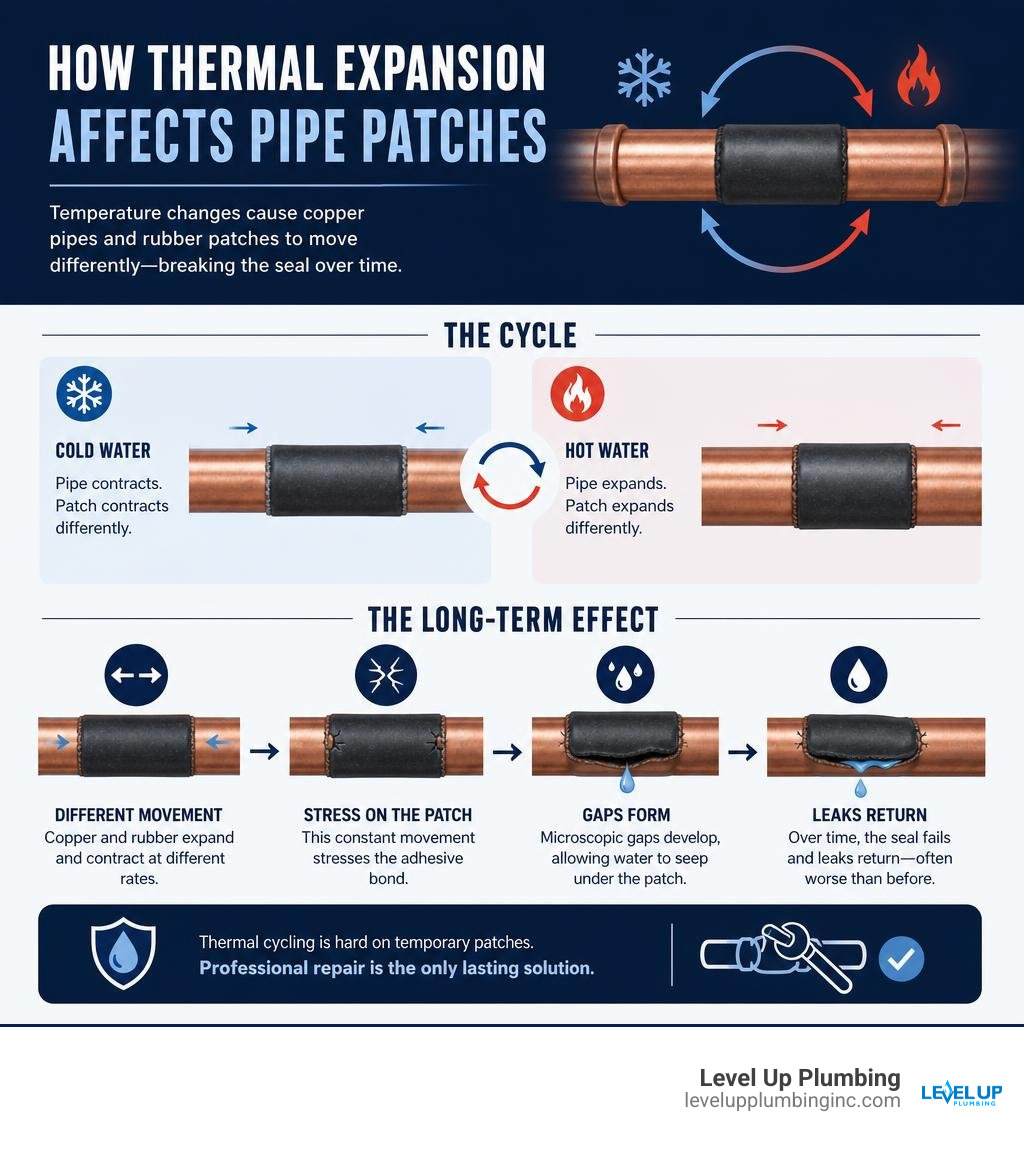
When hot water flows through a copper line, the metal expands. Rubberized tapes and liquid coatings expand and contract at different rates than copper metal. Over time, this thermal cycling breaks the adhesive bond, allowing hot water to seep underneath. Cold supply lines fare slightly better regarding adhesive stability, but they are prone to exterior condensation (sweating), which prevents topical sprays and tapes from bonding correctly if applied while the line is chilled or wet.
How to Apply Flex Seal to a Leaking Copper Pipe
If you face an after-hours emergency and need to contain a pinhole leak until our team arrives, applying a temporary patch can buy you precious hours.
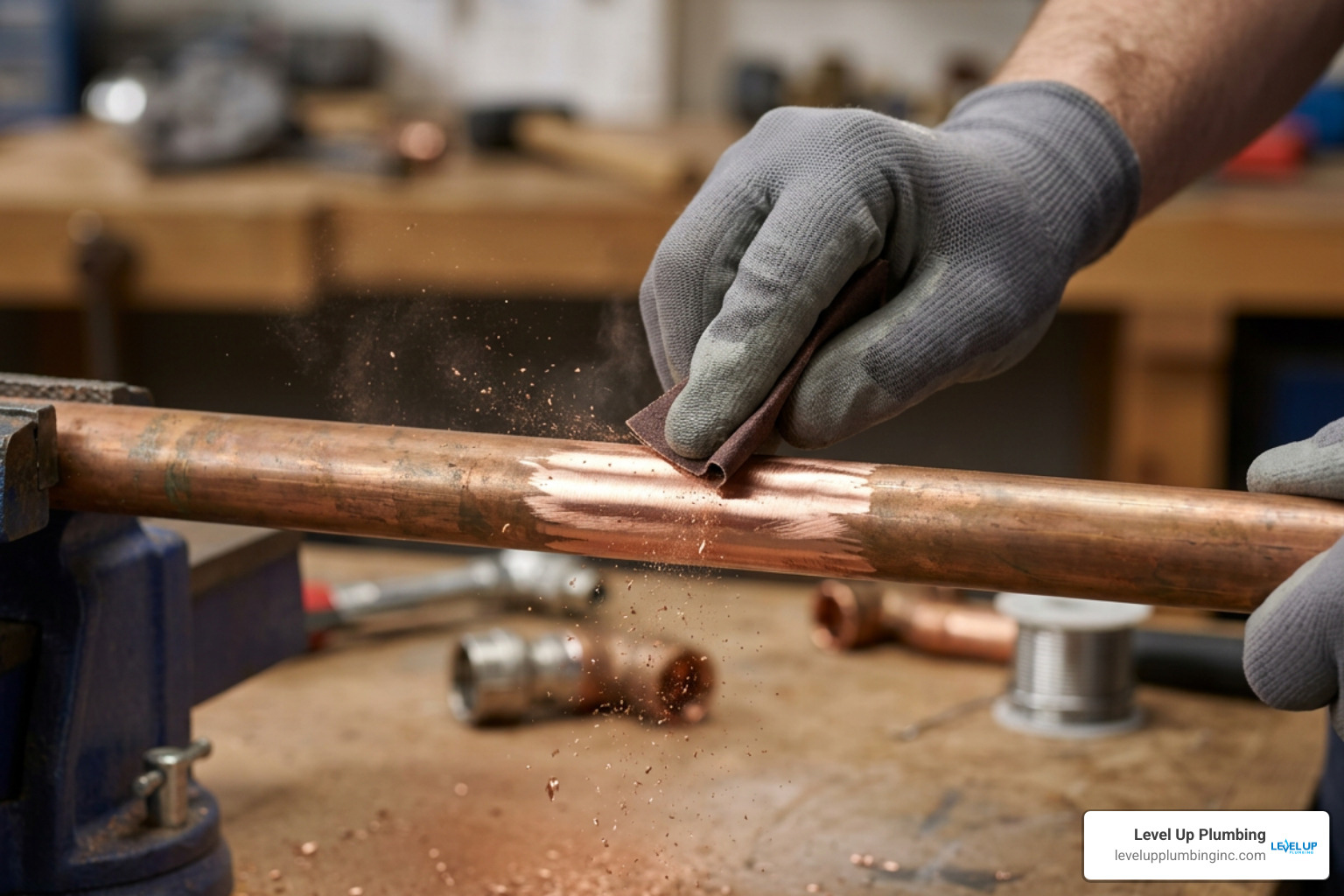
For a flex seal copper pipe patch to work at all, surface preparation must be meticulous. Moisture, grease, and corrosion will ruin the adhesive bond instantly.
| Product Type | Best Emergency Use Case | Curing Time Required | Water Pressure Status During Application |
|---|---|---|---|
| Flex Tape | Active pinhole leaks on low-pressure lines | Immediate bond; 24-hr full cure | Water MUST be shut off and line depressurized |
| Flex Seal Spray | Wide areas of light surface corrosion or hairline cracks | 2 to 3 hours per coat; 24-hr full cure | Line must be completely dry and turned off |
| Flex Seal Liquid | Brush-on application for non-pressurized drain pipes | 24 to 48 hours for full cure | Pipe must remain completely unused while drying |
Preparing the Pipe Surface for Proper Adhesion
To ensure the temporary patch holds, follow the proper surface preparation steps as outlined in the official manufacturer guide for Flex Tape:
- Shut Off the Main Valve: Turn off your main water supply valve immediately to relieve line pressure.
- Drain the Water Line: Open the lowest faucet in your home to drain remaining water from the pipes.
- Clean and Etch the Copper: Use an emery cloth or medium-grit sandpaper to gently clean tarnish, green oxidation, and dirt from the copper pipe. Etching the smooth metal gives the adhesive a textured surface to grab onto.
- Wipe Dry: Wipe the area completely dry with a clean rag. Any remaining water film will prevent a tight seal.
Wrapping and Curing the Emergency Patch
When applying Flex Tape, cut a section large enough to extend at least two inches past the damage on all sides. Peel off the protective backing and press the tape firmly onto the pipe. Wrap the tape tightly around the pipe multiple times, ensuring a heavy overlap between layers.
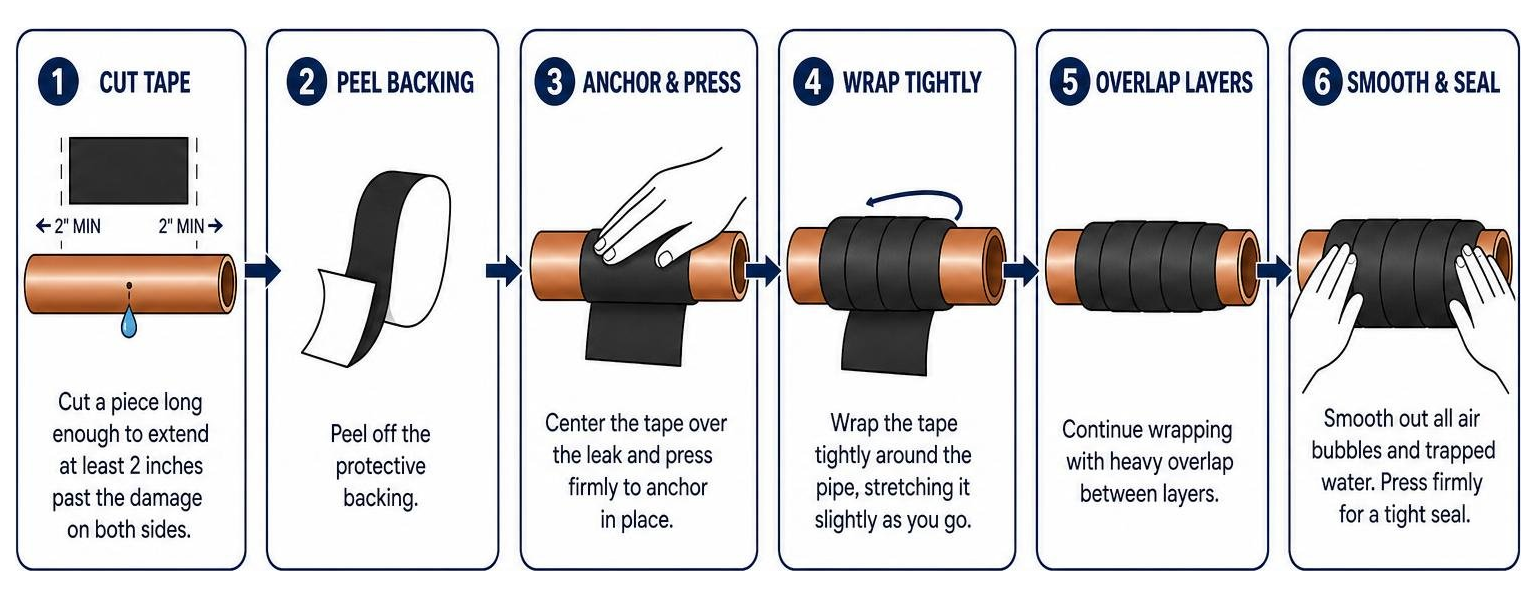
Use your fingers to smooth out all air bubbles and trapped water from under the tape. Allow the patch to cure—ideally waiting 24 hours before turning your water main back on. Re-pressurize the line slowly and watch closely for weeping droplets.
Risks and Limitations of Flex Seal on Pressurized Plumbing
Understanding home plumbing physics makes it easy to see why topical sealants struggle on supply pipes. Residential water pressure in Cypress and Huntington Beach typically ranges between 40 and 80 PSI (pounds per square inch).
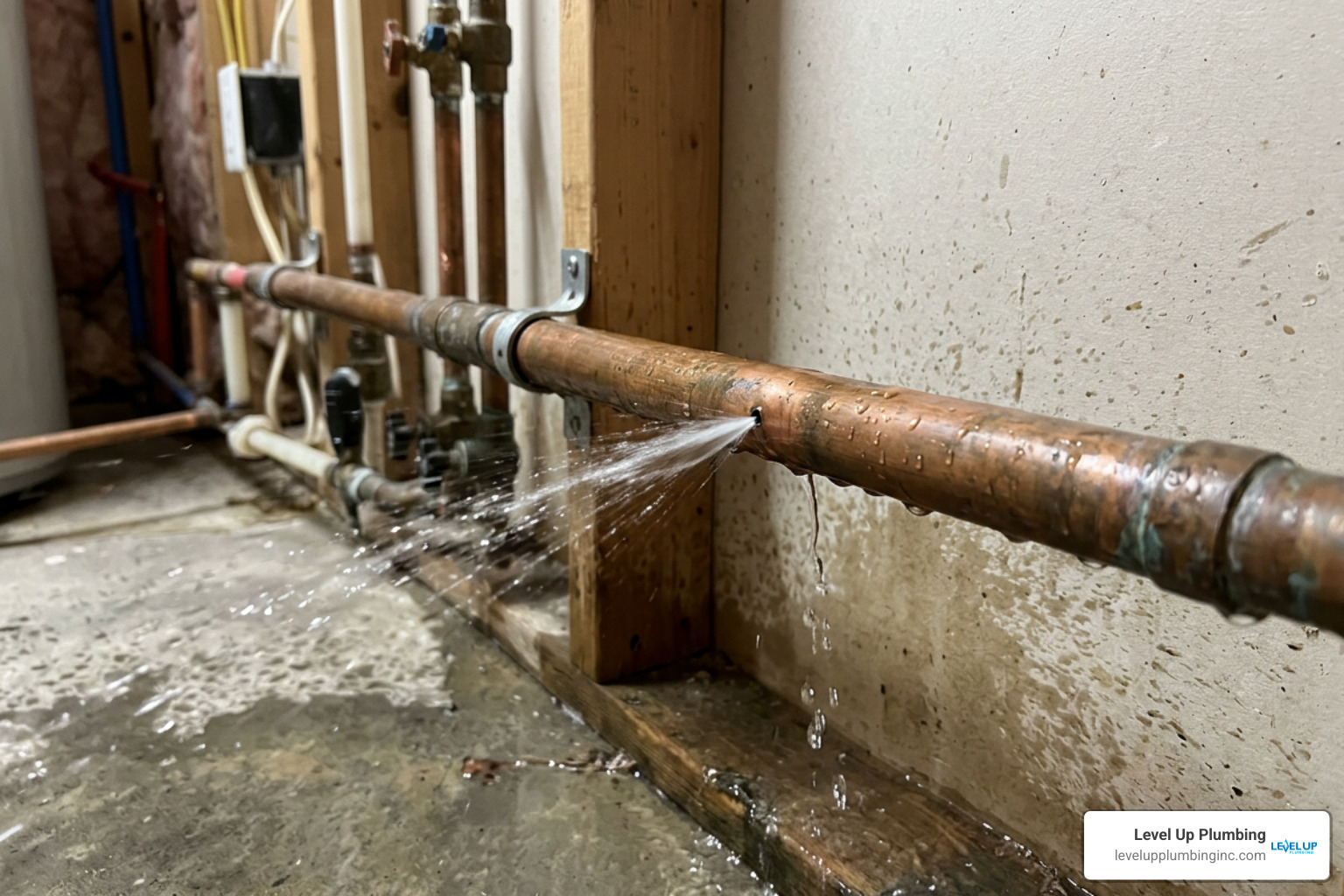
When a pinhole leak forms, water forces its way out with significant continuous pressure. A topical coating applied to the outside of the pipe is relying entirely on surface adhesion to fight against 60+ PSI pushing outward. Eventually, continuous water pressure will undermine the glue, causing the patch to bubble up and blow off.
Conversely, topical sealants perform much better on non-pressurized gravity-fed lines. If you are dealing with a leaking drain under a sink, you can learn proper temporary repair steps in our article on how to fix a leaking drain pipe joint fast.
Pressure Tolerances and Potable Water Concerns
Because standard home water lines operate at high hydrostatic pressure, using a chemical spray on a pressurized line violates standard plumbing codes. Furthermore, applying rubber coatings directly over copper drinking water lines raises safety concerns. Without NSF/ANSI 61 certifications for potable water contact, chemical off-gassing into your home’s fresh water system remains a real risk.
Better Alternatives for Permanent Copper Pipe Repair
Instead of risking a sudden indoor flood with a temporary flex seal copper pipe patch, homeowners have several reliable mechanical options for fixing copper leaks. If you want to understand proper plumbing techniques, explore our overview on how to master pipe replacement.
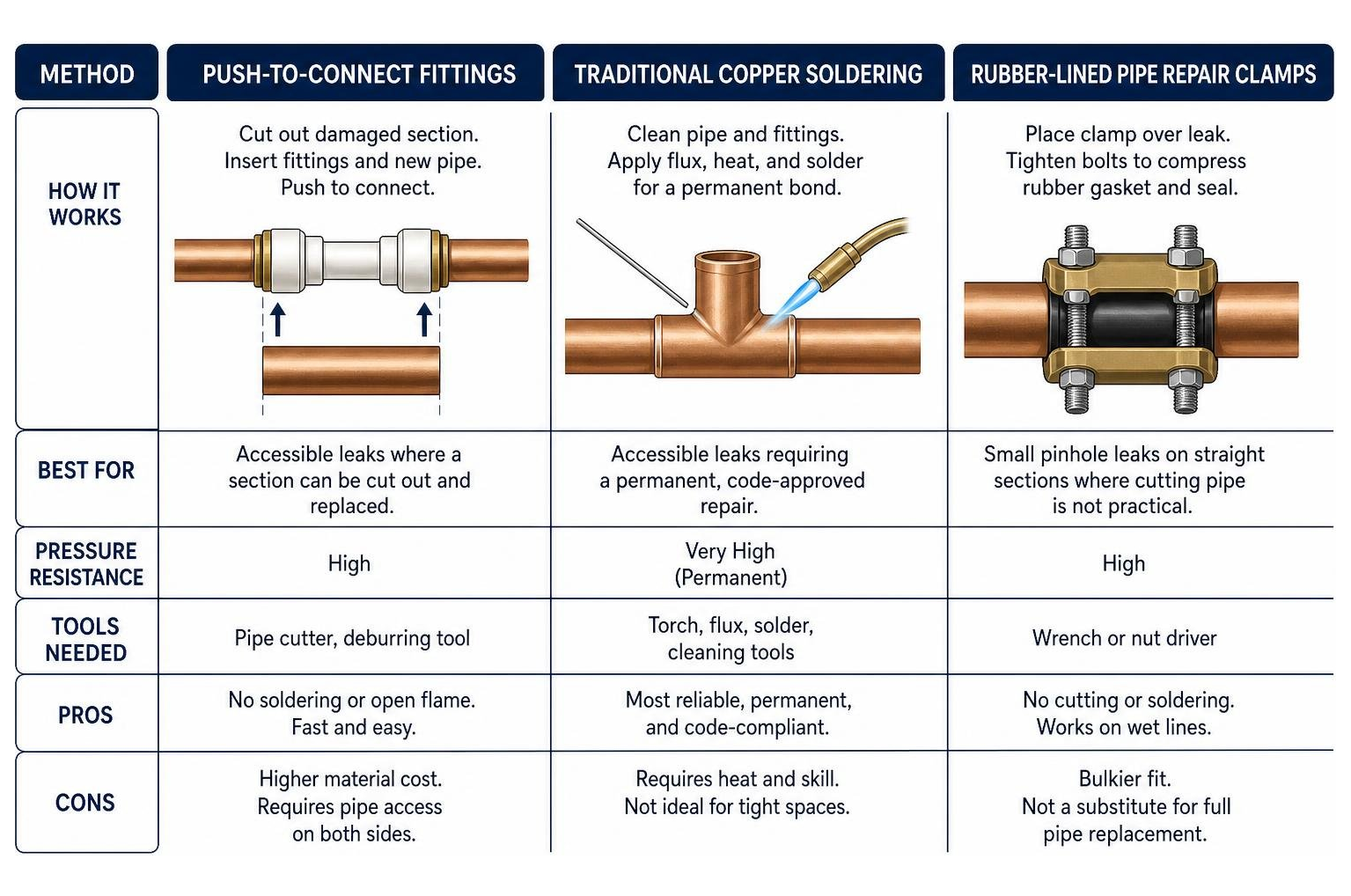
- Push-to-Connect Fittings: Connectors like SharkBite fittings allow you to cut out a damaged section of copper and snap in a new piece of pipe or PEX without requiring open flames or soldering torches.
- Traditional Copper Soldering: Sweating a copper coupling using flux, lead-free solder, and a propane torch remains the gold standard for a permanent, leak-free copper connection.
- Rubber-Lined Pipe Repair Clamps: A mechanical brass or stainless-steel pipe clamp uses bolted compression to force a heavy rubber gasket over a pinhole leak, offering far greater pressure resistance than adhesive tapes.
When to Call a Professional Plumber for Copper Leaks
While wrapping a pipe buys you temporary peace of mind overnight, calling a licensed plumber is necessary to safeguard your property.
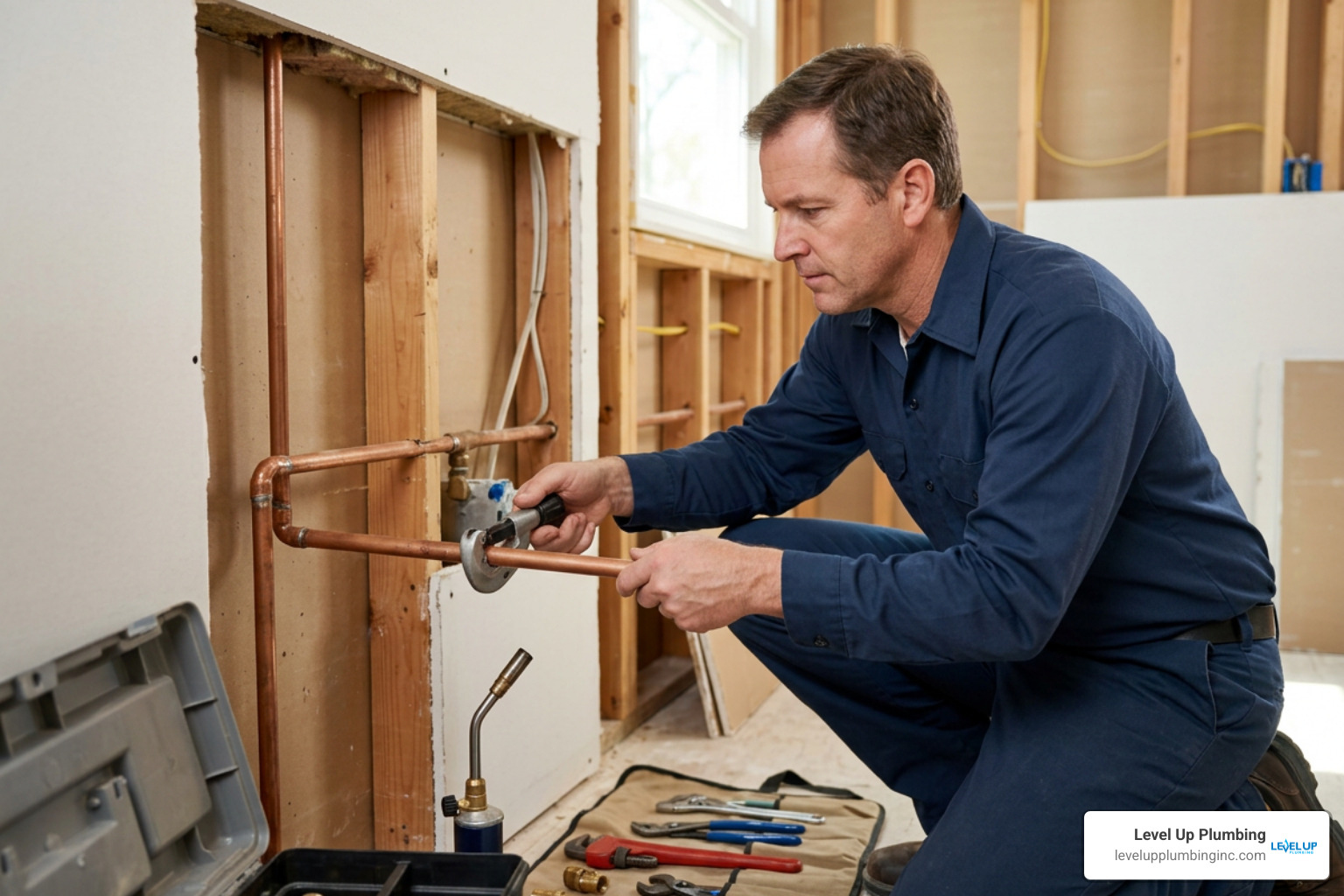
You should call a professional immediately if:
- The Leak is Inside a Wall or Ceiling: Water travels along studs and joists. A visible drip on your drywall often originates feet away from the actual pipe break.
- You Suspect a Slab Leak: Pinhole leaks under your concrete foundation can cause damp carpets, warm spots on floors, or unexplained jumps in your water bill.
- Pipes Show Signs of Pinhole Corrosion: If your copper pipes show multiple blue-green crusty spots (verdigris), the pipe walls are thinning from the inside out due to hard water or age. Patching one hole usually leads to another burst inches away.
At Level Up Plumbing, our team brings over 21 years of local expertise to diagnose hidden leaks quickly, protect your home, and perform code-compliant mechanical repairs.
Frequently Asked Questions About Repairing Copper Leaks
Will Flex Seal stop an active high-pressure water pipe leak?
No. Flex Seal products will not adhere properly to wet surfaces under active line pressure. Water pushing out from the leak prevents the adhesive from bonding to the copper metal. You must shut off the main water valve and dry the pipe completely before applying any temporary emergency patch.
How long will Flex Seal hold on a copper water pipe?
At best, a well-applied patch on a depressurized, clean pipe might hold for 24 to 48 hours once line pressure is restored. It should strictly be treated as short-term relief while you wait for a plumber to complete a permanent repair.
Is Flex Seal safe to use on drinking water lines?
No. Flex Seal products are not certified under NSF/ANSI Standard 61 for potable drinking water contact. Spraying or coating lines that supply your drinking water poses chemical off-gassing risks and violates local plumbing safety codes.
Conclusion
When a pipe breaks unexpectedly, using a flex seal copper pipe patch can serve as a quick emergency measure to slow water damage while you shut off your main valve. However, continuous water pressure, thermal expansion, and a lack of drinking water safety certifications mean tape and spray solutions are never a substitute for true plumbing work.
To protect your home from sudden flooding and costly repairs, rely on permanent mechanical fixes. If you suspect hidden pinholes or foundation leaks, contact Level Up Plumbing today for expert Professional Slab Leak Repair Services.