What to Do When Your Toilet Won’t Flush
Clogged toilet repair is something most homeowners will face at least once — and usually at the worst possible moment.
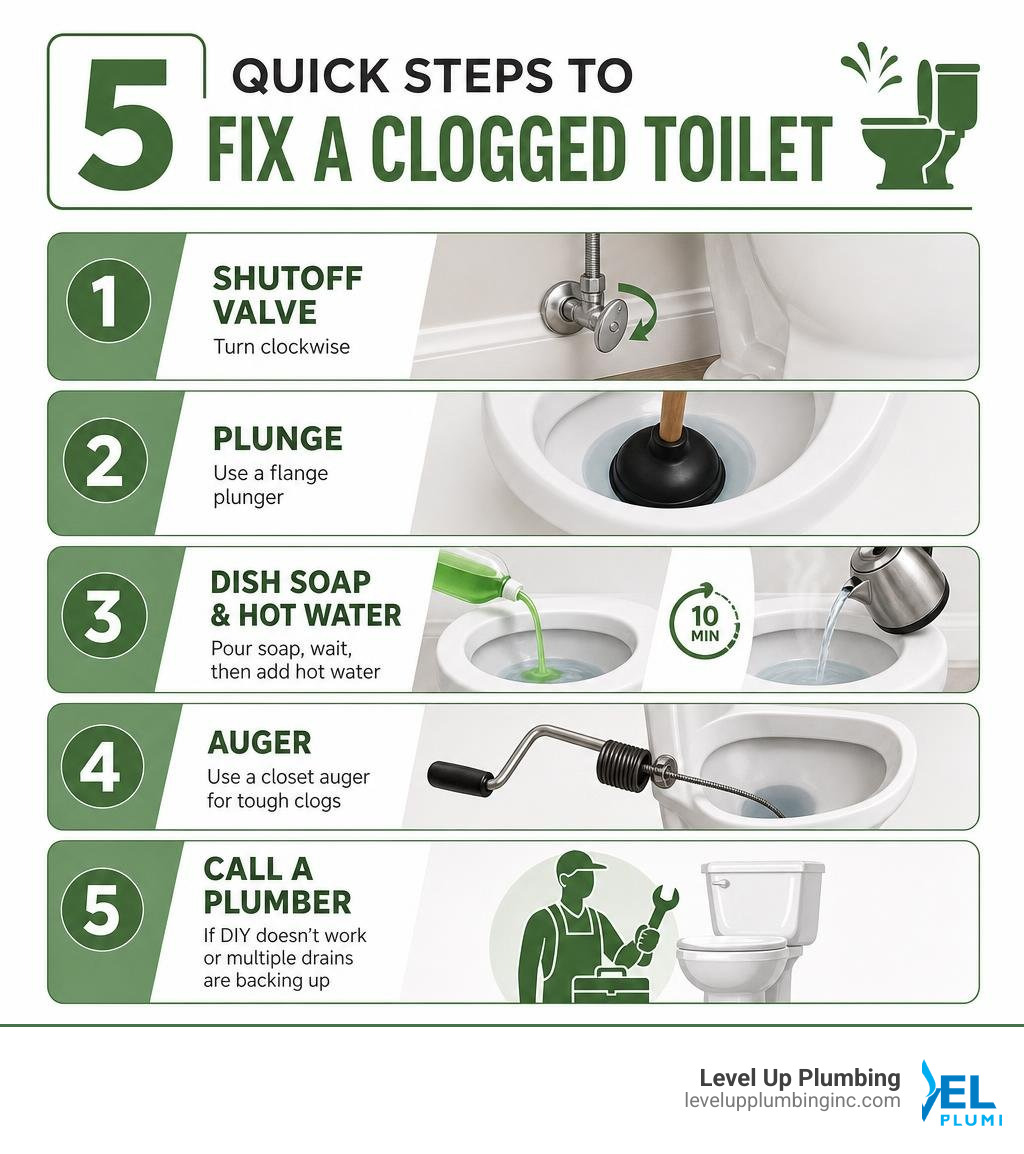
Here are the five fastest fixes, in order:
- Stop the overflow — turn the shutoff valve clockwise behind the toilet
- Plunge it — use a flange plunger with a proper seal (clears ~90% of clogs)
- Try dish soap and hot water — pour half a cup of dish soap, wait 10 minutes, add hot tap water
- Use a closet auger — for hard objects or clogs that survive plunging
- Call a plumber — if multiple drains are backing up, or DIY fails after a few attempts
A clogged toilet can go from minor inconvenience to real property damage fast. Water damage from a toilet overflow can run into the thousands of dollars — and sewage backup cleanup can cost far more. That’s why acting quickly and using the right method matters.
The good news? Most clogs are simple. They happen right in the curved trap below the bowl, and a plunger handled correctly will clear them in minutes.
This guide walks you through five practical fixes — from stopping an overflow to knowing when to hand it off to a pro — without the guesswork.
I’m Tiffany Miley, owner of Level Up Plumbing in Huntington Beach, CA, with over 21 years of experience in Southern California’s plumbing and trades industries, including hands-on clogged toilet repair for homeowners across Orange County and Los Angeles County. Whether it’s a simple trap blockage or a stubborn sewer line issue, I’ll show you exactly what works — and what to skip.
Quick look at clogged toilet repair:
1. Stop the Overflow and Assess the Clog Location
The panic that sets in when you flush a toilet and the water level keeps rising, threatening to spill over onto your clean bathroom floor, is unmatched. Before you reach for any tools or remedies, your immediate priority is to stop a potential flood.
Once the crisis is averted, you can figure out exactly where the blockage is located. Knowing whether the problem is right in the toilet bowl or deeper in your home’s main sewer line will determine your next steps.
Emergency Steps to Prevent Water Damage
If the water in the bowl is rising and looks like it is about to overflow, do not stand there and hope for the best. You need to act fast.
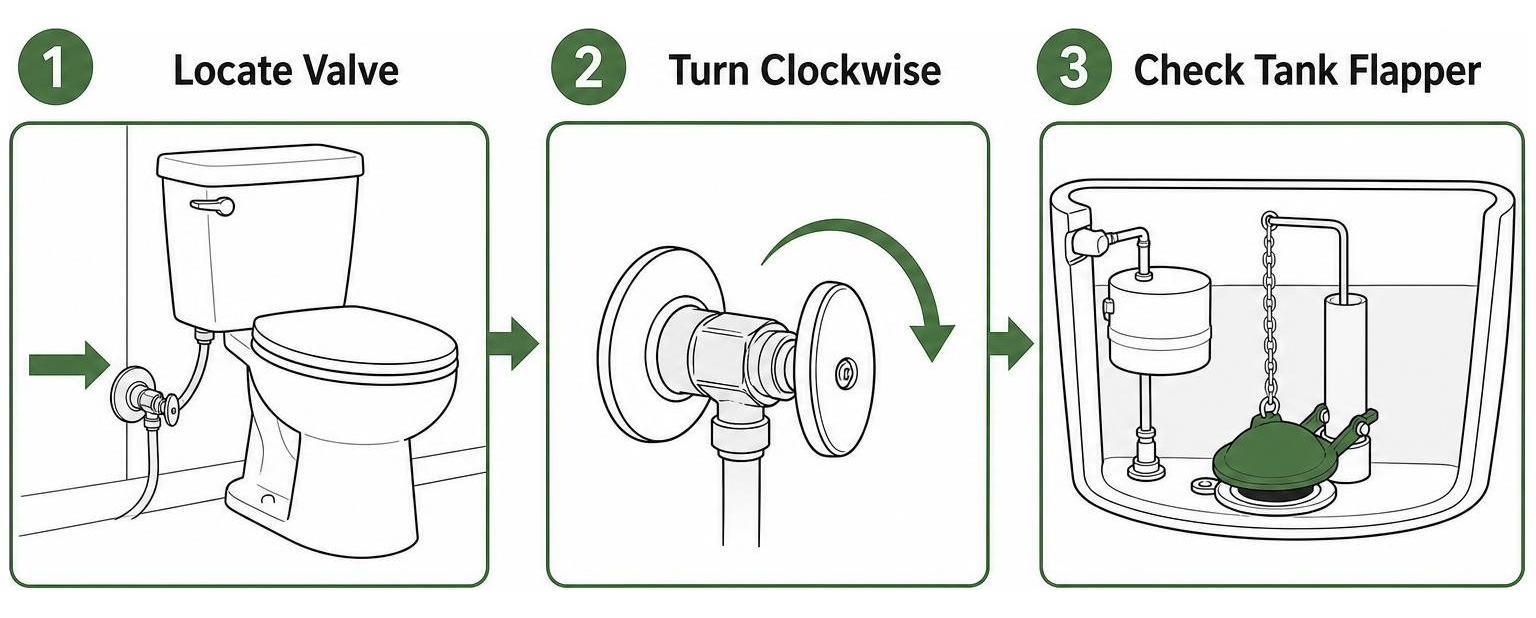
First, locate the water shutoff valve on the wall behind the toilet. Turn this chrome handle clockwise until it stops. This cuts off the water supply to the tank, preventing any more water from entering the bowl.
If the valve is stuck or hard to turn, don’t force it to the point of breaking. Instead, quickly lift the lid off the toilet tank. Reach inside and locate the rubber flapper at the bottom of the tank. Push the flapper down by hand to seal the flush valve. This stops water from draining from the tank into the bowl. You can also hook the float cup or float ball upward to trick the fill valve into thinking the tank is full, stopping the water flow.
Once you have stopped the flow of incoming water, you need to prepare the area. Place old towels or newspapers around the base of the toilet to protect your flooring from stray splashes. If the bowl is filled to the absolute brim, you should bail some water out. Use a small disposable cup or a wet/dry vacuum to lower the water level until the bowl is only half-full. This gives you enough room to work without splashing dirty water everywhere.
Taking these steps quickly can save you from costly water damage repair bills or extensive professional sewage cleanup.
Diagnosing the Blockage: Toilet Trap vs. Main Sewer Line
Now that the immediate emergency is under control, it is time to figure out what you are dealing with. Is the clog isolated to the toilet, or is it a symptom of a much larger issue?
Most standard toilet blockages occur right in the S-shaped trap, which is the curved channel molded into the porcelain structure of the toilet bowl. This trap is designed to hold a small amount of water to block sewer gases from rising into your home. However, its tight curves also make it the prime spot for excess toilet paper or foreign objects to get stuck. If you want to dive deeper into how this works, check out our guide on how to fix toilet problems fast by using simple tools.
To determine if the clog is local, ask yourself these questions:
- Is only one toilet backed up while the sinks, showers, and other toilets in the house drain perfectly?
- When you flush the toilet, does the water level simply rise in the bowl without affecting any other fixtures?
If yes, you are dealing with a standard, localized toilet clog. This usually happens when too much toilet paper or organic waste gets caught in the narrow trapway.
On the other hand, if you notice multiple fixtures backing up simultaneously — for example, if water bubbles up into your bathtub when you flush the toilet, or if your bathroom sinks make gurgling noises — the blockage is likely in the main sewer line. Persistent sewer gas odors inside the house are another clear indicator of a deep line issue. In these cases, standard DIY methods won’t work, and attempting to clear it yourself can push the blockage further down. You can learn more about identifying these serious issues in this resource on Toilet Clogged – How to Fix | PlumbersDen.
2. Master the Flange Plunger Technique for Clogged Toilet Repair
When it comes to clogged toilet repair, the plunger is your absolute best friend. In fact, roughly 90% of all toilet clogs can be successfully cleared with a plunger if you use the right tool and the correct technique.
However, many homeowners grab the wrong type of plunger or use a fast, splashy motion that does more to mess up the bathroom than clear the pipe.
Choosing the Right Tool: Flange vs. Cup Plunger
Not all plungers are created equal. If you are using a flat, red rubber cup plunger on your toilet, you are making the job incredibly difficult.
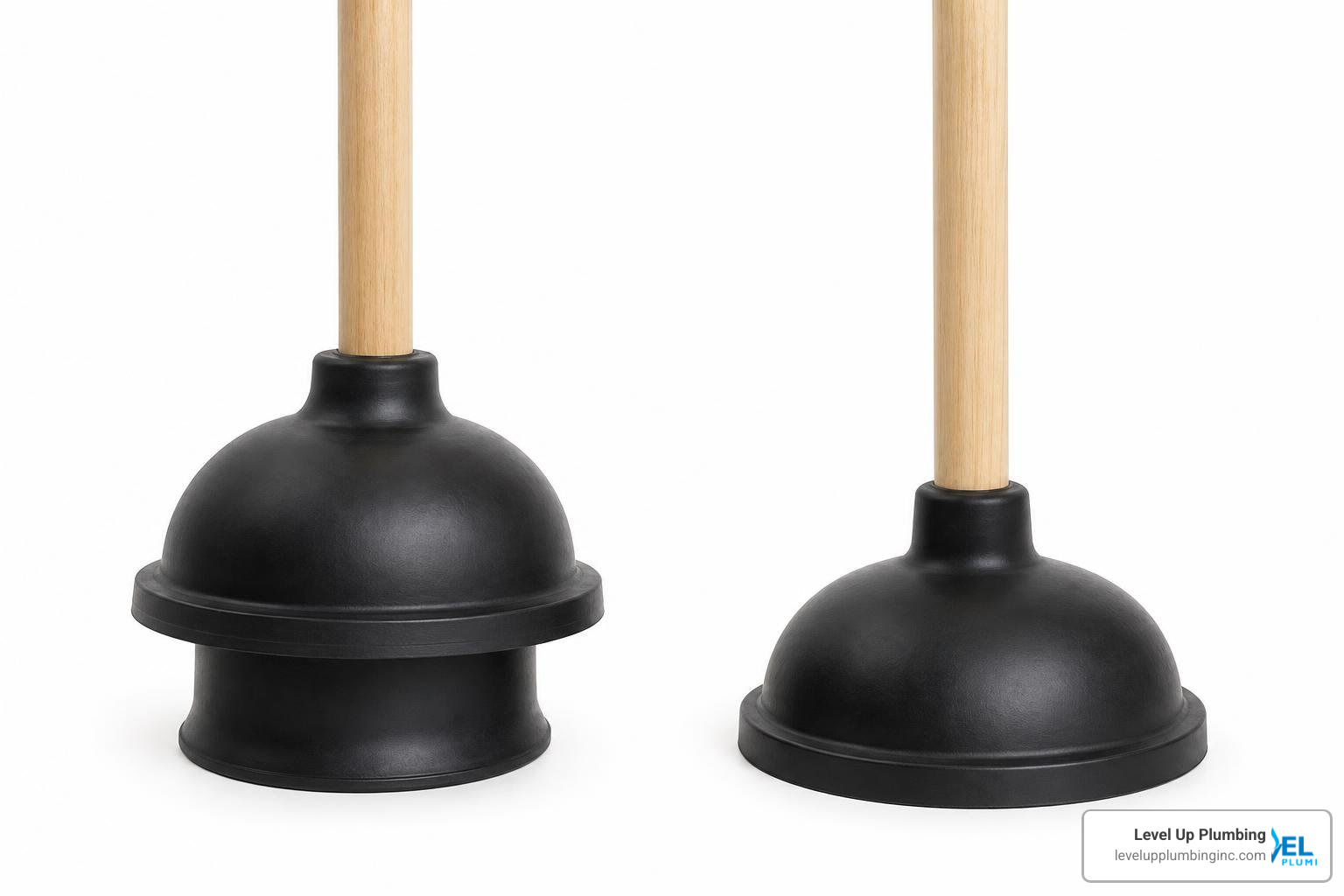
A standard flat cup plunger is designed specifically for flat surfaces, like kitchen sinks, utility drains, or bathtubs. Because a toilet drain is curved and recessed, a flat plunger cannot form the airtight seal required to build up pressure.
For toilets, you must use a flange plunger (often called a toilet plunger). A flange plunger features an extended rubber sleeve or “lip” that folds out from the bottom of the main dome. This extended collar is designed to fit snugly inside the opening at the bottom of the toilet bowl, creating a tight seal.
These plungers are inexpensive and widely available at any hardware store in Orange County, CA. Investing in a proper flange plunger is the single best step you can take to make DIY toilet repair quick and painless.
Step-by-Step Guide to Proper Plunging
Once you have your flange plunger ready, follow these steps to clear the clog without creating a mess:
- Submerge and Angle: Lower the plunger into the toilet bowl at an angle. This allows the rubber dome to fill with water rather than trapping a large pocket of air. If you plunge with a dome full of air, the first push will force that air out around the sides, splashing dirty water all over you and your bathroom floor.
- Establish the Seal: Fit the extended flange securely into the drain opening. Ensure the rubber cup is completely submerged in water. If there isn’t enough water in the bowl to cover the head of the plunger, add some water from a bucket or sink. Trying to plunge through air will not generate the pressure needed to break up the blockage.
- The Gentle First Push: Push down gently. This expels any remaining trapped air without breaking the seal.
- Execute Firm Pumps: Once the air is out, perform 10 to 15 firm, rapid push-and-pull strokes. Keep the plunger perpendicular to the drain and maintain the seal throughout.
- Focus on the Pull: The pull stroke is just as important as the push. Pulling backward creates a vacuum that rocks the clog back and forth, loosening it from the narrow trapway.
- Release and Test: After a series of pumps, pull the plunger away quickly. If the water drains out of the bowl with a satisfying whoosh, you have successfully cleared the block.
3. Try Safe Household Remedies Without a Plunger
If you don’t have a plunger handy, or if you want to try a hands-off approach before getting physical, several household remedies can help clear minor, organic clogs. These methods work best on soft blockages made of toilet paper and organic waste.
The Dish Soap and Hot Water Lubrication Trick
One of the most effective DIY remedies involves using standard liquid dish soap and hot water. Dish soap acts as a lubricant, breaking down fats and greases while coating the porcelain trapway to help the clog slide through.
To use this method:
- Pour half a cup of liquid dish soap directly into the toilet bowl. Let it sit for 10 to 15 minutes to settle and penetrate the blockage.
- While you wait, heat a gallon of water. Crucial Safety Warning: Do not use boiling water. Pouring boiling water into a cold ceramic toilet bowl can cause thermal shock, instantly cracking the porcelain and turning a simple clog into an expensive replacement job. Keep the water temperature around 120°F to 140°F (hot tap water is perfect).
- Pour the hot water into the bowl from waist level. Pouring from a height adds gravitational force, pushing the soapy water down against the clog.
- Let the mixture sit for another 15 to 30 minutes. If successful, you will see the water level gradually drop as the clog lubricates and slides down the drain.
The Baking Soda and Vinegar Fizz Method
Another classic household remedy is the combination of baking soda and white vinegar. When mixed, these two ingredients create a chemical reaction that produces carbon dioxide gas. This fizzing action can help loosen and break up soft paper clogs.
- Pour one cup of baking soda directly into the toilet bowl.
- Slowly pour two cups of white vinegar in a circular motion. Pour it slowly, as the mixture will begin to fizz and expand rapidly. You don’t want it bubbling over the rim.
- Let the mixture sit for at least 20 to 30 minutes, or overnight if you have a slow-draining toilet.
- Once the fizzing has settled, pour a bucket of hot tap water into the bowl to help flush the loosened debris away.
4. Upgrade to a Closet Auger for Stubborn Blockages
When a plunger fails to clear a clog after several attempts, or if you know a hard object has been dropped into the bowl, it is time to put down the plunger and pick up a closet auger (also known as a toilet snake).
Using a plunger on a hard object, like a child’s toy, a toothbrush, or a plastic cap, will only wedge it deeper into the trapway, making it much harder to retrieve.
When to Put Down the Plunger and Pick Up an Auger
If you hear a solid “thud” when you try to flush, or if your plunger has yielded no results after multiple vigorous attempts, you are likely dealing with a stubborn or solid obstruction.
A standard closet auger is designed specifically for toilets. It features a rigid metal shaft, a hand crank, and a flexible cable that reaches roughly three feet. This length is perfect because it is long enough to navigate the entire length of the toilet’s internal porcelain trapway where almost all local clogs sit.
Augers are highly effective and are a budget-friendly addition to any homeowner’s plumbing toolkit.
How to Safely Clear a Clog with a Closet Auger
Using an auger requires a bit of finesse to avoid damaging your toilet.
- Protect the Porcelain: A standard metal drain snake designed for sinks will scratch, chip, and leave permanent grey marks on the porcelain glaze of your toilet bowl. A proper closet auger features a protective rubber or plastic sleeve at the bend of the tube. Ensure this sleeve rests firmly against the bottom of the bowl to protect the porcelain.
- Insert the Cable: Pull the auger handle all the way up so the cable retracts into the tube. Insert the curved end of the auger into the drain opening, making sure the protective sleeve is resting against the ceramic.
- Crank and Push: Gently push down on the handle while rotating the crank clockwise. The rotation helps the flexible spring-loaded cable navigate the sharp bends of the toilet trap.
- Retrieve or Break Up: If you feel resistance, do not force it aggressively. Instead, reverse the rotation (counter-clockwise) and pull back slightly, then resume cranking forward. This action will either hook a solid object (allowing you to pull it back out of the bowl) or break up a dense paper clog so it can pass through.
- Test the Flush: Once the handle is pushed all the way down, carefully retract the cable. Flush the toilet to ensure the water flows freely.
5. Know When to Call a Professional Plumber
While DIY methods are highly successful for minor clogs, some situations require professional expertise. Pushing a stubborn clog too hard can damage your pipes, break the wax seal at the base of your toilet, or lead to a major sewage backup.
When to Call a Professional for Clogged Toilet Repair
You should stop your DIY attempts and call a licensed professional plumber immediately if you experience any of the following:
- Uncontrolled Overflow: If water continues to rise or leak from the base of the toilet even after you have shut off the water valve.
- Failed DIY Attempts: If you have tried plunging and augering multiple times with no success.
- Water Pooling at the Base: Water leaking out from where the toilet meets the floor is a sign of a failed wax ring. This seal must be replaced to prevent structural wood rot and sewer gas leaks. Learn more about starting this process in our guide on how to start toilet repair in Orange County CA.
- Multiple Fixtures Backing Up: If water backs up into your shower, tub, or sinks when you flush. This points directly to a main sewer line issue. For emergency help, contact our local experts immediately.
To help you decide whether to keep troubleshooting or call in the pros, consider this comparison table:
| Scenario | Recommended Action | Risk of Ignoring |
|---|---|---|
| Single slow-draining toilet | DIY Plunging / Auger | Complete blockage over time |
| Water leaking around toilet base | Call a Professional | Rotting subfloors, mold growth |
| Water backing up in tub when flushing | Call a Professional | Whole-house backup, severe water damage |
| Foreign object dropped in toilet | DIY Shop-Vac or Call a Pro | Wedging object permanently in sewer line |
If you are unsure of your next step, remember: When in Doubt Call a Plumber.
Professional Clogged Toilet Repair Tools and Methods
When we visit your home for a clogged toilet repair, we don’t just use standard hardware store tools. We utilize advanced diagnostic and clearing equipment to resolve the issue safely and permanently:
- Sewer Camera Inspections: We feed a high-definition, waterproof camera down your drain lines to see exactly what is causing the blockage. This eliminates guesswork and allows us to inspect the structural integrity of your pipes.
- Hydro-Jetting: For severe blockages or main line clogs caused by grease, scale, or tree roots, we use hydro-jetting. This method uses high-pressure water to scour the inside of your pipes, restoring them to like-new condition without using harsh chemicals.
- Power Augers: Heavy-duty, motorized drain snakes that can cut through tough obstructions deep within your home’s drainage system.
These professional tools are accessed through a designated drain cleanout. If you are unfamiliar with this component of your home’s plumbing, read our helpful overview on what is a cleanout.
For professional service in our local Orange County communities, including Huntington Beach, Cypress, and Garden Grove, our team at Level Up Plumbing is always ready to help. We provide fast, reliable, and expert toilet repair and installation services tailored to your home’s needs.
Common Mistakes to Avoid and How to Prevent Future Clogs
Preventing a clog is always easier — and far cleaner — than fixing one. By avoiding common DIY pitfalls and adopting a few smart habits, you can keep your bathroom plumbing running smoothly for years to come.
Common DIY Mistakes That Cause Costly Damage
When trying to clear a clog quickly, many homeowners make mistakes that turn a simple fix into an expensive plumbing emergency:
- Using Chemical Drain Cleaners: Commercial chemical cleaners are highly corrosive. They generate intense heat to dissolve clogs, which can warp or crack plastic pipes, damage older metal lines, and eat away at the wax ring seal under your toilet. Additionally, if the chemical fails to clear the clog, you are left with a bowl full of toxic, caustic water that makes plunging or augering highly dangerous.
- Pouring Boiling Water: As mentioned, boiling water can easily crack the porcelain of your toilet bowl due to thermal shock.
- Double Flushing: If your toilet does not flush completely the first time, do not flush it a second time to “see if it will go down.” This is the number one cause of messy toilet overflows.
- Aggressive Plunging: Plunging too violently can rupture the wax seal at the base of the toilet, leading to hidden leaks and sewer gas odors in your home.
Proactive Habits to Prevent Future Toilet Blockages
To minimize the chances of dealing with another backup, keep these preventative tips in mind:
- Only Flush the “Big Two”: The toilet is designed to handle only human waste and toilet paper. Never flush paper towels, facial tissues, napkins, diapers, dental floss, or feminine hygiene products.
- The Truth About “Flushable” Wipes: Despite what the packaging claims, flushable wipes do not disintegrate in water like toilet paper does. They remain intact and are one of the leading causes of residential and municipal sewer line clogs.
- Practice Two-Step Flushing: If you need to use a significant amount of toilet paper, flush once midway through, and then a second time when you are finished.
- Keep the Lid Closed: This prevents small items like toothbrushes, hair clips, or children’s toys from accidentally falling into the bowl.
- Consider Hard Water Solutions: In areas of Orange County with hard water, mineral buildup can narrow your toilet’s drain pipe and clog the small jet holes under the rim, leading to weak flushes. Installing a water softener can help prevent this issue.
Frequently Asked Questions About Toilet Blockages
Why is my toilet clogged but still slowly draining?
A slowly draining toilet indicates a partial clog. Water can slowly seep past the obstruction, but the toilet will not flush properly. It is highly recommended to clear a partial clog immediately. If ignored, the loose debris will continue to catch more waste, quickly turning into a complete and more difficult blockage.
Can I use a regular drain snake in a toilet?
No. A standard metal plumbing snake has exposed metal coils that will scratch, gouge, and permanently stain the porcelain glaze of your toilet bowl. Always use a proper closet auger, which features a protective plastic or rubber sleeve designed to keep the metal cable from touching the porcelain.
Is it safe to leave a clogged toilet overnight?
Yes, if the clog consists of soft organic waste and toilet paper. Over time, water will naturally saturate and break down paper fibers, causing the blockage to “relax” and sometimes clear on its own by morning. However, do not attempt to flush the toilet to check on it until you have verified that the water level has dropped back to normal.
Conclusion
Handling a clogged toilet doesn’t have to be a stressful experience. By keeping a cool head, stopping any potential overflows immediately, and using the right tools like a flange plunger or a closet auger, you can resolve the vast majority of blockages on your own.
However, when a clog is deep, persistent, or affecting multiple drains in your home, seeking professional help is the safest way to protect your property and your family’s health.
If you are located in Orange County, CA, and need reliable, expert assistance, Level Up Plumbing is here to help. We are a proud, woman-owned plumbing company with over 21 years of local expertise. From professional toilet installation and repair services in Orange County to emergency drain cleaning, our award-winning team provides fast, transparent, and dependable service.
We happily serve our local neighbors across the region, including:
- Huntington Beach, CA
- Cypress, CA
- Garden Grove, CA
- Orange County, CA
For professional, honest service you can trust, visit our Level Up Plumbing in Huntington Beach page or contact us today to schedule your service. Let us help you level up your home’s plumbing!