
What to Do When Your Bathtub Drain Pipe Is Leaking
A bathtub drain pipe leaking is one of the most common — and most damaging — plumbing problems a homeowner can face. Here’s a quick overview of how to fix it:
- Prepare the workspace and remove the drain flange
- Replace the rubber gasket under the tub
- Apply fresh plumber’s putty or silicone around the flange
- Reinstall and tighten the drain flange
- Test for leaks by filling the tub and observing from below
That’s the short version. Keep reading for the full step-by-step breakdown.
Water damage from plumbing leaks accounts for roughly 24% of all home insurance claims in the U.S. A slow bathtub drain leak alone can waste up to 3,000 gallons of water per year — and most homeowners don’t even realize it’s happening until they see a stain on the ceiling below.
The tricky part? A bathtub drain pipe can leak without any obvious signs at the tub itself. The water quietly soaks into the subfloor, the ceiling joists, or the wall cavity — where mold can take hold fast.
The good news: most bathtub drain pipe leaks are fixable with basic tools and a couple of hours.
I’m Tiffany Miley, owner of Level Up Plumbing in Huntington Beach — a woman-owned plumbing company serving Orange County and LA County. With over 21 years of experience in Southern California’s trades, I’ve diagnosed and repaired more bathtub drain pipe leaking situations than I can count, from simple gasket replacements to hidden subfloor damage. Let’s walk through exactly how to find and fix yours.
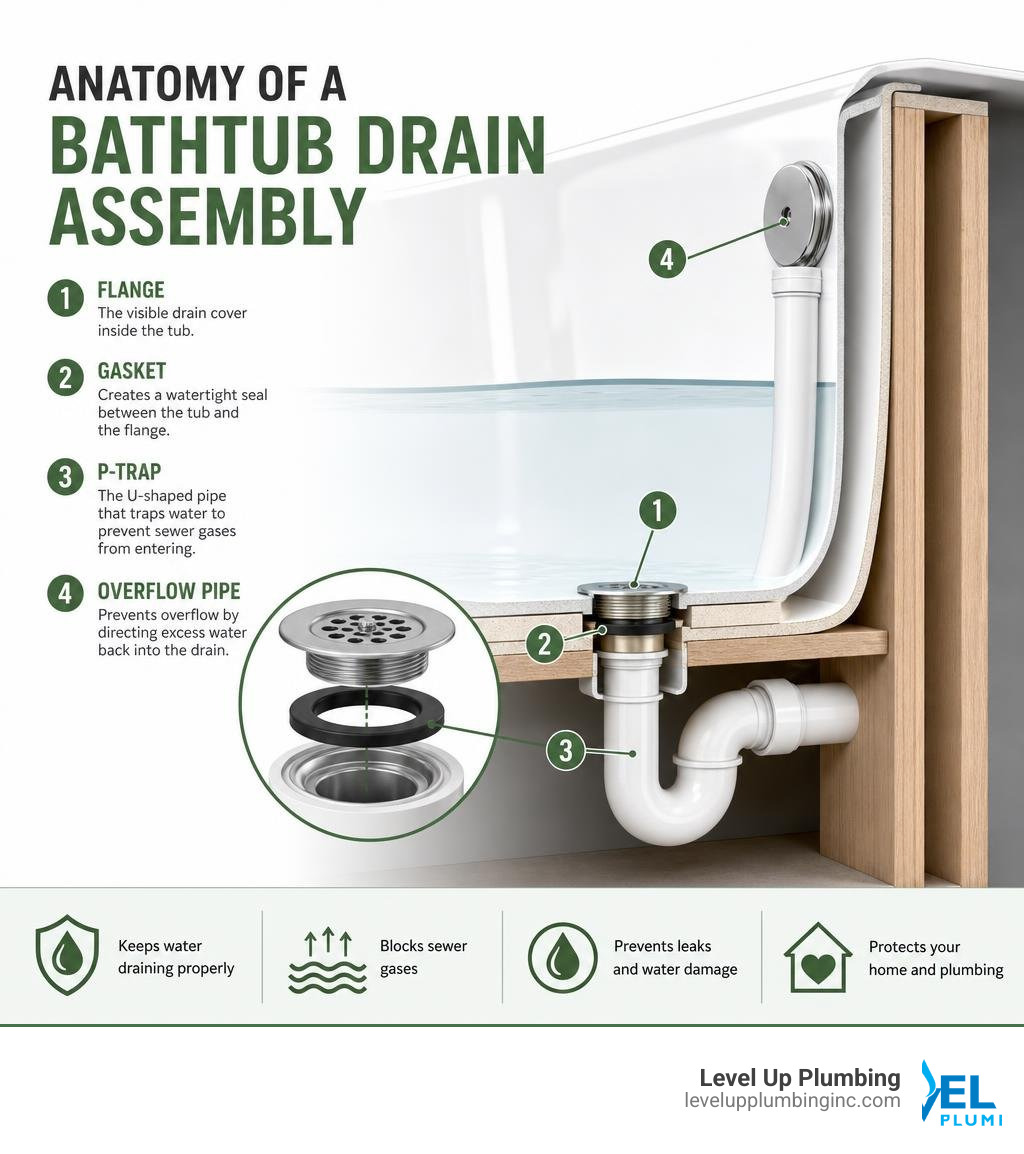
Basic bathtub drain pipe leaking vocab:
Why is Your Bathtub Drain Pipe Leaking?

Before you grab your wrench, you need to understand the anatomy of your bathtub’s drainage system. A bathtub doesn’t just have a single pipe running straight down into the sewer. It is a system of interconnected parts, and a failure in any one of them can result in a bathtub drain pipe leaking.
The primary components of a bathtub drain assembly include:
- The Drain Flange (or Strainer): This is the finished metal piece you see inside the tub where the water exits. It is threaded into the drain pipe below.
- Plumber’s Putty or Silicone: This seals the gap between the upper surface of the tub and the underside of the drain flange.
- The Rubber Gasket: Located directly underneath the bathtub, this heavy-duty rubber washer cushions and seals the connection between the bottom of the tub and the drain shoe.
- The Drain Shoe: The L-shaped metal or plastic pipe that connects the drain flange to the rest of the waste lines.
- The Overflow Pipe: The vertical pipe running up the back of the tub that prevents water from spilling over the rim. It connects to the drain line below the tub.
- The P-Trap: The curved section of pipe below the drain shoe that holds a small pool of water to block sewer gases from entering your bathroom.
To help you understand the best ways to seal these components, here is a quick comparison of the two primary sealants used during repairs:
| Sealant Type | Best Use For | Pros | Cons | Curing Time |
|---|---|---|---|---|
| Plumber’s Putty | Cast iron, steel, and porcelain bathtubs | Easy to work with, non-hardening, easy to remove later | Can stain or degrade acrylic, fiberglass, or porous stone | None (can be used immediately) |
| 100% Silicone | Acrylic, fiberglass, composite, and plastic tubs | Watertight, flexible, safe for all synthetic materials | Messy to apply, difficult to clean up, hard to remove | 24 hours |
Weight and Pressure Factors in a Bathtub Drain Pipe Leaking
One of the most baffling scenarios for homeowners is a bathtub that leaks only when draining a full tub, but remains bone-dry during a standard shower.
This happens because of two physical forces: water weight and head pressure.
When you take a shower, water drains immediately. There is very little standing water in the tub, meaning the weight on the floor and the plumbing is minimal. However, when you fill a standard bathtub, you are adding 40 to 60 gallons of water. Since water weighs roughly 8.34 pounds per gallon, a full tub adds 330 to 500 pounds of weight, not including the weight of the person bathing!
This massive weight causes the bathtub to settle and flex slightly. If your drain assembly is rigidly connected or has older, brittle slip joints, this structural movement can pull the drain flange away from the tub or split old rubber gaskets.
Furthermore, a full tub of water creates significant “head pressure” (hydrostatic pressure) at the bottom of the drain. This pressure forces water out of tiny hairline cracks or loose joints that wouldn’t normally leak under the gentle trickle of a shower. If you are dealing with this type of issue, our guide on how to fix a bathtub drain leak when closed can help you pinpoint whether the leak is happening while holding water or only during active drainage.
Material Degradation and Chemical Damage
Over time, the materials beneath your tub naturally degrade. In older Orange County homes — especially those built between the 1950s and 1980s in areas like Cypress or Garden Grove — you may find galvanized steel or brass drain assemblies. These metals are highly susceptible to galvanic corrosion, which occurs when dissimilar metals are joined together in the presence of water, causing the metal to rust, thin, and eventually crack.
Modern homes typically use PVC (polyvinyl chloride) or ABS (acrylonitrile butadiene styrene) plastic drain kits. While plastic doesn’t rust, it is highly vulnerable to chemical damage. Pouring harsh chemical drain cleaners down your tub to clear hair clogs can generate extreme heat and chemical reactions that warp plastic pipes, melt slip-joint washers, and dry out the rubber gaskets under your tub.
If you want to dive deeper into how material choices affect repairs, check out this DIY guide to bathtub drain pipe leak repair for an in-depth material analysis.
How to Diagnose the Source of the Leak
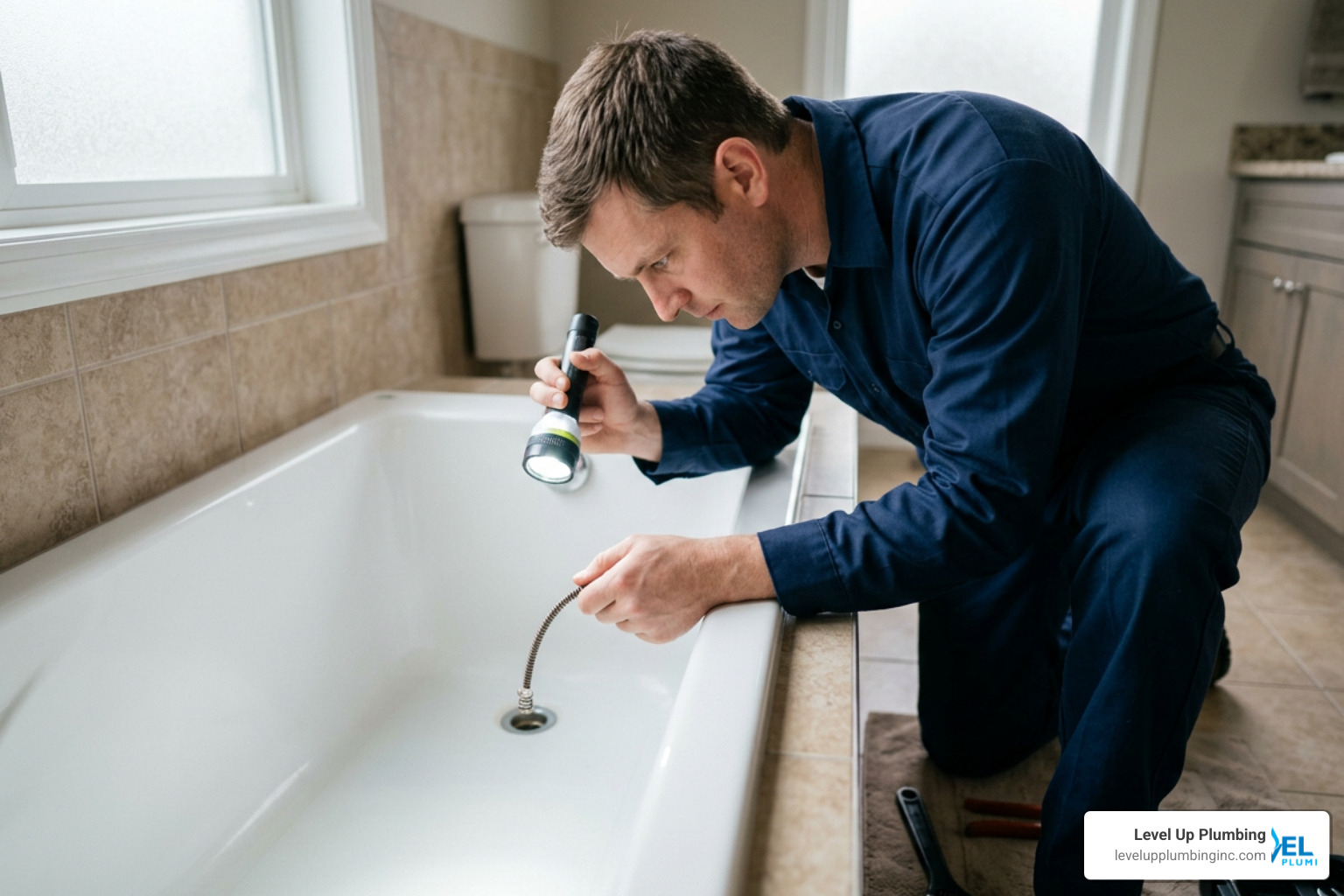
Before you start tearing out drywall, you must verify exactly where the water is escaping. A leak that looks like a bathtub drain pipe leaking could actually be a faulty overflow gasket, a loose faucet connection behind the wall, or even failing grout lines along the tub tile.
Here are the best diagnostic methods we use at Level Up Plumbing:
- The Access Panel Inspection: Many homes have a plumbing access panel in the closet or hallway behind the tub. If you have one, open it up and shine a flashlight inside while someone runs the water. If your tub is on a concrete slab (common in single-story Huntington Beach homes) or you don’t have an access panel, you may need to inspect the ceiling directly below the bathroom for dampness.
- The Paper Towel Test: Wrap dry, clean paper towels around the P-trap, the drain shoe, and the overflow pipe joints. Run a small amount of water. Check the towels for dampness. Because water is clear, a slow drip on plastic or metal can be hard to see with the naked eye, but a paper towel will show wet spots immediately.
- Dye Testing: If you have a slow, elusive leak, fill the tub with water and mix in a few drops of dark food coloring. Watch the pipes below. The colored water will make it incredibly easy to track the exact path of the drip.
Distinguishing Between Drain Flange, Gasket, and Overflow Leaks
To avoid replacing parts that aren’t actually broken, use this quick isolation test to distinguish between different leak sources:
- The Stopper Test (Flange & Putty Check): Plug the drain completely. Fill the tub with 3 to 4 inches of water. Mark the water level with a piece of tape. Wait 30 minutes. If the water level drops but there is no water leaking under the tub, your stopper is simply failing. If the water level drops and you see water dripping below, your plumber’s putty or the drain flange threads are compromised.
- The Drain Shoe & P-Trap Check: If the tub holds water perfectly when plugged, but starts dripping the moment you open the drain, the leak is located in the drain shoe, the slip-joint washers, or the P-trap. For general advice on resolving these active pressurized leaks safely, see our article on how to fix leaks quickly and safely.
- The Overflow Assembly Test: If the leak only occurs when the tub is filled to the very top, the issue is almost certainly the overflow gasket. This foam or rubber ring behind the tub’s overflow plate dry-rots over time. When water splashes into the overflow grate, it leaks down the outside of the pipe instead of staying inside.
Identifying a Bathtub Drain Pipe Leaking Under Load
If your diagnostics show no leaks when you run the faucet, but a steady drip appears when a person actually sits in a full tub, you are dealing with a leak under load.
To confirm this, perform a two-person test:
- Have one person sit in the dry tub (to simulate the weight) while the other inspects the drain assembly from below with a flashlight. Look closely for any separation between the rubber gasket and the bottom of the tub.
- Next, fill the tub with water and have the person step inside. Inspect the joints under the tub again. The added weight will often cause a hairline crack in a plastic slip-nut or a rusted section of metal pipe to flex open and start spraying water.
How to Fix Leaking Bathtub Drain Pipe in 5 Easy Steps
If you’ve confirmed that your bathtub drain pipe leaking is coming from the drain flange or the rubber gasket directly beneath the tub, you can complete this repair yourself using a few specialized tools.
Essential Tools and Materials Checklist
Before starting, gather the following items:
- Drain Removal Tool (Dumbbell Wrench or Smart Dumbbell): A specialized tool that fits into the crosshairs of your drain flange so you can unscrew it without scratching the metal.
- Adjustable Wrench or Channel Lock Pliers
- Flathead and Phillips Screwdrivers
- Replacement Rubber Drain Gasket (ensure it matches your tub drain size, typically 1.5 inches)
- Plumber’s Putty (or 100% silicone for fiberglass/acrylic tubs)
- Putty Knife or Plastic Scraper
- Old Towels and a Small Bucket
- Rubbing Alcohol and a Scrub Sponge
For a comprehensive look at how these parts are installed from scratch, you can reference the Complete 2026 DIY guide to installing a bathtub faucet and drain.
Step 1: Prepare the Workspace and Remove the Drain Flange
First, make sure the bathtub is completely dry and clear of any bath toys or products. While you don’t strictly have to shut off the main water valve to repair a drain pipe, we highly recommend turning off the water supply to the bathroom to prevent anyone from accidentally turning on the faucet while the drain is disassembled.
Next, remove your drain stopper. If you have a lift-and-turn or toe-touch stopper, you may need to unscrew the top cap or loosen a small set screw underneath the cap to remove it. If you have a lever-style stopper, pull the lever up and carefully pull the entire brass linkage assembly out of the overflow hole.
Now, insert your drain removal tool (dumbbell wrench) into the drain opening, ensuring it engages securely with the metal crosshairs inside the flange.
Insert a screwdriver or adjustable wrench handle through the hole of the dumbbell wrench to act as a lever. Turn the tool counterclockwise to break the old seal.
Note: If your plumbing is very old, the crosshairs may corrode and break off. If this happens, you will need a specialized internal pipe wrench or extractor tool to grab the inside walls of the flange.
Once the flange is unscrewed, lift it out of the tub. Use your putty knife or plastic scraper to scrape away all the old, hardened plumber’s putty from the tub surface. Clean the area thoroughly with rubbing alcohol and a scrub sponge. The new sealant will not adhere properly to old putty residue.
Step 2: Replace the Rubber Gasket Under the Tub
With the drain flange removed, the drain shoe underneath the tub will drop down slightly. This gives you access to the rubber gasket that sits between the top of the drain shoe and the underside of the tub.
Reach through your plumbing access panel (or work carefully through the drain hole from above if you do not have access below) and slide the old rubber gasket out. It will likely be dry, cracked, or compressed flat.
Take your new rubber gasket and slide it into place on top of the drain shoe.
Critical Tip: The gasket is tapered. The thicker, sloped side of the gasket must face upward toward the underside of the tub, while the flat side faces downward against the plastic or metal drain shoe. Align the gasket perfectly with the opening of the drain shoe to prevent leaks and avoid cross-threading when you reinstall the flange.
Step 3: Apply Fresh Plumber’s Putty or Silicone
Now it’s time to seal the top side of the drain.
If you are working on a classic cast iron, steel, or porcelain-enameled tub, grab a golf-ball-sized amount of plumber’s putty. Roll it between your hands until you form a consistent, pencil-thin rope about 6 inches long.
Wrap this putty rope in a complete circle around the underside lip of your clean drain flange. Join the ends together smoothly.
If you have an acrylic, fiberglass, or composite tub: Do not use standard plumber’s putty! The oils in the putty can chemically degrade plastic and leave permanent, unsightly yellow stains on your tub. Instead, apply a thick, continuous bead of 100% silicone around the underside of the flange lip.
Step 4: Reinstall and Tighten the Drain Flange
Carefully lower the drain flange back into the tub opening. Align the threads of the flange with the threads of the drain shoe underneath the tub.
Begin threading the flange by hand turning it clockwise. Doing this by hand is crucial; because you are threading metal into plastic or brass, it is incredibly easy to cross-thread the joints, which will permanently ruin the drain shoe.
Once the threads have caught smoothly, insert your dumbbell wrench and tighten the flange. As you tighten, you will see excess plumber’s putty or silicone squeeze out from under the flange lip. This is exactly what you want — it indicates a solid, void-free seal.
Tighten until the flange is snug against the bottom of the tub. Do not overtighten! Overtightening can crack fiberglass or acrylic tubs, strip the plastic threads on the drain shoe, or warp the rubber gasket underneath, causing a brand-new leak. A good rule of thumb is hand-tight plus one-quarter to one-half turn with your tool.
Wipe away the excess squeezed-out putty with your finger or a plastic scraper. Putty can be reused, but if you used silicone, wipe it clean immediately with a damp rag before it begins to cure.
Step 5: Test the System for Leaks
Do not close up your walls or access panels just yet! You must test your work under realistic conditions.
If you used plumber’s putty, you can test the tub immediately. If you used silicone, you must wait 24 hours for the sealant to fully cure before running any water.
To test the system:
- Place your stopper in the drain and fill the tub with about 3 to 4 inches of water.
- Let the water sit for 15 minutes. Check underneath the tub with a dry paper towel to ensure no water is seeping past the new rubber gasket.
- Remove the stopper and let the tub drain completely.
- While the water is draining, watch the P-trap and slip joints under the tub. Run your hands and dry paper towels along all the pipe connections to confirm there are absolutely no drips.
For more household leak troubleshooting tips, you can also read our guide on how to fix a leaking toilet valve in 5 quick steps or learn about faucet leak repair: how a licensed plumber can help you.
Frequently Asked Questions about Bathtub Drain Leaks
Why does my bathtub leak only when draining a full tub?
This is almost always caused by weight and head pressure. The extreme weight of a full tub (often exceeding 400 pounds) causes the tub to settle or flex, pulling the drain flange away from its seals or opening up hairline cracks in old, brittle pipes. Additionally, the high volume of water creates hydrostatic pressure that forces water out of loose slip-joint connections or a failing overflow gasket.
Is plumber’s putty or silicone better for sealing a tub drain?
It depends entirely on your bathtub’s material. Plumber’s putty is traditional and highly reliable for heavy metal, cast iron, and porcelain tubs. However, you should use 100% silicone for fiberglass, plastic, composite, or acrylic tubs, as putty oils can stain and structurally weaken these synthetic materials. That silicone requires a 24-hour curing time, whereas putty can be tested immediately. For a detailed breakdown of drain maintenance, refer to How to Fix a Leaking Bathtub Drain: A Complete Guide.
What are the warning signs of hidden water damage from a drain leak?
Because bathtub drain lines run beneath your floorboards, leaks often go unnoticed until they cause structural damage. Watch for these warning signs:
- Musty, damp odors in the bathroom or the room directly below.
- Visible mold or mildew growth along the baseboards or floor tiles.
- Peeling paint, bubbling wallpaper, or water stains on walls adjacent to the tub.
- Sagging drywall, water spots, or circular staining on the ceiling directly below the bathroom.
- Spongy, soft, or warping floorboards around the base of the tub.
Conclusion
A bathtub drain pipe leaking is a serious issue, but in many cases, it is a highly manageable DIY project. By replacing a dry-rotted rubber gasket and reapplying fresh plumber’s putty or silicone, you can secure your plumbing and protect your home from costly structural rot and mold remediation.
However, plumbing in older Southern California homes can sometimes throw unexpected curveballs. If you run into corroded brass pipes, rotted subfloors, or a leak on a concrete slab foundation with no access panel, it’s best to call in the professionals before a minor drip becomes a major disaster.
At Level Up Plumbing, we are proud to be Orange County’s premier woman-owned plumbing experts. With over 21 years of local experience, we serve Huntington Beach, Cypress, Garden Grove, and the surrounding areas with award-winning customer service and transparent, reliable repairs.
To keep your entire home drainage system in top shape and avoid unexpected emergencies, check out our professional drain preventative maintenance tips.
If you suspect you have a hidden leak beneath your floors, don’t wait for the ceiling to sag. Schedule slab leak and plumbing services in Huntington Beach with us today, and let our family take care of yours!