
What to Do When Your Bathtub Drain Leaks When Closed
If your bathtub drain leaks when closed, here’s the short answer:
The most common causes and fixes:
- Misadjusted stopper linkage — adjust the connector rod on your lever-style drain
- Worn or dried-out plumber’s putty/gasket — reseal the drain flange with fresh putty or a new rubber gasket
- Mineral buildup or debris on the stopper — clean the stopper and surrounding seal surface
- Cracked drain shoe or stripped threads — replace the drain assembly entirely
Read on for step-by-step instructions on how to diagnose and fix each one.
A bathtub that slowly drains even with the stopper closed is more than just annoying. Left unrepaired, a leaking bathtub drain can waste up to 3,000 gallons of water per year. Worse, water damage from plumbing leaks accounts for roughly 24% of all home insurance claims in the U.S.
The good news? Most bathtub drain leaks when closed come down to a small handful of causes — and many can be fixed in an afternoon with basic tools.
This guide walks you through exactly how to find the leak, fix it, and keep it from coming back.
Why Your Bathtub Drain Leaks When Closed
When you fill a tub to enjoy a warm, relaxing soak, you expect the water to stay put. If you find yourself sitting in a rapidly cooling, shallow puddle fifteen minutes later, you are dealing with a slow drain leak.
This issue generally stems from one of two problems: either the stopper mechanism itself is failing to create a watertight seal, or the seal beneath the metal drain flange has degraded, allowing water to escape into the pipes (or worse, your ceiling) even when the stopper is physically closed.
To understand why this happens, it is helpful to look at how water escapes. When your bathtub drain leaks when closed, it is usually because the physical barrier designed to block the water has a tiny gap. This gap can be caused by mechanical wear, mineral buildup, or physical degradation of the rubber seals. For a deeper dive into why this occurs, you can read more about Why Is My Bathtub Draining When Closed.
Why a Lever-Style Bathtub Drain Leaks When Closed
If your bathtub features a classic lever on the overflow plate, you have a trip-lever or plunger-style drain assembly. This design is highly reliable but relies on a precise mechanical linkage hidden inside the overflow pipe.
When you flip the lever to “closed,” it lowers a heavy brass plunger or activates a linkage that pushes a stopper into place. Over time, several things can go wrong with this mechanism:
- Misadjusted Linkage: The metal linkage rod can slip or stretch over time. If the linkage is even a fraction of an inch too long or too short, the plunger will not sit deeply enough in the drain shoe to block the water completely.
- Mineral Buildup: Hard water is common here in Orange County. Calcium and limescale can coat the brass plunger or the inside of the drain pipe, preventing a flush, watertight fit.
- Hair and Soap Scum: Debris can wrap around the linkage or settle beneath the plunger, keeping it propped open just enough to let water seep past.
Other Stopper Types and Why They Fail
If you do not have a lever on your overflow plate, you likely have one of these common modern stopper types:
- Toe-Touch Stoppers: These operate via an internal spring mechanism. You push down with your foot to click them closed and push again to open. They fail when the internal spring wears out or when hair and soap scum clog the spring chamber, preventing the stopper from depressing fully.
- Lift-and-Turn Stoppers: These require you to lift the stopper and turn it in opposite directions to open or close. The tiny set screw inside can loosen over time, causing the stopper to sit crookedly.
- Push-and-Pull Stoppers: Similar to lift-and-turn, these are pulled up or pushed down directly.
With all three of these styles, the primary culprit for a slow leak is the rubber seal or O-ring located on the underside of the stopper. Over years of exposure to hot water, bath oils, and harsh cleaning chemicals, this rubber dries out, cracks, and loses its flexibility, rendering it unable to form a true seal against the metal drain flange.
How to Diagnose the Source of a Bathtub Leak
Before you start tearing your drain apart, you need to know exactly where the water is escaping. Is it slowly slipping down the drainpipe because of a bad stopper seal, or is it leaking around the outside of the drain flange and dripping onto the floor or ceiling below?
If you live in a multi-story home in Cypress or Garden Grove, a leak below the tub can quickly ruin the ceiling of the room downstairs. If you are facing this stressful scenario, check out this helpful community discussion on How to fix a 2nd story tub drain leak with no access to plumbing?.
Distinguishing Flange, Gasket, and Overflow Leaks
To pinpoint the exact failure point, use this simple, step-by-step diagnostic checklist:
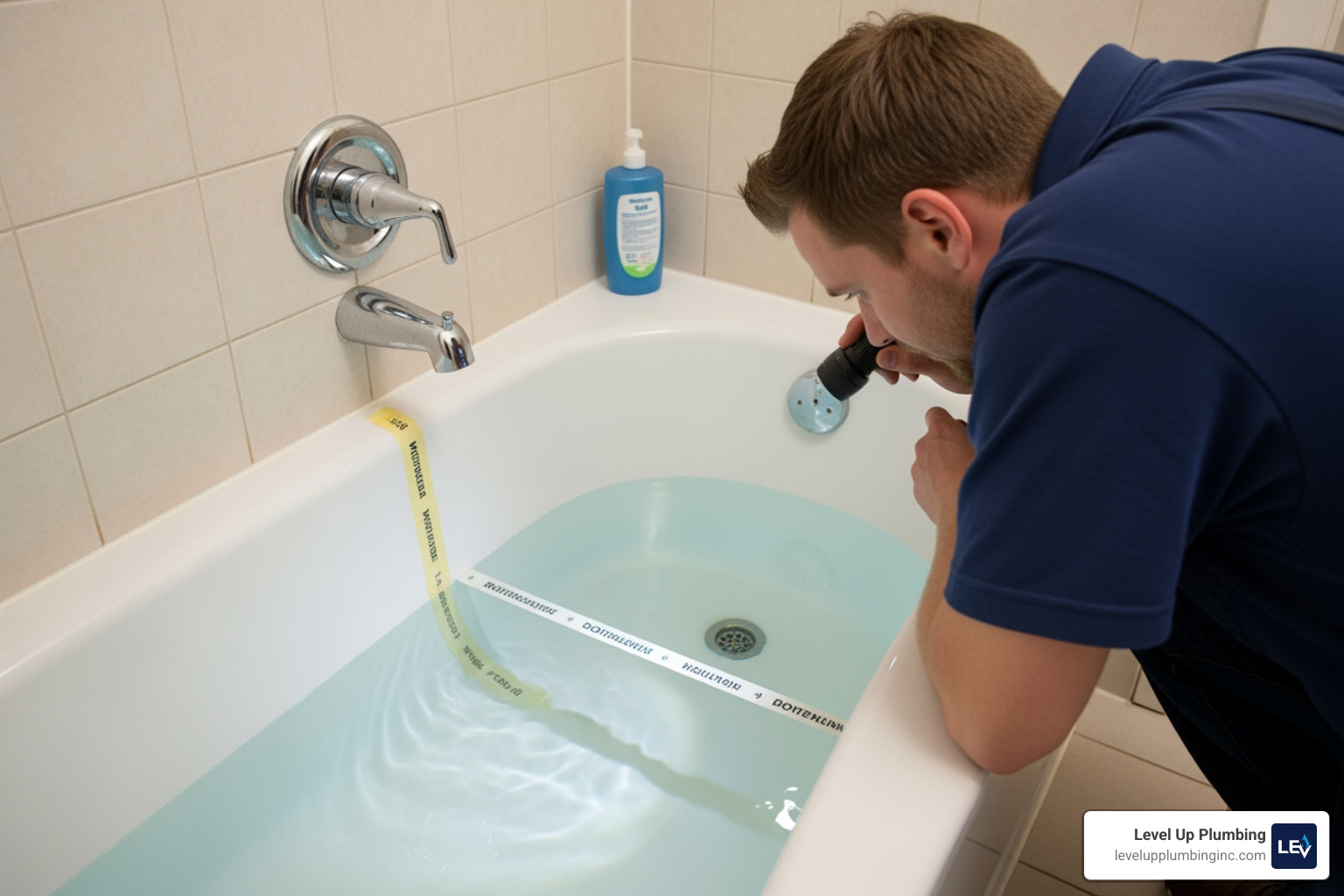
- The Stopper Test (Is the stopper leaking?): Fill the tub with exactly three inches of water. Mark the water line with a piece of painter’s tape. Wait 30 minutes. If the water level has dropped but the floor around the tub (or the ceiling below) is completely dry, your leak is internal. The stopper or its linkage is simply failing to hold water, and the liquid is safely draining away down the waste line.
- The Flange and Putty Test (Is the seal under the flange leaking?): If you suspect water is escaping around the drain rather than down it, look closely at the metal flange pressed against the bottom of your tub. If the plumber’s putty or silicone seal beneath this flange has dried out, water will seep under the metal ring.
- The Paper Towel Test: If you have an access panel behind your tub (often located in an adjacent closet or hallway), open it and place dry paper towels beneath the drain shoe (the pipe directly under the drain) and the overflow pipe. Fill the tub and watch the towels. If the paper towel directly under the drain shoe gets wet while the tub is holding water, your drain flange seal or the rubber gasket beneath the tub has failed.
- The Overflow Assembly Test: Sometimes, the leak only happens when the tub is filled near the top. This points directly to a failing overflow gasket. The overflow plate has a foam or rubber gasket behind the tub wall that can dry out and rot. To test this, direct a hand-held showerhead directly into the overflow plate. If water immediately begins dripping behind the tub, that gasket needs to be replaced.
How to Fix a Bathtub Drain Leak When Closed Step-by-Step
Once you have diagnosed the source of the leak, it is time to roll up your sleeves. Below, we have broken down the repair process into three clear steps, ranging from the easiest mechanical adjustments to replacing the entire seal.

Tools and Materials Needed:
- Flathead and Phillips head screwdrivers
- Needle-nose pliers
- A drain wrench (also known as a dumbell wrench)
- Fresh high-quality plumber’s putty (or 100% silicone sealant if installing on plastic/fiberglass tubs)
- A replacement rubber drain gasket (bath shoe gasket)
- Rubbing alcohol and an old rag
- Old toothbrush (for cleaning threads)
Step 1: Adjusting the Linkage and Stopper
If your lever-style drain is letting water escape slowly into the drainpipe, the linkage is likely out of adjustment.
- Remove the Faceplate: Locate the two screws securing the overflow faceplate to the tub wall. Unscrew them carefully, holding the plate so it doesn’t drop.
- Extract the Linkage: Slowly pull the faceplate away from the wall. The brass linkage rods and the heavy cylindrical plunger should slide up and out of the overflow tube.
- Clean the Assembly: Wipe away any hair, black slime, or mineral deposits from the plunger and rods using an old toothbrush and warm water.
- Adjust the Linkage Length: To make the plunger sit lower (creating a tighter seal), loosen the small locknut on the threaded adjustment rod. Turn the plastic or metal lift yoke to extend the overall length of the linkage by about 1/8 to 1/4 of an inch. Tighten the locknut back down.
- Reinstall and Test: Carefully slide the plunger and linkage back down into the overflow tube. Secure the faceplate with the screws. Fill the tub with a few inches of water to see if the slow leak has stopped. If it still leaks, you may need to repeat the process and extend the linkage slightly further.
Step 2: Removing and Resealing the Drain Flange
If the water is leaking under the tub because of failed putty, you must remove the drain flange to apply a fresh seal. Keeping this area sealed is a key part of long-term home care; for more advice, check out our guide on Drain Preventative Maintenance Tips.
- Remove the Stopper: Remove your stopper or unscrew the top cap to expose the metal crossbars inside the drain opening.
- Use the Drain Wrench: Insert your drain wrench into the drain opening so it engages with the metal crossbars. Fit a pair of adjustable pliers or a large screwdriver through the top of the wrench for leverage. Turn counterclockwise to unscrew the flange. Pro tip: If the flange is completely stuck, do not force it with extreme pressure, as you can crack a fiberglass tub or break the plumbing below. Apply a bit of penetrating oil and let it sit for 15 minutes.
- Clean the Area Thoroughly: Once the flange is out, scrape away all old, crusty plumber’s putty from both the tub surface and the underside of the flange. Wipe the area down with rubbing alcohol and let it dry completely. A clean surface is vital for a watertight seal.
- Apply Fresh Plumber’s Putty: Take a golf-ball-sized piece of plumber’s putty and roll it between your palms until you have a consistent rope about 1/2 inch thick. Wrap this rope in a circle around the underside of the drain flange.
- Thread and Tighten: Carefully align the flange with the drain shoe threads below the tub. Do not cross-thread it! Carefully thread it by hand clockwise first, then use your drain wrench to tighten it. As you tighten, excess putty will squeeze out around the edges—this is normal. Stop tightening once the flange is firmly snug. Scrape away the excess putty and save it for future use.
Step 3: Replacing the Gasket or Using Silicone
Directly beneath the bathtub sits the “drain shoe,” and sandwiched between that shoe and the underside of your tub is a thick rubber gasket. If this gasket is dry-rotted or cracked, putty on the top side won’t save you from a leak.
- Access the Gasket: With the drain flange removed (as detailed in Step 2), look down into the hole. You will see the black rubber gasket resting on top of the drain shoe pipe.
- Extract the Old Gasket: Use needle-nose pliers or a flathead screwdriver to hook the old gasket and pull it out through the drain hole.
- Install the New Gasket: Fit a matching replacement rubber washer/gasket into the space. Ensure it sits completely flat and centered over the drain shoe.
- Putty vs. Silicone: While plumber’s putty is the time-tested standard for metal and cast-iron tubs, you should use 100% silicone sealant instead of putty if you have a modern plastic, acrylic, or fiberglass tub. Putty can occasionally degrade certain plastics over many years, whereas silicone remains flexible and safe.
- Avoid Cross-Threading: When screwing the metal flange back into the drain shoe, make sure it spins smoothly. If you force a cross-threaded flange, you will ruin the plastic threads of the drain shoe, requiring a much more expensive plumbing replacement.
Frequently Asked Questions about Bathtub Drain Leaks
What should I do if adjusting the linkage doesn’t stop the leak?
If you have extended the linkage on your lever-style stopper and the tub still drains slowly, the issue is likely a worn-out plunger or a damaged drain shoe. Over decades, the brass plunger can become deeply corroded or pitted, allowing water to slip past no matter how low it sits.
In this case, you can replace the plunger assembly entirely. Alternatively, many homeowners choose to convert their old lever system to a simple, modern toe-touch or lift-and-turn stopper, which bypasses the internal linkage entirely. If you are dealing with recurring slow drains alongside your leak, you might also want to read our expert advice on DIY Drain Cleaning.
Is plumber’s putty or silicone better for sealing a tub drain?
For the vast majority of metal, cast iron, and porcelain tubs, plumber’s putty is the superior choice. Putty is incredibly easy to work with, does not require drying time (you can use the tub immediately), and makes future removal simple.
However, silicone sealant is preferred for plastic, acrylic, or fiberglass tubs because putty can degrade these synthetic materials over time. The main downside to silicone is that it makes removing the flange very difficult down the road, and you must wait a full 24 hours for it to cure before running any water.
How can I prevent future bathtub drain leaks and water damage?
Preventing leaks is all about regular maintenance and staying vigilant:
- Avoid Harsh Chemical Cleaners: Strong chemical drain openers are highly acidic and can corrode metal pipes, eat away at rubber gaskets, and dry out plumber’s putty.
- Use Hair Catchers: Keeping hair out of your drain prevents the mechanical clogging that forces water to back up and strain your seals.
- Inspect Regularly: If you have an access panel, open it once or twice a year to check for dampness or slow drips. Catching a tiny drip early can save you thousands of dollars in drywall repairs.
- Know When to Call for Help: If you are uncomfortable working with old, fragile pipes, professional help is always just a phone call away. For more guidance on this, see When in Doubt Call a Plumber.
Conclusion
A bathtub drain leaks when closed is a frustrating issue, but with a little patience and the right tools, you can easily restore your tub’s ability to hold water. Whether it’s a simple linkage adjustment or a complete flange resealing, taking action today protects your home from hidden moisture, mold, and structural water damage.
Sometimes, though, old plumbing can turn a simple DIY project into a major headache. If your drain flange is rusted solid, your pipes are corroded, or you are worried about causing a major leak in your ceiling, we are here to help.
At Level Up Plumbing, we are proud to be a woman-owned business serving Huntington Beach, Cypress, Garden Grove, and the wider Orange County area. With over 21 years of local expertise and award-winning customer service, we can quickly diagnose and repair your tub issues with zero stress.
Don’t let a slow leak ruin your peace of min, Schedule Slab Leak and Plumbing Services in Huntington Beach with us today and let our family take care of yours!