
When Your Hot Water Boiler Stops Working: What to Do First
Hot water boiler repair is something most homeowners don’t think about — until the heat disappears on a cold morning or the hot water suddenly runs out.
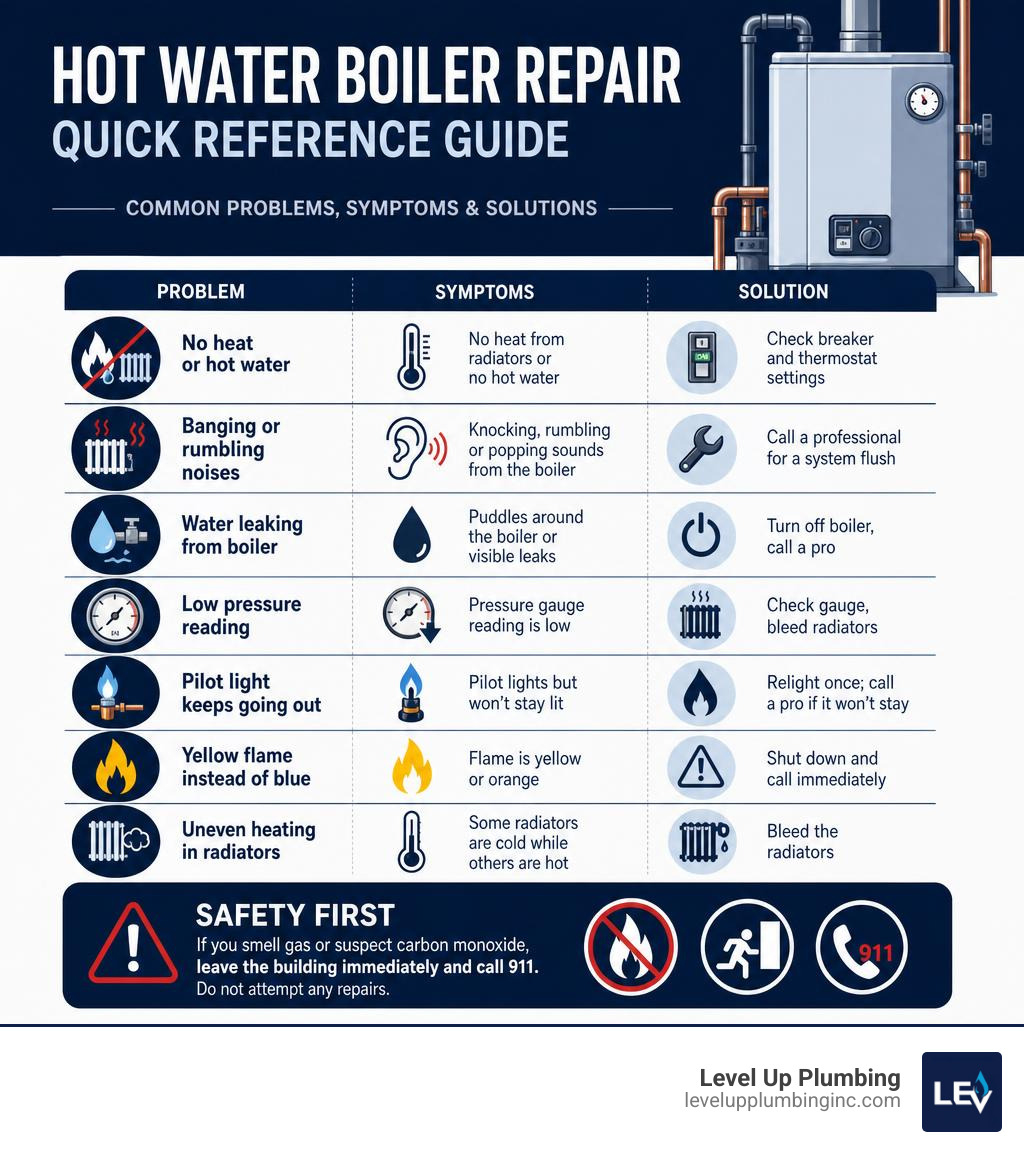
Before reading further, here’s a quick overview of the most common boiler problems and what to do about them:
Quick Fix Guide: Common Hot Water Boiler Problems
| Problem | Likely Cause | First Step |
|---|---|---|
| No heat or hot water | Tripped breaker, thermostat, or pilot light | Check breaker and thermostat settings |
| Banging or rumbling noises | Limescale buildup (kettling) | Call a professional for a system flush |
| Water leaking from boiler | Faulty valve, corroded pipes, or pressure issue | Turn off boiler, call a pro |
| Low pressure reading | Water leak or failed expansion tank | Check gauge, bleed radiators |
| Pilot light keeps going out | Thermocouple failure or gas supply issue | Relight once; call a pro if it won’t stay |
| Yellow flame instead of blue | Incomplete combustion — potential CO risk | Shut down and call immediately |
| Uneven heating in radiators | Trapped air in the system | Bleed the radiators |
If you smell gas or suspect carbon monoxide, leave the building immediately and call 911 — do not attempt any repairs.
Your boiler is the heart of your home’s heating system. When it fails, everything else stops working with it. The good news? Many boiler problems follow predictable patterns — and knowing what to look for can save you time, money, and a lot of stress.
Most boilers last 15 to 25 years with proper care, but even a well-maintained system will eventually need attention. Some issues are simple enough to check yourself. Others require a licensed technician, especially anything involving gas lines or combustion.
This guide walks you through exactly what to look for, what you can safely handle, and when it’s time to call in a professional.
How Hot Water Boilers Work and Key Components
To understand when and why you need hot water boiler repair, it helps to know how these systems operate. Unlike forced-air systems that blow dry air through ducts, a hot water boiler uses water to move heat through your home. This process is known as hydronic heating. Think of it as your home’s circulatory system, pumping warm water instead of blood to keep you comfortable.
At the center of this system is the boiler itself, which heats water to temperatures typically between 140°F and 180°F. Once heated, this water travels through a closed network of pipes to radiators, baseboard heaters, or radiant floor systems. As the water releases its heat into your living spaces, it cools down and returns to the boiler to start the cycle all over again.
Because this is a closed, pressurized system, several key components must work in perfect harmony. If even one of these parts fails, the entire heating cycle can grind to a halt. When troubleshooting, we often refer back to our foundational guide on Exploring the World of Water Heaters to compare how boilers differ from standard domestic water heating systems.

Understanding the Hydronic Heating Cycle
The hydronic heating cycle relies on basic physics: hot water rises, transfers its thermal energy to cooler surrounding air, and contracts as it cools. However, because modern systems cannot rely solely on gravity, they use specialized pumps to keep the water moving efficiently through the piping network.
The water temperature is carefully regulated to prevent it from turning into steam, which would create dangerous pressure levels inside a standard residential hot water boiler. This precise control allows hydronic heating to provide incredibly even, draft-free warmth. Unlike forced-air systems, which can circulate dust, allergens, and pet dander, hydronic heat keeps the air in your home clean and still.
If you are trying to decide which type of heating setup is ideal for your home’s layout, check out our resource on Water Heaters: Which is Best for Me? to see how hydronic boilers stack up against other options.
Crucial Parts That May Require Hot Water Boiler Repair
When we perform a diagnostic check on a struggling boiler, we focus on a few highly critical components:
- The Aquastat: This is the boiler’s thermostat. It monitors water temperature inside the unit and tells the burner when to fire up or shut down.
- Zone Valves: If your home is divided into different heating zones, these motorized valves open and close to direct hot water only to the areas of the house that are currently calling for heat.
- The Circulator Pump: This pump is the mechanical heart of the system. It forces the hot water through the complex maze of pipes in your floors or walls.
- The Expansion Tank: Water expands as it heats up. The expansion tank provides a safe cushion of air for this extra volume to go, preventing dangerous pressure spikes.
- The Pressure Relief Valve: If the pressure inside the boiler exceeds safe limits (typically around 30 PSI), this safety valve opens to discharge water and relieve the pressure.
- The Burner Assembly and Gas Valve: This is where combustion happens. The gas valve regulates fuel flow, and the burner ignites it to heat the water in the heat exchanger.
Residential vs. Commercial Boiler Differences
While the basic science of hydronic heating remains the same, there are vast differences between residential boilers and commercial systems.
Residential boilers are compact, usually designed to heat a single-family home, and operate at lower pressures. They have simpler piping networks and require less frequent, though still highly important, maintenance.
Commercial boilers, on the other hand, are massive machines designed for apartment complexes, office buildings, or large facilities. These systems feature highly complex zoning setups, multiple circulator pumps, and advanced computerized controls. Because of the sheer volume of water and fuel they use, commercial boilers are subject to strict regulatory compliance and safety inspections.
Whether you need residential service in Cypress or commercial support, working with a team familiar with local codes is essential. For those in the coastal areas, working with local specialists ensures your system meets regional demands and safety standards.
Common Signs You Need Hot Water Boiler Repair
Boilers are generally quiet, reliable workhorses, but they will let you know when they are struggling. Recognizing the early warning signs can mean the difference between a quick, affordable fix and a catastrophic, freezing-cold emergency.
If your system is beginning to fail, you might notice lukewarm water, strange sounds, or unexpected spikes in your utility bills. Let’s look at the visual and auditory clues that indicate it’s time to schedule a professional diagnostic call.
Visual and Auditory Red Flags
One of the most common complaints we hear from homeowners is a loud, metallic banging or rumbling noise coming from the boiler closet. This phenomenon is known as “kettling.” It occurs when hard water minerals, specifically limescale, build up on the surface of the heat exchanger. This buildup restricts water flow, causing localized steam bubbles to form and collapse violently. It sounds exactly like a giant tea kettle boiling on your stove, and it indicates that your heat exchanger is overheating.
Other warning signs include:
- Pooling Water: Any visible water around the base of your boiler is a major red flag. It could indicate a failing pressure relief valve, a waterlogged expansion tank, or a corroded pipe joint.
- Low Pressure: If your boiler’s pressure gauge drops below 12 PSI when cold, your system may have a hidden leak or need to be manually refilled.
- Rusty or Discolored Water: Corrosion inside the tank or piping can turn your water a dark, rusty color, indicating that components are actively deteriorating.
If you find yourself constantly running out of warm water or experiencing fluctuating temperatures, read our guide on how to Stop Running Out of Hot Water with Level Up Plumbing to identify the root causes.
Critical Safety Risks: Gas Leaks and Carbon Monoxide
While a lack of heat is highly inconvenient, some boiler issues pose immediate threats to your family’s safety. Gas-fired boilers rely on combustion, which must be perfectly vented to prevent toxic gases from entering your living space.
Incomplete combustion occurs when there is not enough oxygen for the fuel to burn cleanly. A healthy burner flame should always be a crisp, steady blue. If you notice a flickering yellow or orange flame, this is a sign of incomplete combustion and a major warning that carbon monoxide (CO) may be venting into your home.
Carbon monoxide is an odorless, colorless, and tasteless gas that can be fatal. It is absolutely vital to have working carbon monoxide detectors installed on every level of your home. For additional safety guidance, review the CDC’s information on carbon monoxide poisoning prevention. If you notice a yellow flame, soot buildup around the boiler casing, or if your CO alarm sounds, shut down the system immediately, evacuate your home, and contact emergency services.
For residents in local areas experiencing gas-related plumbing issues, it is critical to find certified emergency technicians who can safely test for fuel leaks and combustion hazards.
DIY Troubleshooting vs. Professional Service
When your heating system acts up, it is natural to want to resolve the issue as quickly as possible. However, because boilers combine water, high electrical voltage, and combustible gas, you must be incredibly careful about which tasks you attempt yourself.
To help you decide whether to grab your toolbox or your phone, we have put together a breakdown of safe homeowner checks versus tasks that must be left to a licensed professional.
| Diagnostic Step | Can Be Done by Homeowner? | Requires Licensed Professional? |
|---|---|---|
| Checking and resetting a tripped circuit breaker | Yes | No |
| Verifying thermostat settings and replacing batteries | Yes | No |
| Bleeding trapped air from cold radiators | Yes | No |
| Checking the system pressure gauge | Yes | No |
| Repairing or replacing gas valves and lines | No | Yes |
| Replacing a cracked heat exchanger | No | Yes |
| Flushing a heavily scaled boiler (power flushing) | No | Yes |
| Rewiring electrical controls or aquastats | No | Yes |
Safe DIY Checks Before Calling a Pro
Before you panic and call for emergency service, there are a few simple, safe checks you can perform to rule out minor external issues:
- Check the Power Switch: Many boilers have an emergency shut-off switch that looks exactly like a standard light switch. It is often located near the boiler room entrance or on the side of the unit. Ensure it hasn’t been flipped off by mistake.
- Inspect the Thermostat: Make sure your thermostat is set to “Heat” and the temperature is set higher than the current room temperature. If the screen is blank, try replacing the batteries.
- Bleed the Radiators: If your radiators are warm at the bottom but freezing cold at the top, they likely have trapped air pockets. Using a radiator key, gently open the bleed valve at the top of the radiator until water begins to drip out, then close it. This releases the air and allows hot water to fill the entire unit.
- Verify the Pilot Light: If you have an older boiler with a standing pilot light, check if it has gone out. You can attempt to relight it once following the instructions in your manufacturer’s manual. If it goes out again immediately, you likely have a faulty thermocouple that needs professional replacement.
For more hands-on troubleshooting tips regarding heating elements, you can read The Ultimate Hot Water Heater Element Replacement Guide to understand how electrical heating components are tested and replaced.
When to Hire a Specialist for Hot Water Boiler Repair
If the basic checks above do not resolve the issue, it is time to call in a licensed specialist. You should never attempt to repair gas valves, adjust internal gas pressures, or dismantle the combustion chamber yourself. Doing so can void your manufacturer’s warranty, violate local building codes, and put your home at risk of gas leaks or fires.
A professional technician has the diagnostic tools required to test electrical resistance, analyze flue gases, and safely replace heavy components like circulator pumps or expansion tanks. If you are located in the local area, you can easily connect with certified local experts to ensure your system is repaired in strict compliance with safety codes.
If you suspect your system is beyond a simple DIY fix, you can always Schedule Professional Water Heater Services with our team to get your home’s comfort restored safely and quickly.
Repair vs. Replace: Costs, Lifespan, and Decisions
Deciding whether to invest in hot water boiler repair or bite the bullet and purchase a brand-new system is one of the toughest financial choices a homeowner has to make.
While a repair is almost always cheaper in the short term, repeatedly patching up an old, inefficient boiler can quickly become a money pit. Let’s look at how to evaluate your system’s age, efficiency, and overall health to make the smartest financial decision.
Analyzing the Financials: Repair vs. Replacement Costs
As a general rule of thumb, we recommend using the “5,000 Rule.” Multiply the age of your boiler by the estimated cost of the repair. If the result is greater than $5,000, it is usually wiser to invest that money into a new, energy-efficient replacement.
For example:
- An 8-year-old boiler needing a minor component replacement: $8 \times \text{Minor Cost} = \text{Low Number}$ (Go with the repair!)
- A 17-year-old boiler needing a major heat exchanger replacement: $17 \times \text{High Cost} = \text{High Number}$ (Replacement is the smarter choice)
Additionally, modern boilers are vastly more efficient than their predecessors. Older standard systems typically operate at an Annual Fuel Utilization Efficiency (AFUE) rating of 56% to 70%, meaning up to 44% of the fuel you pay for is wasted up the chimney. Modern condensing boilers boast AFUE ratings of 90% to 98%, which can dramatically lower your monthly gas bills.
To help offset the initial cost of an upgrade, you can learn how to Maximize Your Savings with Energy Star Water Heater Tax Credits to see what federal incentives are currently available for high-efficiency installations.
Key Factors in the Decision Framework
When weighing your options, keep these four factors in mind:
- System Age: If your boiler is approaching or has exceeded its 15-to-25-year expected lifespan, any major breakdown is a sign that other components are likely to fail soon.
- Frequency of Breakdowns: If you have had to call a technician more than twice in the last two years, your boiler’s reliability is compromised.
- The Heat Exchanger Status: If the heat exchanger is cracked or leaking internally, it is almost always better to replace the entire boiler, as this is the most complex and expensive component to source and install.
- Local Climate & Usage: In areas where heating systems run constantly during cooler months, upgrading to a high-efficiency model will result in a much shorter payback period through energy savings.
For those residing in Orange County, you can research regional service standards to compare local installation practices and efficiency ratings.
Preventive Maintenance to Extend Boiler Lifespan
The absolute best way to avoid premature boiler replacement is to commit to annual preventive maintenance. Just like your car, a boiler needs regular tune-ups to operate safely and efficiently.
During an annual service visit, a technician will:
- Flush out accumulated sediment from the bottom of the tank to prevent kettling.
- Check the expansion tank’s air charge to ensure it isn’t waterlogged.
- Test the pressure relief valve to confirm it opens and closes properly.
- Clean the burner assembly to ensure clean, efficient combustion.
To understand why this routine care is so vital for all water-heating appliances in your home, read our detailed post on The Importance of Annual Maintenance to Your Water Heater.
Frequently Asked Questions About Boiler Repair
How long do hot water boilers typically last?
Most residential hot water boilers have a typical lifespan of 15 to 25 years. The actual lifespan of your system depends heavily on water quality, how often the system is used, and whether it has received consistent annual maintenance. Systems operating with hard, untreated water tend to fail much sooner due to scale buildup inside the heat exchanger.
Why is my boiler making a loud banging or kettling noise?
A loud banging or rumbling sound — often called “kettling” — is almost always caused by limescale and mineral buildup on the boiler’s heat exchanger. This buildup acts as an insulating barrier, trapping water underneath it. This trapped water overheats, turns to steam, and collapses back into liquid water, creating a violent, noisy bubbling effect. A professional technician can resolve this issue by performing a chemical system flush to dissolve the scale.
What should I do if I smell gas or suspect a carbon monoxide leak?
If you smell gas (which has a distinctive sulfur or “rotten egg” odor) or if your carbon monoxide detector sounds, you must take immediate action:
- Evacuate the building immediately with all family members and pets.
- Do not turn any light switches on or off, use a landline, or use your cell phone inside the home, as these can create a spark.
- Once you are a safe distance away from the property, call 911 or your local gas utility provider.
- Do not re-enter the home until emergency responders declare it safe to do so.
Conclusion
Your home’s boiler is a complex, highly engineered system designed to keep your family warm and comfortable. When issues arise, acting quickly can prevent minor component failures from turning into incredibly expensive, hazardous emergencies. Whether you need a simple radiator bleed or a comprehensive system diagnostic, professional care is always your safest and most reliable option.
At Level Up Plumbing, we are proud to be a premier woman-owned plumbing company serving Orange County, CA. With over 21 years of local expertise and award-winning customer service, our highly trained technicians are ready to handle all your residential heating and plumbing needs. From leak detection to high-efficiency system upgrades, we provide honest, transparent service you can trust.
We proudly serve homeowners throughout our local communities, including Huntington Beach, CA, Cypress, CA, and Garden Grove, CA. If you are experiencing temperature fluctuations, strange noises, or simply want to schedule your annual safety inspection, don’t wait for a complete system breakdown.
If you are in Garden Grove and need assistance, local professional technicians are available to address your plumbing needs quickly and efficiently.
Ready to restore your peace of mind and keep your home cozy? Schedule Professional Water Heater Services with the trusted team at Level Up Plumbing today!