
Why Installing an Anode Rod the Right Way Can Double Your Water Heater’s Life
Knowing how to install an anode rod in a water heater is one of the most valuable — and most overlooked — maintenance skills a homeowner can have. Most people never touch their anode rod until the water heater fails. By then, it’s too late.
Here’s how to install a water heater anode rod in 6 steps:
- Shut off the power or gas supply to the water heater
- Turn off the cold water supply valve
- Drain a few gallons from the tank to relieve pressure
- Locate and remove the old anode rod using a 1-1/16 inch socket
- Wrap the threads of the new rod with Teflon tape
- Install and tighten the new rod — about 1/2 to 3/4 turn past hand-tight
The whole job takes about 30–60 minutes and can save you from an early water heater replacement.
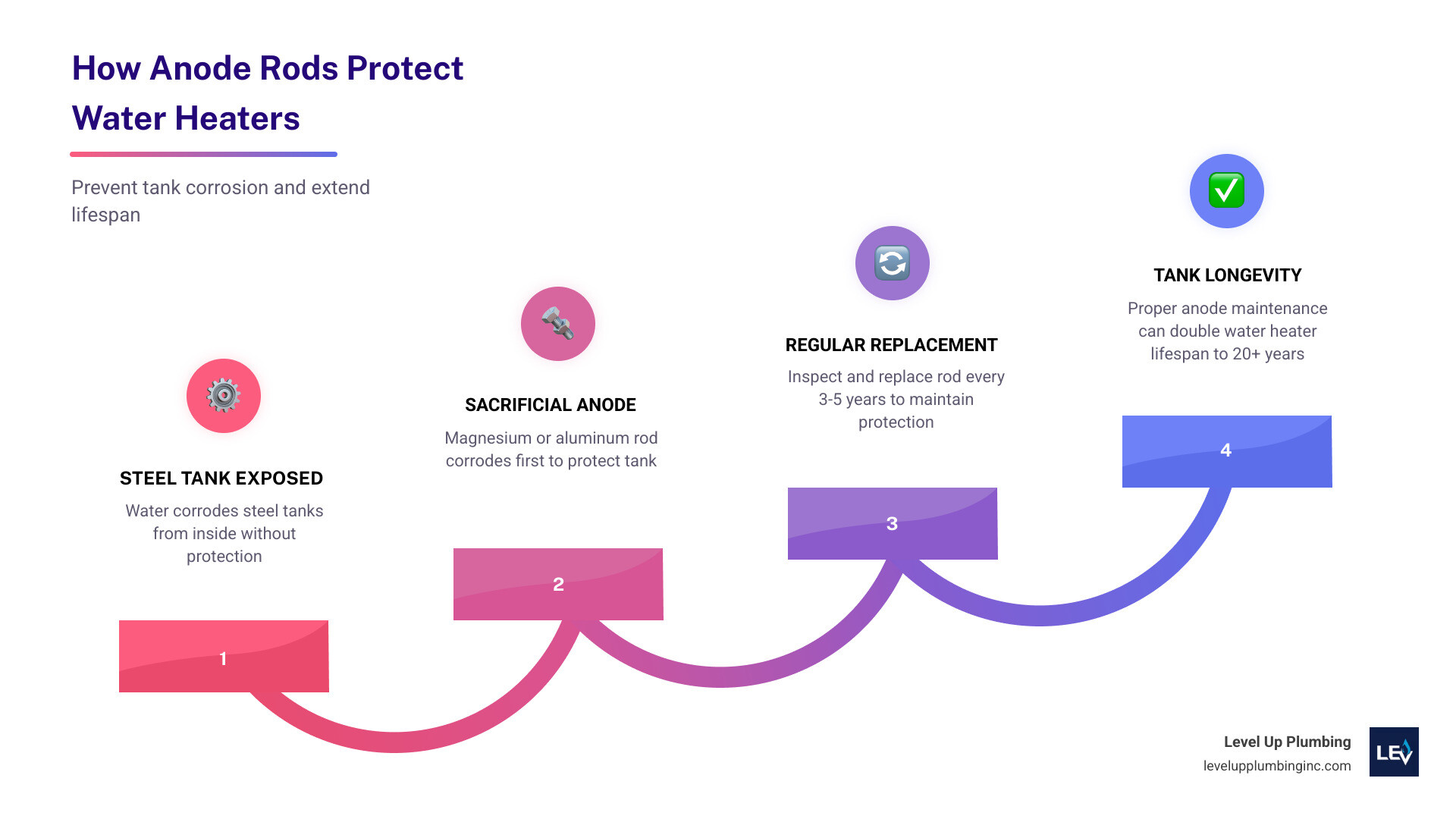
Here’s why it matters: your water heater tank is made of steel. Water and steel don’t mix well. Without protection, the inside of your tank slowly rusts from the inside out.
The anode rod is what stops that from happening. It’s a metal rod — usually magnesium or aluminum — that sacrifices itself to corrosion so your tank doesn’t have to. When it’s gone, your tank is next.
In Southern California, where water quality varies widely, anode rods can wear out faster than the standard 3–5 year window. Many homeowners discover their rod is completely corroded — down to bare wire — without ever knowing it was a problem.
The good news: replacing it yourself is straightforward, and it can extend your water heater’s life from the typical 8–12 years to 20 years or more.
Understanding Water Heater Anode Rods and Their Lifespan
To understand why you need to install anode rod water heater replacements regularly, you have to understand the science inside your tank.
Your water heater is essentially a giant steel cylinder constantly filled with pressurized, hot water. To keep the steel from rusting, manufacturers coat the inside of the tank with a thin glass lining. However, during manufacturing, shipping, and thermal expansion (as the tank heats and cools), tiny microscopic cracks form in this glass lining.
This is where the sacrificial anode rod comes to the rescue.

The Science of the Sacrificial Anode
The anode rod operates on a electrochemical principle called electrolysis. When two different metals are submerged in water, an electrical current naturally flows between them. The metal that is more electrochemically active (the anode) will corrode, while the less active metal (the cathode, which is your steel tank) is protected.
By inserting a rod made of highly active metal like magnesium or aluminum into the steel tank, the corrosive elements in your water attack the rod instead of the tank walls. It is literally a sacrificial decoy.
To keep this defense system active, understanding The Importance of Annual Maintenance to Your Water Heater is absolutely essential. Once the sacrificial metal on the rod is completely eaten away, the water begins eating your steel tank, leading to a catastrophic leak.
How Water Quality Affects Anode Lifespan
How long your anode rod lasts depends heavily on your local water supply. In Southern California communities like Huntington Beach, Cypress, and Garden Grove, water chemistry plays a massive role:
- Hard Water: Hard water contains high levels of calcium and magnesium. While this can cause scale buildup, it actually doesn’t accelerate anode corrosion as quickly as soft water. However, the mineral buildup can bury the rod, reducing its effectiveness.
- Water Softeners: If you have a whole-house water softener, your anode rod will corrode at an accelerated rate. Water softeners replace calcium minerals with sodium ions. This increases the electrical conductivity of the water, making the chemical process of electrolysis move much faster. If you use a water softener, you should inspect your rod every year.
- pH Levels: Highly acidic water (low pH) or highly alkaline water (high pH) will eat away at sacrificial metals much faster than neutral water.
According to the comprehensive Anode Rod Replacement: Extend the Life of Your Water Heater – Bob Vila guide, while manufacturers generally recommend replacing the rod every 3 to 5 years, aggressive water conditions can completely deplete a rod in as little as 1 to 2 years.
Types of Anode Rods Compared
Before you purchase a replacement to install anode rod water heater components in your home, you must choose the right material for your water conditions.
| Material Type | Best Suited For | Pros | Cons | Average Lifespan |
|---|---|---|---|---|
| Magnesium | Standard municipal water, non-softened water | Excellent tank protection; healthiest material for drinking water | Corrodes quickly in softened or highly conductive water | 2 to 4 Years |
| Aluminum | Hard water, high pH water, softened water | Highly durable; cheaper alternative; bends easily for tight spaces | Can accumulate a jelly-like byproduct; not recommended for drinking water | 3 to 5 Years |
| Zinc-Aluminum | Water that smells like rotten eggs (sulfur) | Zinc kills odor-causing bacteria; resolves smelly hot water | Still contains aluminum; slightly lower electrical output than pure magnesium | 3 to 5 Years |
| Powered (Impressed Current) | All water types, especially softened water | Permanent solution; zero maintenance; eliminates sulfur smells completely | Requires an electrical outlet; higher initial cost | 10+ Years (Lifetime) |
Signs Your Anode Rod Needs Replacement
How do you know it is time to install anode rod water heater replacements? Your water heater will usually drop a few hints before the tank fails completely:
- The Rotten Egg Smell: If your hot water has a strong sulfur or rotten egg odor, it is likely because anaerobic bacteria in your tank are reacting with the hydrogen gas produced by a deteriorating magnesium or aluminum rod. Replacing it with a zinc-aluminum or powered anode rod can solve this issue.
- Rusty or Discolored Water: If your hot water starts coming out brown, red, or rusty, but your cold water is perfectly clear, the anode rod has likely fully corroded, and rust is forming on the inside of the steel tank.
- Loud Popping or Rumbling Noises: When the anode rod degrades, pieces of corroded metal and calcium scale fall to the bottom of the tank. This sediment creates an insulating barrier over the burner or heating elements. Water gets trapped underneath this scale, boils, and pops loudly.
- Visible Core Wire: During a physical inspection, if you pull the rod out and find that more than 6 inches of the thin steel core wire is visible, or if the rod’s diameter has shrunk to less than half an inch, it is completely spent and must be replaced.
Step-by-Step Guide to Install Anode Rod Water Heater
If you are comfortable with basic hand tools, you can save a significant amount of money by handling this project as a DIY task. Doing it yourself only requires purchasing the replacement rod, whereas hiring a professional plumber covers both labor and trip fees.
To help you visualize the process, we have broken down the steps clearly. Before starting, review the official How to Replace an Anode Rod on a Water Heater – This Old House resource for additional expert perspectives.

Tools Needed to Install Anode Rod Water Heater
Before you begin, gather the following tools to ensure you do not have to stop halfway through the job:
- Socket Wrench or Breaker Bar: A long breaker bar is highly recommended, as factory-installed anode rods are tightened with high-torque machinery.
- 1-1/16 Inch 6-Point Socket: Most residential water heaters use a standard 1-1/16 inch hex head. Ensure you use a 6-point socket rather than a 12-point socket to prevent rounding off the corners of the nut.
- Teflon Tape (Plumber’s Tape): Used to seal the threads of the new rod and prevent leaks.
- Garden Hose: To drain a few gallons of water from the tank.
- Pipe Wrench: Useful if you have a combination nipple-style anode rod or need to stabilize the pipe connections.
Safety Tips to Install Anode Rod Water Heater Safely
Working with hot water, high pressure, and electricity or gas requires strict adherence to safety protocols.
- Turn Off the Energy Source: For electric water heaters, switch off the dedicated breaker in your electrical panel. For gas water heaters, turn the gas control valve knob to the “PILOT” or “OFF” position.
- Shut Off the Water: Close the cold water shut-off valve located on top of the water heater.
- Let It Cool: Hot water can cause severe burns. If possible, turn off the water heater the night before you plan to do the work. If you cannot wait, exercise extreme caution when draining the water.
- Relieve the Pressure: Open a hot water faucet inside your home (such as in a bathroom or kitchen sink) to relieve pressure and allow air into the system so the tank can drain smoothly.
How to Remove and Replace the Rod
Now that you are prepped and safe, follow these detailed steps to complete the installation:
Step 1: Drain the Tank Partially
Connect your garden hose to the drain valve at the bottom of the water heater. Run the other end of the hose to a safe drainage spot (like a floor drain or driveway). Open the drain valve and let roughly 2 to 3 gallons of water flow out.
Pro Tip: Do not drain the tank completely! Leaving the tank mostly full of water adds weight, which prevents the water heater from spinning or tipping over when you apply heavy torque to loosen the stuck anode rod.
Step 2: Locate the Hex Head
Look at the top of your water heater. On most residential models, you will see a hex bolt head slightly off-center. It might be exposed, or it might be hidden beneath a plastic cap or insulation. If your model uses a combination nipple anode, the rod is built directly into the hot water outlet nipple, which will require disconnecting the hot water pipe.
Step 3: Unscrew the Old Rod
Fit your 1-1/16 inch socket onto the hex head. Attach your breaker bar or socket wrench. Turn the wrench counterclockwise (lefty-loosey). You may need to have a helper hold the tank steady to keep it from rotating. Once loose, unscrew the rod the rest of the way by hand and carefully pull it straight up out of the tank.
Step 4: Handle Vertical Clearance Issues
If your water heater is installed in a closet or basement with a low ceiling, you might not have enough vertical clearance to pull out a straight 36-to-42-inch metal rod.
If this happens, you can bend the old rod as you pull it out (since you are throwing it away anyway). When you install anode rod water heater replacements in tight spaces, purchase a flexible segmented anode rod (often called a “nunchuck” rod). These rods are broken into short sections connected by a flexible stainless steel cable, allowing you to feed them into the tank at an angle.
Step 5: Seal and Install the New Rod
Wrap the threads of your new anode rod with 4 to 5 wraps of Teflon tape in a clockwise direction. This ensures a watertight seal and makes the rod easier to remove during future maintenance.
Insert the new rod into the port. Hand-thread it clockwise to make sure you do not cross-thread the delicate tank connection. Once hand-tight, use your socket wrench to tighten it. The recommended torque is between 50 and 75 ft/lbs, which translates to roughly 1/2 to 3/4 turn past hand-tight. Do not overtighten, as you could crack the glass lining around the port.
Step 6: Refill and Check for Leaks
Turn the cold water supply valve back on to fill the tank. Keep the hot water faucet inside your house open until water flows steadily without sputtering air. Check the top of the anode rod threads for any signs of weeping water. If you spot a leak, tighten the rod in tiny 1/4-inch increments until the leak stops. Finally, turn the power or gas back on.
Troubleshooting Stuck Rods and Upgrading to Powered Anodes
Sometimes, reality does not match the instruction manual. If your water heater is several years old, the anode rod may feel like it has been welded shut.
How to Loosen a Stubborn Anode Rod
If you pull on your socket wrench and the entire water heater starts spinning across the floor, do not panic. Here is how professional plumbers break loose seized threads safely:
- Use an Impact Wrench: This is the ultimate secret weapon. An electric impact wrench uses rapid vibrational blows to break the rust and scale bond on the threads without putting rotational strain on the water heater pipes. If you have access to one, it will spin a stuck rod out in five seconds.
- Increase Your Leverage: If you do not have an impact wrench, slide a long metal pipe (a cheater bar) over the handle of your breaker bar. The extra length increases your leverage exponentially.
- Stabilize the Tank: Have a helper hold the tank, or secure it to structural wall studs using heavy-duty straps to keep the tank from moving and snapping the connected copper water lines.
- Avoid Penetrating Oils: While it is tempting to spray WD-40 or other penetrating oils onto the threads, avoid doing so. These chemicals can seep into your domestic water supply, contaminating your household drinking and bathing water. Physical force and impact vibration are always safer.
The Benefits of Powered Anode Rods
If you are tired of dealing with sacrificial rods, or if your home’s water softener eats through magnesium rods every year, you should strongly consider upgrading to a powered anode rod.
Unlike sacrificial anodes, powered anode rods (such as those manufactured by Corro-Protec) do not use metals that dissolve over time. Instead, they consist of a solid titanium rod connected to a small wall plug adapter.
The device sends a tiny, completely safe electrical current (impressed current) into the water tank. This current reverses the natural electrochemical process of corrosion, protecting the steel tank continuously.
- No Maintenance: Because the titanium rod does not degrade, you never have to replace it. It is a permanent, lifetime solution.
- Kills Rotten Egg Smells: The electrical current alters the environment inside the tank, preventing sulfur-reducing bacteria from producing hydrogen sulfide gas.
- Adapts to Water Quality: Powered anodes automatically adjust their electrical output based on the conductivity of your water, making them perfect for homes with water softeners or fluctuating water quality.
Frequently Asked Questions about Water Heater Anodes
Do all water heaters have anode rods?
Almost all traditional, tank-style water heaters have at least one anode rod, regardless of whether they run on natural gas, propane, or electricity. Commercial water heaters and larger residential tanks (over 50 gallons) often have two anode rods to provide adequate protection.
On the other hand, tankless water heaters do not have anode rods. Because tankless models heat water on demand through copper heat exchangers rather than storing water in a steel tank, they do not face the same corrosion risks. If you want to learn more about different types of systems, take a look at our guide on Exploring the World of Water Heaters or compare your options with Water Heaters: Which is Best for Me?.
How much does it cost to replace an anode rod?
Replacing an anode rod is highly cost-effective, especially when compared to the cost of purchasing and installing a brand-new water heater. If you choose the DIY route, a standard magnesium or aluminum replacement rod is very affordable. Upgrading to a premium powered anode rod involves a higher upfront cost for the device itself, but it pays for itself over time because you will never have to buy another replacement.
If you prefer to have a professional plumber handle the job to ensure it is done safely and leak-free, the cost will include labor and trip fees. Given that this simple maintenance task can double your water heater’s lifespan, it is one of the smartest home maintenance investments you can make.
Can a bad anode rod cause a water heater to leak?
Yes, indirectly. A bad (depleted) anode rod leaves your steel tank completely unprotected. Once the rod is gone, corrosive elements in the water will attack the weakest spots in the tank—usually around the welds or areas where the glass lining has microscopic cracks. Over time, the steel rusts through, leading to a major leak. Once a water heater tank starts leaking from a rust-through, it cannot be repaired; the entire unit must be replaced.
Conclusion
Taking the time to install anode rod water heater replacements is the single best way to protect your home from sudden water damage and avoid the high cost of premature system failure. Whether you choose to handle it yourself with a standard magnesium rod or upgrade to a maintenance-free powered anode, keeping this small metal rod in good working order keeps your hot water flowing safely.
If you are located in Orange County, CA—including Huntington Beach, Cypress, or Garden Grove—and would rather leave this task to the professionals, we are here to help. Level Up Plumbing is a proud, woman-owned plumbing company with over 21 years of local expertise and award-winning customer service.
We can inspect your system, flush out accumulated sediment, and replace your worn-out anode rod quickly and cleanly. Contact us today to Schedule Water Heater Maintenance and keep your home running smoothly!