
When Your Gas Water Heater Is Trying to Tell You Something
If you’re looking for gas water heater repairs near me, here are the most urgent signs you need professional help — fast:
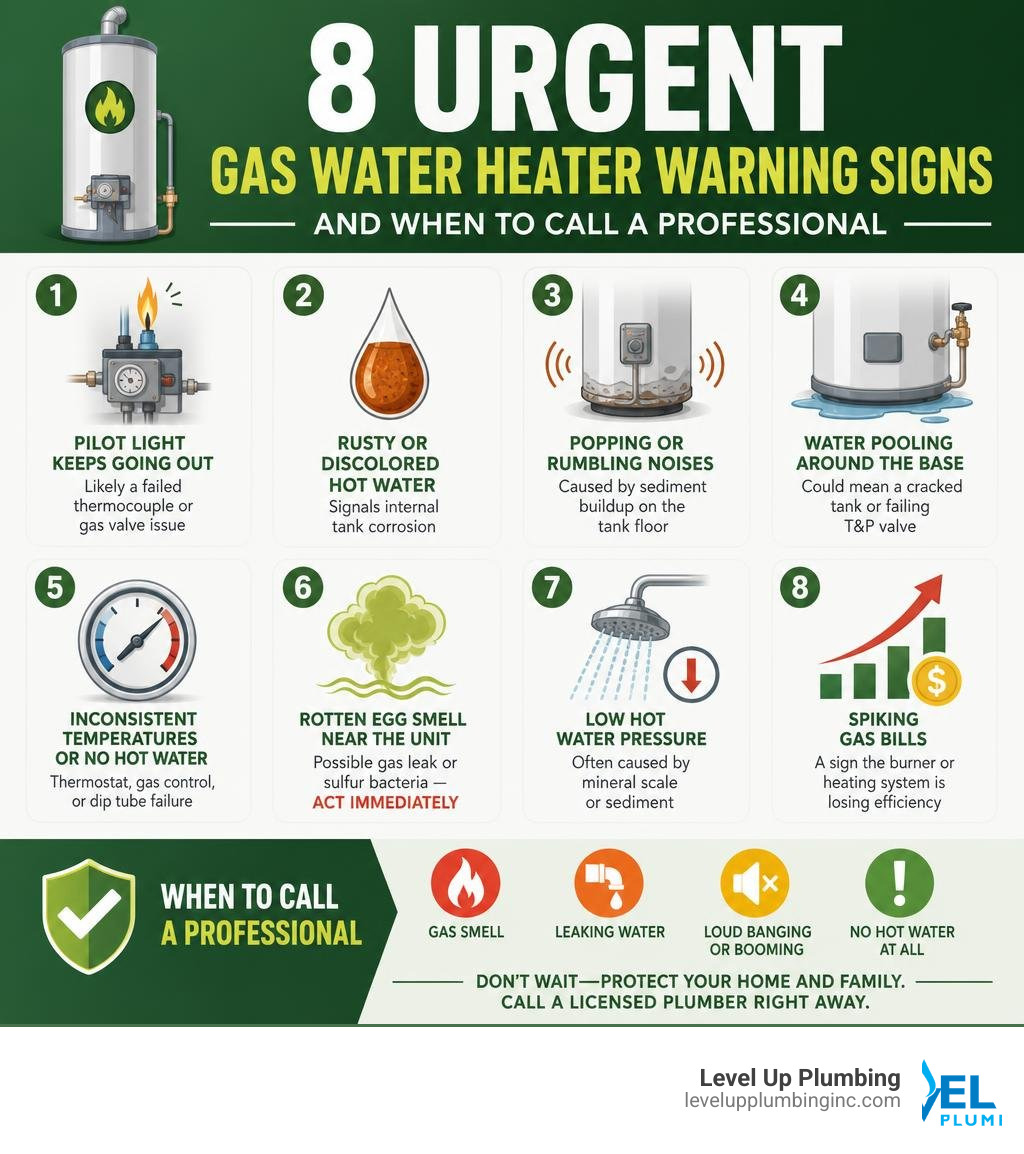
8 Signs You Need Urgent Gas Water Heater Repairs:
- Pilot light keeps going out — likely a failed thermocouple or gas valve issue
- Rusty or discolored hot water — signals internal tank corrosion
- Popping or rumbling noises — caused by sediment buildup on the tank floor
- Water pooling around the base — could mean a cracked tank or failing T&P valve
- Inconsistent temperatures or no hot water — thermostat, gas control, or dip tube failure
- Rotten egg smell near the unit — possible gas leak or sulfur bacteria — act immediately
- Low hot water pressure — often caused by mineral scale or sediment
- Spiking gas bills — a sign the burner or heating system is losing efficiency
Your gas water heater doesn’t usually fail without warning. It tells you something is wrong — through strange smells, odd noises, or water that just won’t get hot.
The problem is, most homeowners don’t know which signs are minor and which ones are genuinely dangerous.
A rotten egg odor near your unit, for example, isn’t just unpleasant — it could point to a gas leak, which is a safety emergency. On the other hand, popping sounds are usually just sediment, which is fixable with a simple tank flush.
Knowing the difference can save you money — and potentially keep your family safe.
This guide walks you through 8 urgent warning signs that your gas water heater needs professional attention, plus what you can safely do yourself and when to call in a licensed plumber right away.
Discover more about gas water heater repairs near me:
8 Urgent Signs You Need Gas Water Heater Repairs Near Me
When you live in Southern California, a sudden lack of hot water can throw your entire household into chaos. Whether you are running a busy home in Huntington Beach, a quiet household in Cypress, or managing a property in Garden Grove, a malfunctioning gas water heater is not something you can ignore for long.
Identifying issues early is the key to preventing a minor glitch from turning into a full-scale residential disaster. If you notice any of the following eight symptoms, it is time to look into professional diagnostics. Learn more about water heater options to understand what system fits your home best.
1. The Pilot Light Keeps Going Out
For traditional gas water heaters, the pilot light is the heart of the system. If you find yourself constantly relighting it, you have a serious issue on your hands.
The most common culprit behind a pilot light that refuses to stay lit is a failing or dirty thermocouple. The thermocouple is a small safety sensor that detects whether the pilot flame is active. If it fails to register the heat of the flame, it automatically shuts off the gas supply as a safety measure to prevent gas from leaking into your home. Other potential issues include a malfunctioning gas control valve, a clogged pilot assembly, or even a draft in your utility closet. Because this system directly handles your home’s gas supply, troubleshooting is best left to licensed professionals. Our troubleshooting guide for gas water heaters can help you understand how these safety features interact.
2. Rusty or Discolored Hot Water
If you turn on your shower or kitchen faucet and notice a reddish, rusty, or brown tint to the water, pay close attention. If the discoloration only occurs when the hot water is running, the source is almost certainly inside your water heater.
This color change typically indicates that the internal glass lining of your tank has worn away, allowing the steel tank itself to rust. It can also point to a completely depleted sacrificial anode rod. The anode rod is designed to attract corrosive elements in the water, rusting away so your tank doesn’t have to. Once that rod is gone, the tank is next. If you are learning the plumbing ropes, reading about how to connect a hot water heater step-by-step can give you a better appreciation of how these internal components are constructed and protected.
3. Strange Popping or Rumbling Noises
Your water heater should operate relatively quietly. If your basement or utility closet sounds like a popcorn machine or a bowling alley, something is wrong.
These popping, cracking, and rumbling noises are caused by heavy sediment buildup at the bottom of the tank. Southern California water can be quite hard, meaning it carries dissolved minerals like calcium and magnesium. Over time, these minerals settle at the bottom of the tank, forming a thick layer of scale.
When the gas burner underneath ignites to heat the water, bubbles of steam become trapped beneath this sediment layer. As they escape and collapse, they make loud popping noises. This sediment layer also forces the burner to run longer and hotter, which can overheat the tank bottom and lead to premature tank failure. Embracing the importance of annual maintenance to your water heater through regular flushing can prevent this mineral buildup from destroying your system.
4. Water Pooling Around the Base
Finding water pooling around the bottom of your gas water heater is a major red flag. Water leaks can stem from a few different areas, and some are much more severe than others:
- The Temperature and Pressure (T&P) Relief Valve: This valve is designed to release water if the pressure or temperature inside the tank gets too high. If it is dripping, the valve itself might be faulty, or your water pressure might be dangerously high.
- The Drain Valve: A loose or degraded plastic drain valve at the bottom of the tank can slowly drip. This can often be replaced with a sturdy brass valve.
- A Fractured Tank: If the leak is coming directly from the body of the tank itself, this indicates internal corrosion has eaten through the steel.
A fractured tank cannot be repaired and requires an immediate replacement. If you notice pooling water, contact our team for professional water heater services right away to prevent costly water damage and ensure your system meets local safety standards across Cypress and surrounding communities.
5. Inconsistent Temperatures or No Hot Water
There is nothing quite like the unpleasant shock of a freezing cold shower. If your water fluctuates wildly between scalding hot and freezing cold, or if you have no hot water at all, your heating system is failing.
In a gas water heater, this is usually caused by a broken thermostat, a malfunctioning gas control valve, or a broken dip tube. The dip tube is a plastic pipe that directs incoming cold water to the very bottom of the tank to be heated. If the dip tube cracks or disintegrates, cold water mixes directly with the hot water at the top of the tank, resulting in lukewarm water at your taps. If you are tired of lukewarm showers, read our guide on how to stop running out of hot water to restore comfort to your daily routine.
6. Rotten Egg Odor Near the Unit
A rotten egg smell is the single most critical safety warning you can encounter with a gas appliance.
Gas utility companies add a chemical called mercaptan to natural gas to give it a distinct, unpleasant sulfur smell so leaks can be easily detected. If you smell rotten eggs near your water heater, do not light matches, turn on light switches, or start any appliances. Evacuate your home immediately and call your gas provider or emergency services. For additional safety guidance, review SoCalGas natural gas leak emergency information.
In some rare cases, a milder sulfur smell only when you run hot water can be caused by sulfur-reducing bacteria reacting with a decaying magnesium anode rod inside the tank. However, you must always treat any gas-like odor as an active gas leak until a professional verifies otherwise.
7. Low Hot Water Pressure
If your cold water pressure is perfectly fine but your hot water pressure has dwindled to a sad trickle, your water heater is likely choked by mineral scale.
As hard water is heated, mineral deposits drop out of suspension and can collect inside the hot water outlet pipe, the heat exchanger of a tankless unit, or the shut-off valves. This restricts the flow of water leaving the heater. By exploring the world of water heaters, you can learn how different types of systems handle hard water and sediment over their lifespans.
8. Spiking Gas Utility Bills
If your gas utility bills are steadily climbing but your household gas usage hasn’t changed, your water heater might be working overtime.
As sediment builds up on the tank floor or scale coats the burner assembly, the transfer of heat becomes incredibly inefficient. The burner has to run much longer to heat the exact same amount of water, consuming far more natural gas in the process. Keeping your system clean and efficient is the best way to keep your bills manageable. You can also maximize your savings with ENERGY STAR water heater tax credits if you decide to upgrade to a modern, high-efficiency model.
How to Handle Gas Water Heater Troubleshooting
While it is tempting to grab a wrench and try to fix things yourself, gas water heaters require a high level of caution. They combine natural gas, high-voltage electrical connections (in some models), open flames, and highly pressurized hot water.
| Troubleshooting Task | Can I DIY It? | Should I Call a Pro? | Why? |
|---|---|---|---|
| Checking the thermostat temperature | Yes | No | Simple adjustment; keep it set to 120°F for safety and efficiency. |
| Checking the gas shut-off valve | Yes | No | Good for verifying the gas supply is turned on. |
| Flushing the water heater tank | Yes / No | Yes | Homeowners can perform annual maintenance, but heavily neglected tanks should be flushed by a pro to avoid clogging the drain valve. |
| Replacing the thermocouple | No | Yes | Involves working directly inside the combustion chamber and handling gas lines. |
| Replacing the gas control valve | No | Yes | Requires disconnecting gas lines; high risk of gas leaks if done incorrectly. |
| Diagnosing a leaking tank | No | Yes | Requires a professional assessment to determine if a replacement is necessary. |
Troubleshooting Gas Water Heater Repairs Near Me
If you decide to do some basic troubleshooting, start by checking the simplest things first. Verify that your gas valve is in the “ON” position and that your pilot light is lit. If your model has an electronic ignition, make sure the unit is plugged in and the circuit breaker hasn’t tripped.
For those familiar with electric units, you might know about element changes. However, gas systems rely on burners, gas valves, and thermocouples rather than electric elements. If you want to understand how electric systems differ, check out our guide to hot water heater element replacement. For any gas-related adjustments, always call a licensed professional to protect your home.
Safety Precautions Before Calling for Gas Water Heater Repairs Near Me
If your gas water heater is actively malfunctioning, leaking, or smelling strange, take these immediate safety precautions:
- Shut Off the Gas: Locate the gas shut-off valve on the gas line leading to the heater and turn it to the off position (perpendicular to the pipe).
- Shut Off the Water: Turn the cold water inlet valve at the top of the water heater clockwise to stop water from entering the tank.
- Ensure Ventilation: If you suspect a minor gas odor, open nearby windows to ventilate the area, but leave the home immediately if the smell is strong.
- Do Not Touch Electrical Switches: If you suspect a gas leak, do not operate any light switches or electrical devices, as a tiny spark could ignite the gas.
Repair vs. Replacement: Making the Right Choice
When your water heater acts up, you face a major decision: should you pay to fix it, or is it time to invest in a brand-new unit?
A standard tank water heater typically lasts between 8 and 12 years. If your unit is under 8 years old and the repair is a simple component replacement, repairing it is almost always the smarter, more economical choice. However, if the tank itself is leaking or the unit is over 10 years old and constantly breaking down, replacement is the more reliable long-term investment.
To make the transition easier, you can save up to $1900 on a new tankless water heater through our current promotions, allowing you to upgrade to endless hot water and superior energy efficiency.
When to Repair Your Gas Water Heater
Repairing your gas water heater is highly recommended if:
- The unit is less than 8 years old.
- The problem is limited to a replaceable part, such as a thermocouple, pilot assembly, T&P valve, or drain valve.
- The tank itself is structurally sound and completely leak-free.
For reliable diagnostics and repairs across the region, trust our team for professional Orange County water heater repairs. Our experienced technicians provide comprehensive service insights to keep your system running safely.
When to Replace Your Gas Water Heater
Replacement is the best option if:
- The water heater is more than 10 to 12 years old.
- The tank is actively leaking from the bottom or sides, indicating internal rust.
- The cost of the repair is more than half the cost of a brand-new unit.
- The system has suffered multiple breakdowns over the past year.
If you are ready to upgrade, explore our services for tankless water heater installation in Huntington Beach to see how a modern system can transform your home’s energy consumption. We ensure all installations meet the highest regional plumbing standards to provide you with long-term peace of mind.
Frequently Asked Questions About Gas Water Heater Repairs
How much does a typical gas water heater repair cost?
The cost of a gas water heater repair varies depending on the specific problem, the parts required, and the labor involved. Minor repairs, such as replacing a thermocouple or a T&P valve, are relatively affordable. Major repairs, like replacing a complex gas control valve or descaling a heavily blocked tankless heat exchanger, will naturally cost more. We always provide straightforward, flat-rate pricing after our initial diagnosis so you know exactly what to expect.
How long does a standard gas water heater repair take?
Most standard gas water heater repairs take between 1 and 3 hours to complete. Simple fixes like replacing a thermocouple can often be finished in under an hour, while more extensive repairs or a full tank flush might take a bit longer. We carry a wide variety of common replacement parts on our service trucks to ensure we can complete your repair in a single visit whenever possible.
How often should a gas water heater be serviced?
We recommend having your gas water heater professionally serviced at least once a year. Annual maintenance should include flushing the tank to remove sediment buildup, checking the safety valves, testing the thermostat, and inspecting the sacrificial anode rod. Regular maintenance can easily double the lifespan of your water heater and keep it running at peak efficiency.
Conclusion
When you need gas water heater repairs near me, you want a plumbing team that combines local expertise with honest, reliable service. Level Up Plumbing is a proud, woman-owned plumbing company serving Orange County, CA. With over 21 years of local plumbing experience, we have built our reputation on award-winning customer service, upfront communication, and top-tier workmanship.
Whether you are in Huntington Beach, Cypress, Garden Grove, or anywhere else in Orange County, we are here to help you get your hot water back up and running safely. Schedule your professional water heater service today and let our family take care of yours!