
Start Water Softener Installation in Huntington Park the Right Way
For reliable water softener installation Huntington Park homeowners should start with a water-hardness test, choose a correctly sized system, and install it on the incoming cold-water line before the water heater. A licensed plumbing professional can confirm the best location, add a service-friendly bypass valve, route the regeneration drain correctly, and program the system for your household’s water use.
Los Angeles-area water commonly contains enough calcium and magnesium to cause white spots on dishes, shower scale, stiff laundry, and buildup inside fixtures and water-using appliances. A properly installed softener removes or reduces those minerals before they can collect in your plumbing.
The goal is not simply to connect a new unit. It is to protect the water heater, maintain steady flow, prevent drain-line problems, and make future service easy.
I am Tiffany Miley, owner and president of Level Up Plumbing, with more than 21 years of experience in Southern California trades and home services. My background in plumbing, water heaters, and water treatment helps homeowners make practical decisions about water softener installation Huntington Park projects without unnecessary upselling.
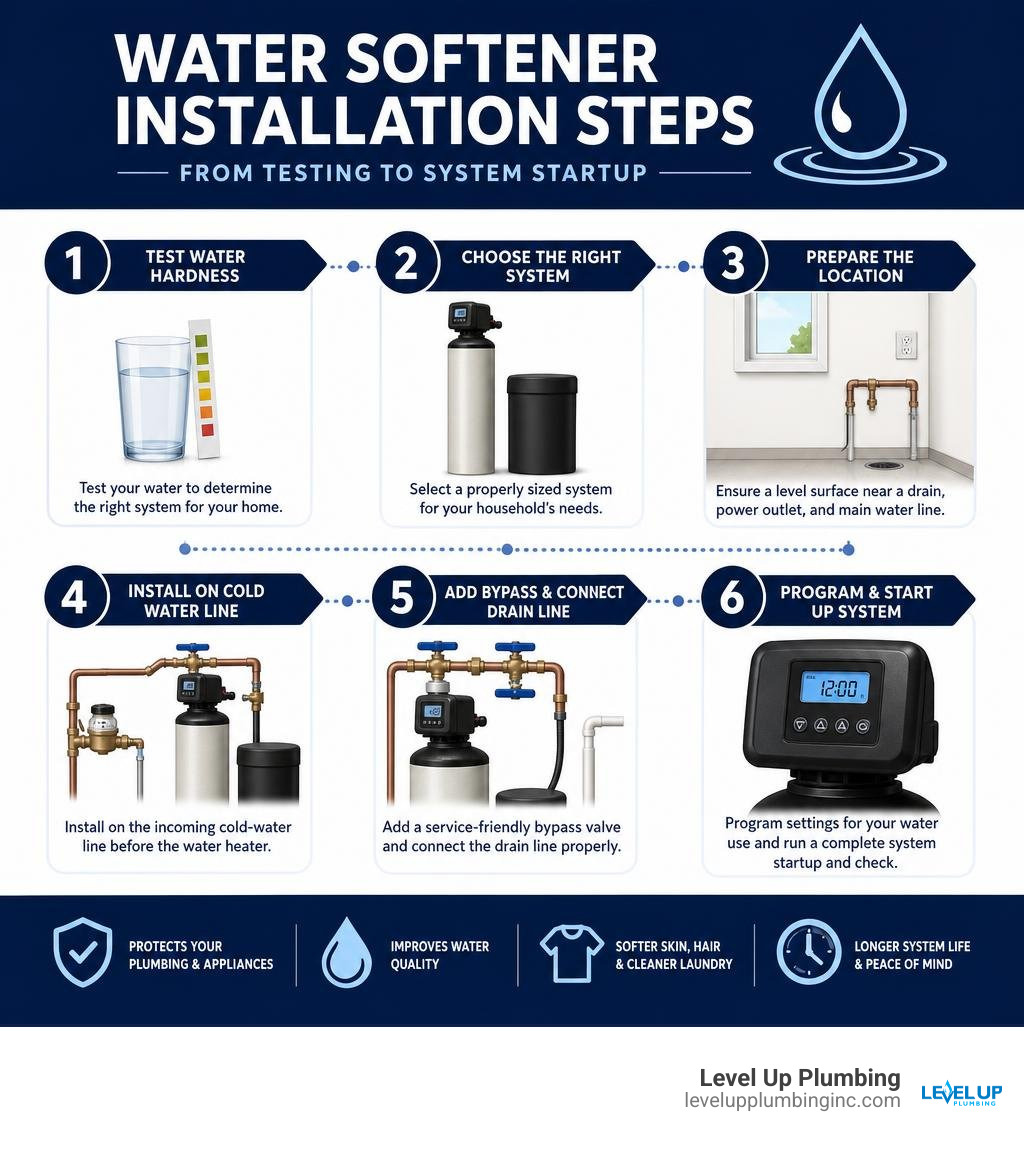
Simple guide to water softener installation huntington park:
Why Huntington Park Homes Require Hard Water Treatment
Hard water is an everyday reality for homeowners across our local communities. Municipal supplies in the region draw from a blend of river, reservoir, and groundwater sources. As this water journeys through subterranean aquifers and rock formations, it dissolves substantial quantities of minerals—predominantly calcium and magnesium.
The Environmental Protection Agency (EPA) considers water with dissolved mineral content exceeding 60 milligrams per liter (mg/L) to be hard. In our region, mineral levels typically range between 80 and 130 mg/L, placing local tap water firmly in the moderately hard to very hard territory.
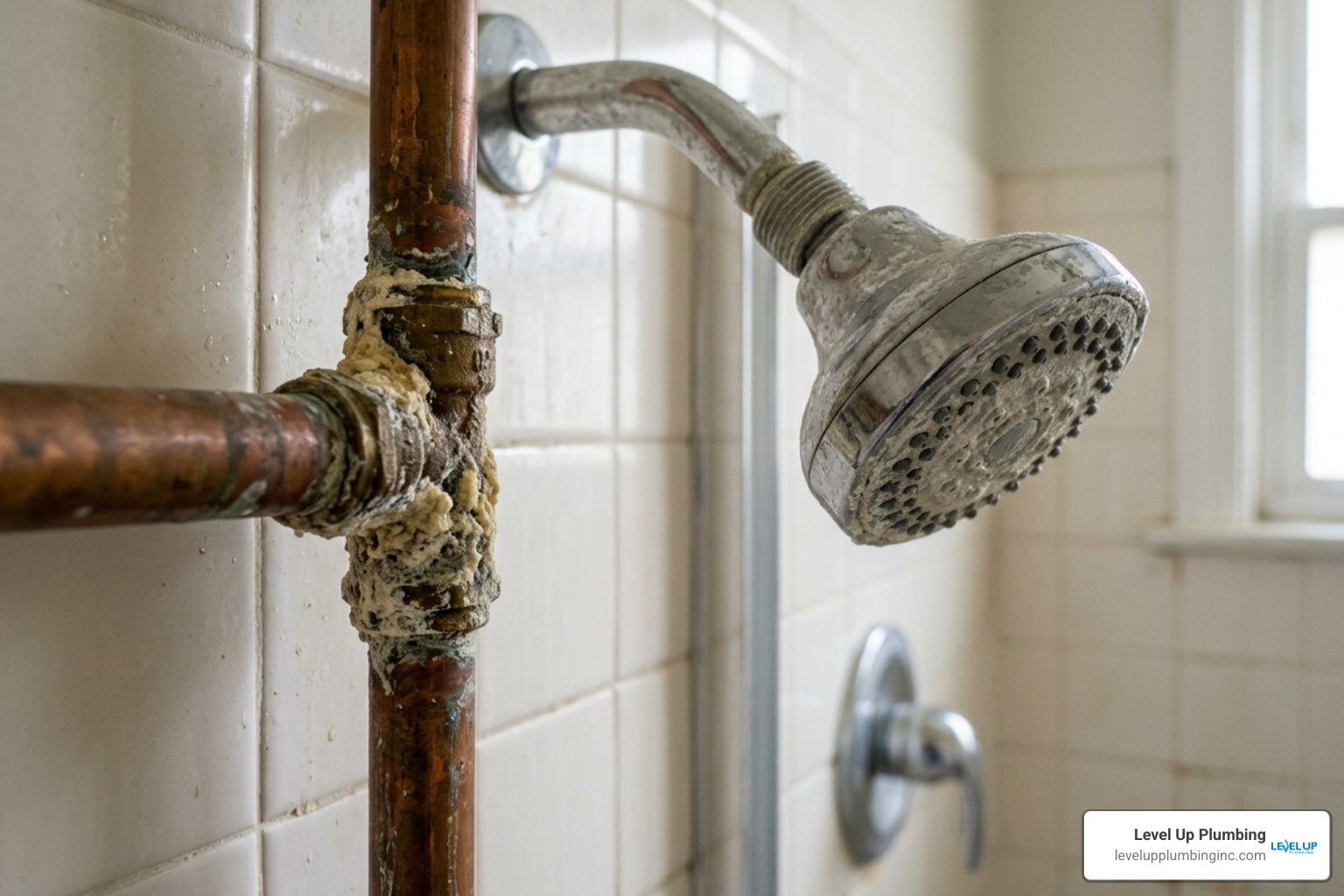
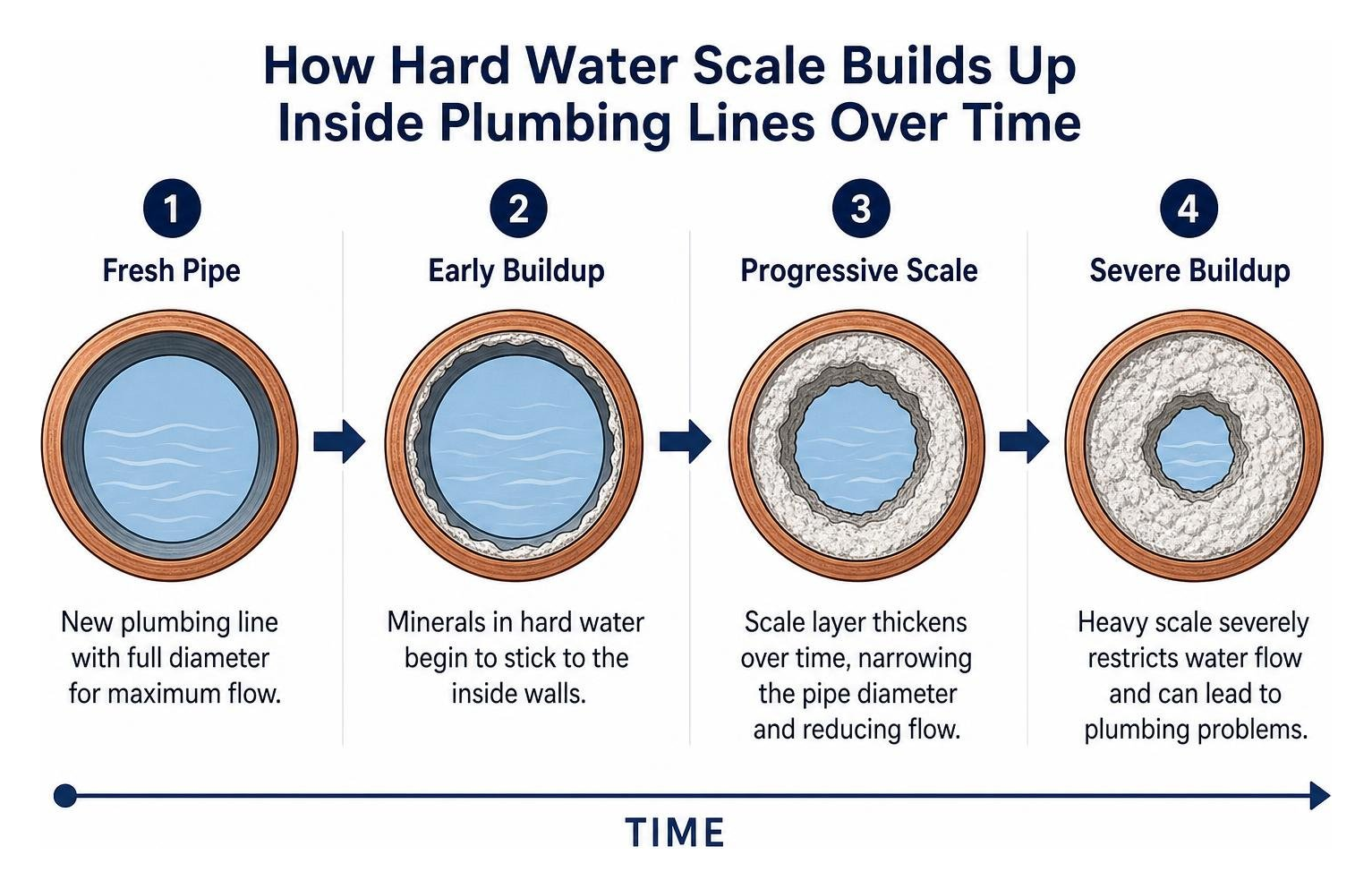
While these minerals pose no health threat when consumed, they wreak havoc on residential plumbing infrastructure. When hard water flows through your pipes and is heated, calcium and magnesium precipitate out of the solution, forming a rock-hard crust known as limescale. Over time, this scale accumulates inside copper supply lines, narrows pipe diameters, and restricts water volume. If left unaddressed, it creates severe plumbing friction. Learning what to do about hard water before scale completely restricts your plumbing is essential to prevent costly infrastructure damage, and taking proactive steps can help you troubleshoot low water pressure before fixtures stop functioning altogether.
Signs You Need Water Softener Installation Huntington Park Services
Hard water leaves obvious clues throughout your home. If you are wondering whether it is time to invest in a treatment system, watch for these common household symptoms:
- Chalky Mineral Deposits on Fixtures: Faucets, showerheads, and aerators develop stubborn white or greenish crusts that do not wash away easily.
- Persistent Soap Scum: Calcium bonds with soap molecules, preventing lather and leaving a sticky residue on glass shower doors and tile walls.
- Stiff, Faded Laundry: Clothes washed in hard water feel scratchy, wear out faster, and lose their vibrant color due to trapped mineral particles in the fabric.
- Dry Skin and Dull Hair: Hard minerals strip natural moisture from your skin and hair, leaving you feeling itchy after showering.
- Premature Water Heater Breakdown: Scale forms an insulating blanket over heating elements or along the base of tank water heaters, causing strange popping noises, lower energy efficiency, and premature tank failure.
- Frequent Appliance Clogs: Modern dishwashers, ice makers, and washing machines suffer valve clogs and internal pump failures due to mineral accumulation.
Salt-Based vs. Salt-Free Water Conditioning Systems
When selecting a treatment unit, homeowners generally choose between two primary technologies: traditional salt-based ion exchange softeners and salt-free water conditioners (often using Template Assisted Crystallization, or TAC). Understanding their functional differences ensures you pick the right system for your home’s water chemistry.
| Feature | Salt-Based Ion Exchange Softeners | Salt-Free Water Conditioners |
|---|---|---|
| Primary Mechanism | Ion exchange replaces calcium/magnesium with sodium ions | Alters mineral crystal structure (TAC) without removal |
| Mineral Removal Rate | Eliminates 95%+ of hardness minerals | 0% removed (minerals remain in the water) |
| Scale Prevention | Completely prevents and dissolves existing scale | Reduces surface scale adhesion |
| Lather & Soap Feel | Silky water feel, rich lather with less soap | Natural water feel, standard soap lather |
| Maintenance Needs | Monthly salt refills (25–40 lbs), periodic tank rinse | Filter cartridge changes every 1–3 years |
| Drain Line Needed? | Yes (required for regeneration backwash) | No drain line or electrical outlet required |
| Ideal Application | Homes with severe scaling and mineral buildup | Mild water conditions or strict brine limitations |
For the water conditions found in our service areas, salt-based ion-exchange systems remain the benchmark. They physically extract hard minerals out of the water supply, providing complete protection for delicate plumbing lines, tankless water heater heat exchangers, and sensitive plumbing valves.
Complete Guide to Water Softener Installation Huntington Park Homeowners Can Trust
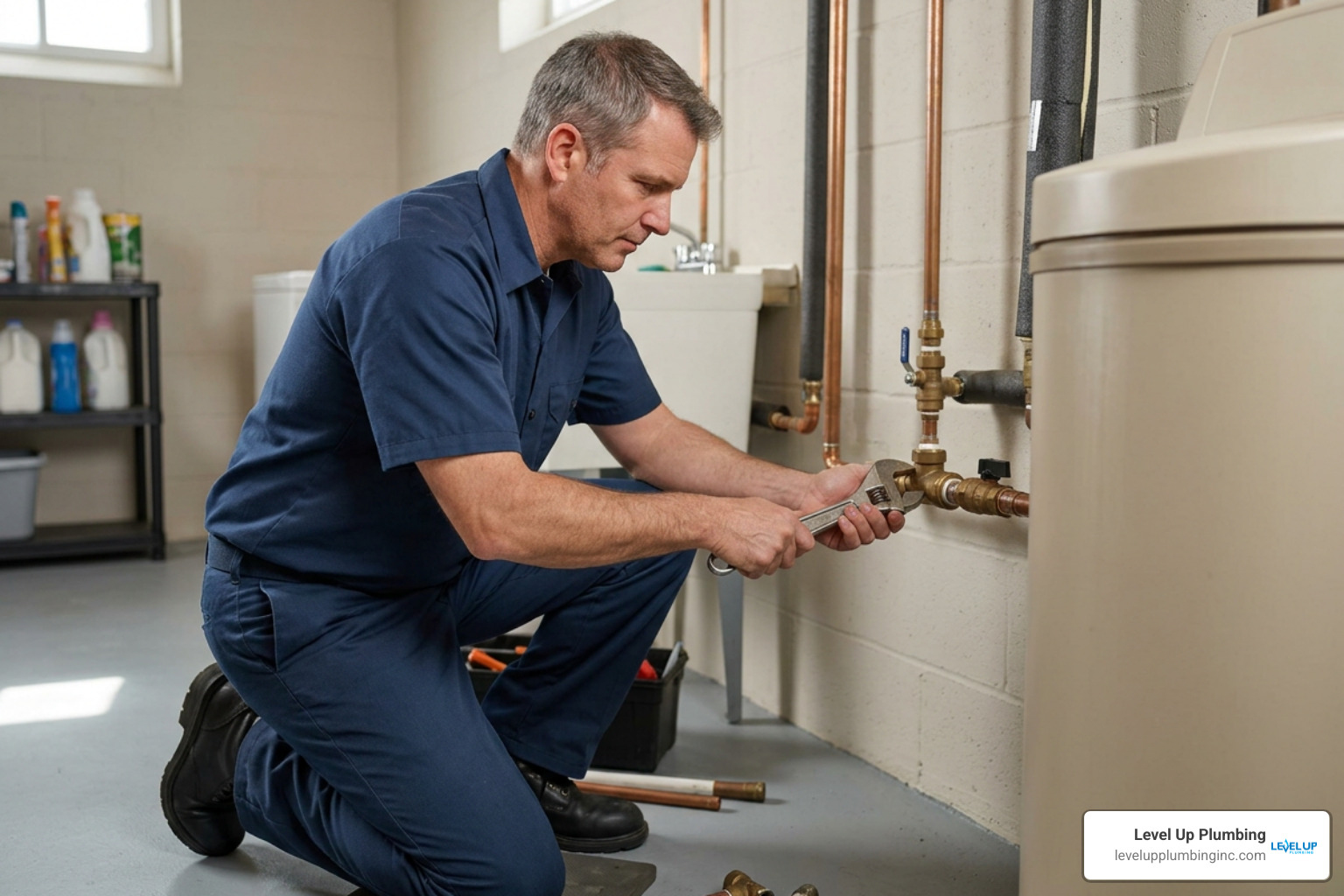
Installing a residential water softener requires careful planning, accurate sizing, and precise plumbing execution. When we install a water softening system, our goal is to deliver balanced water pressure, reliable mineral removal, and easy access for future servicing.
Sizing and Preparing for Water Softener Installation Huntington Park Projects
A properly sized system ensures your home never runs out of softened water during peak usage hours while avoiding unnecessary salt and water waste during regeneration cycles.
To determine the ideal grain capacity for your household:
- Calculate Daily Water Usage: The standard planning figure is roughly 80 to 100 gallons per person per day.
- Determine Hardness Grains: We convert local water hardness from mg/L into grains per gallon (GPG) by dividing mg/L by 17.1.
- Calculate Daily Grain Removal: Multiply daily water consumption by your water’s GPG rating.
- Incorporate Reserve Capacity: Multiply daily grain requirements by 3 to 4 days so the system only regenerates about once or twice a week.
For most households of 2 to 4 people, a 30,000-grain to 40,000-grain system provides ample capacity. Larger families or multi-bathroom estates often require 48,000 to 64,000-grain systems to manage peak simultaneous flow rates across showers, laundry, and kitchen tasks.

Step-by-Step Installation and Plumbing Integration
Executing a water softener setup involves precise mechanical and plumbing steps:
- Site Inspection and Water Shutoff: We locate the primary cold water main where it enters the home, ensure proper clearance in your garage or utility space, and shut off the main water isolation valve, releasing line pressure by opening the lowest fixture.
- Main Supply Line Integration: We cut into the incoming cold water line before it branches into the water heater. Outdoor irrigation lines are typically kept on an unsoftened bypass loop so you don’t waste conditioned water on lawns and garden beds.
- Bypass Valve Assembly: A three-valve bypass or a integrated manufacturer bypass valve is installed. This allows you or a technician to isolate the softener for maintenance without interrupting water flow to the rest of the house.
- Dedicated Drain and Air Gap Configuration: The backwash drain line carries flushed minerals and brine rinse away during regeneration. We install a dedicated, smooth-sloping drain line that terminates with a physical air gap fitting over a standpipe or utility drain to eliminate any risk of sewer backflow.
- Brine Tank Setup and System Priming: We position the brine tank, connect the safety brine line, and add initial water to prime the salt tank before loading high-purity salt pellets.
- Pressurization and Manual Regeneration: We slowly repressurize the home’s water lines to purge air without disturbing the delicate resin bead media inside the tank. We then run a complete manual regeneration cycle to verify valve operation, confirm cycle timing, and test all connections under full working pressure.
Professional vs. DIY Installation: Costs, Permits, and Plumbing Safety
While some handy homeowners contemplate a weekend DIY installation, plumbing a whole-home filtration system into your primary water supply involves real mechanical risks. A single cross-threaded fitting, improperly sloped drain line, or incorrect bypass installation can lead to high-pressure leaks, water damage, or compromised water quality.
When upgrading your home’s water treatment setup, engaging residential plumbing services ensures your unit meets regional plumbing codes, safeguards your manufacturer warranties, and operates at peak efficiency. If you are comparing local options, review these 5 smart ways to find a local plumber in Huntington Park CA to ensure you choose a licensed, bonded, and experienced contractor.
Installation Costs and Old System Removal
Investing in a residential water softening system involves both hardware selection and labor considerations. System costs depend on household capacity, valve intelligence (demand-metered digital valves vs. basic mechanical timers), and site plumbing conditions.
- Equipment Investment: Equipment varies based on resin capacity, dual-tank setups, and smart digital metered controls.
- Professional Installation Labor: Labor costs vary based on whether the home is already pre-plumbed with a softener loop or requires new pipe routing, drywall access, or custom drain connections.
- Old Unit Removal & Hauling: When replacing an obsolete, ruptured, or scaled-up water softener, professional haul-away includes disconnecting the old unit, draining residual brine, and arranging eco-friendly component recycling.
Why Professional Installation Protects Your Plumbing
- Corrosion Protection for Fresh Copper: If your home recently had copper repiping, introducing softened water too rapidly before pipes build a natural protective patina can cause pinhole leaks or blue-green staining. Professional plumbers know how to balance water chemistry during commissioning.
- Code-Compliant Cross-Connection Protection: Backflow prevention and physical air gaps are legally required to prevent waste water from siphoning back into your potable drinking supply.
- Precise Control Valve Calibration: We program your system’s regeneration schedule based on actual local water hardness readings and household usage patterns, preventing excessive salt consumption and reducing water waste.
Ongoing Maintenance and Troubleshooting for Longevity
A high-quality water softener that is properly installed and maintained will deliver 15 to 20 years of dependable performance. Routine maintenance is straightforward and requires only a few minutes each month:
- Monitor Salt Levels Monthly: Inspect your brine tank every 4 to 6 weeks. Maintain salt levels roughly 2 to 3 inches above the standing water line, keeping the tank about half to two-thirds full. Most households use approximately 25 to 40 pounds of salt each month.
- Choose the Right Salt: Use high-purity evaporated salt pellets or solar salt crystals. Avoid rock salt, which contains insoluble minerals and dirt that clog brine injectors.
- Prevent and Clear Salt Bridges: In humid environments, salt can form a hard crust—known as a salt bridge—above empty space, preventing the salt from dissolving into the water below. If your system stops softening despite looking full of salt, gently tap the crust with a broom handle to break it apart.
- Prevent Salt Mushing: When thick sludge settles at the base of the brine tank, it obstructs the brine well screen. Empty and rinse the brine tank with warm, soapy water once or twice a year to maintain clean draw cycles.
- Flush the Resin Bed: Add an iron-removing resin cleaning solution into the brine well every 6 to 12 months. This clears accumulated mineral coatings from the ion-exchange resin beads, restoring their original softening capacity.
Frequently Asked Questions About Water Softeners in Huntington Park
How much does water softener installation cost in Huntington Park?
Total installation costs depend on the size of the system, whether your home already has an existing plumbing loop, and the distance to the nearest drain line and electrical outlet. Homes that require extensive pipe retrofitting or drain extensions involve more labor than direct change-outs of older units.
How often should I check the salt level and clean the brine tank?
You should check the salt level inside your brine tank every 4 to 6 weeks. Keep the salt level 2 to 3 inches above the waterline to guarantee proper brine saturation for regeneration. Brine tanks should receive a full inspection and sanitizing rinse once or twice every year to clear sediment and prevent salt mushing.
What is the difference between a salt-based softener and a reverse osmosis system?
A salt-based water softener is a whole-house system designed to protect pipes, water heaters, and appliances by extracting hardness minerals (calcium and magnesium) from all incoming water. A reverse osmosis system is typically a dedicated point-of-use unit installed under the kitchen sink. It uses a semi-permeable membrane to eliminate microscopic contaminants, heavy metals, total dissolved solids (TDS), and chlorine, providing purified water specifically for cooking and drinking. Many homeowners combine both systems for complete whole-home protection and pristine drinking water.
Conclusion
Untreated hard water quietly damages home plumbing, degrades expensive appliances, and creates frustrating cleaning chores. Installing a reliable, properly calibrated water softening system protects your home’s infrastructure, cuts energy bills, and delivers the comfort of soft water for decades to come.
Level Up Plumbing is proud to be a woman-owned plumbing company serving Southern California with 21+ years of local expertise. Our licensed team provides upfront guidance, expert installation, and reliable system commissioning tailored specifically to regional water conditions.
If you are ready to protect your plumbing and enjoy crystal-clear fixtures, turn to Level Up Plumbing for experienced guidance and quality workmanship. You can also contact Level Up Plumbing directly today to schedule an on-site consultation with our local plumbing experts.