
What Is a Camera Inspection? (Quick Answer)
A camera inspection is a non-invasive diagnostic method where a small waterproof camera is inserted into your pipes or sewer lines to visually identify problems — without any digging or tearing apart walls.
Here’s what you need to know at a glance:
- What it is: A waterproof camera on a flexible cable feeds live video from inside your pipes to a monitor above ground
- What it finds: Clogs, tree root intrusion, cracked pipes, corrosion, collapsed lines, and misaligned joints
- When you need it: Slow drains, recurring clogs, sewage backups, foul odors, or before buying a home
- How long it takes: Often less than an hour, depending on the complexity of the issue
- Why it matters: Pinpoints problems accurately — no guesswork, no unnecessary excavation
If you’ve been dealing with slow drains, mysterious wet patches in your yard, or a toilet that just won’t behave, the problem is likely deeper than it looks. Traditional plumbing diagnostics used to mean digging up your yard or tearing into walls — a costly, messy process with no guarantee of finding the real issue.
Camera inspections changed all of that.
Today, a trained plumber can thread a high-definition camera through your sewer line and see exactly what’s going on inside — in real time. It’s faster, cleaner, and far more accurate than guesswork.
For homeowners in Southern California dealing with aging pipes, shifting soil, and tree roots seeking water, this technology is especially valuable. It protects your property and your wallet by catching small problems before they become expensive disasters.
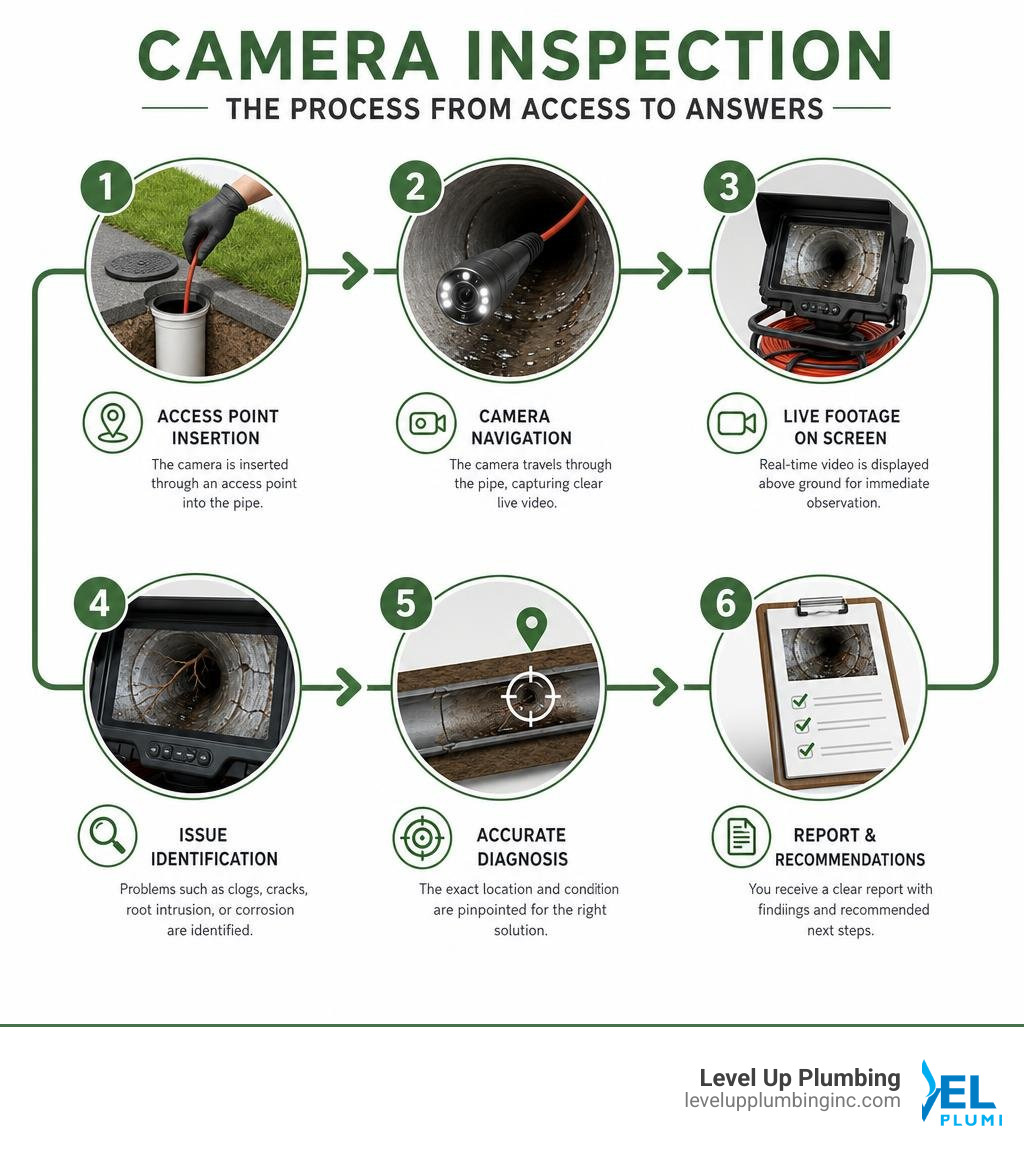
What is a Camera Inspection and How Does It Work?
At its core, a Camera Inspection (often referred to as a sewer scope, drain camera, or pipe inspection) is like an endoscopy for your home’s plumbing. Instead of guessing what is causing a stubborn backup deep beneath your concrete slab, we use specialized closed-circuit television (CCTV) technology to take a direct look.
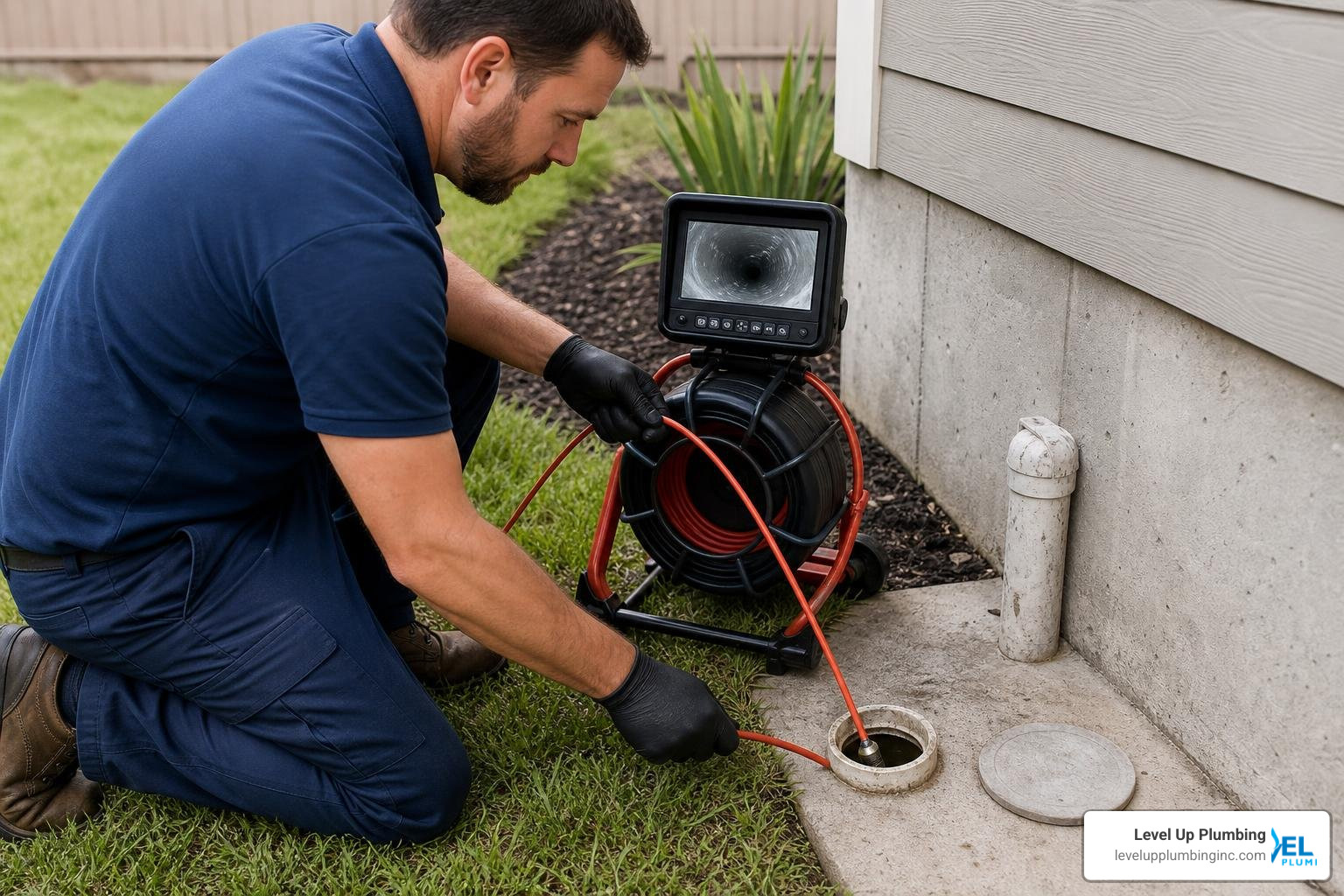
The process is remarkably straightforward but relies on highly sophisticated gear. A professional technician begins by identifying an easily accessible entry point, such as a rooftop vent, an indoor drain, or an outdoor sewer cleanout.
Once the access point is opened, we feed a high-resolution, waterproof camera attached to a flexible, fiber optic push cable down into the drainage system. As the cable is pushed through the pipe, it transmits real-time, high-definition footage back to a ruggedized monitor above ground. This allows our technicians—and you, if you want to look over our shoulder—to see the exact interior condition of your pipes.
Whether we are conducting Orange County camera inspection services or troubleshooting a commercial mainline, this real-time visual feedback eliminates all diagnostic mystery.
Modern professional systems, such as the Wöhler VIS 200/250 Service Camera, are engineered to navigate tight bends and elbows easily. These compact systems are perfect for inspecting waste water pipes and ventilation lines starting at 1 1/2 inches in diameter, proving that we don’t need a massive opening to get a crystal-clear picture of your system’s health.
Key Equipment Used in a Sewer Camera Inspection
A professional-grade Camera Inspection system is not something you buy off a discount rack. It is a carefully engineered suite of tools designed to withstand the harsh, wet, and abrasive environments found inside underground sewer lines.
- The Camera Head: This is the “eye” of the operation. Modern camera heads are encased in heavy-duty stainless steel or scratch-resistant sapphire glass. They feature surrounding arrays of high-intensity LED lights to illuminate pitch-black pipes. Premium systems like the Wöhler VIS 700 HD Inspection Camera offer advanced features such as a 360-degree pan and 180-degree tilt, digital focus, and self-leveling capabilities. Self-leveling ensures the image on the screen stays upright, preventing the technician from getting disoriented as the camera twists through the line.
- The Push Rod / Cable: This is the backbone of the system. It must be rigid enough to be pushed hundreds of feet through heavy debris, yet flexible enough to negotiate sharp 90-degree turns. These cables are typically made of reinforced fiberglass and house the delicate video and power wires inside.
- The Monitor and Recording Hub: This is where the magic happens. Plumbers view the live feed on high-resolution LCD screens, often equipped with sunshields for outdoor use. Modern hubs allow for one-touch digital recording, voice-over commentary, and direct Wi-Fi streaming to mobile devices so we can email you the footage immediately.
How Inspectors Locate the Exact Position of Pipe Damage
You might wonder: “Great, you found a cracked pipe on your screen, but how do you know where to dig in my yard to fix it?”
We don’t just guess the distance based on how much cable we pushed in. To pinpoint the exact location and depth of a problem, we use a specialized transmitter called a Sonde.
A Sonde is a tiny radio transmitter built directly into the camera head (often operating at a standard frequency of 512Hz). As the camera travels through your pipes, the Sonde continuously emits a radio signal.
Above ground, the inspector sweeps a handheld locator receiver over the grass or concrete. By tracking the strength of the signal, the receiver tells the technician exactly where the camera head is resting beneath the surface, as well as its precise depth. This means if there is a collapsed pipe ten feet underground beneath your rose garden, we can mark the exact square foot of dirt that needs to be excavated, sparing the rest of your beautiful landscape.
Key Benefits and Common Problems Detected by Video Inspections
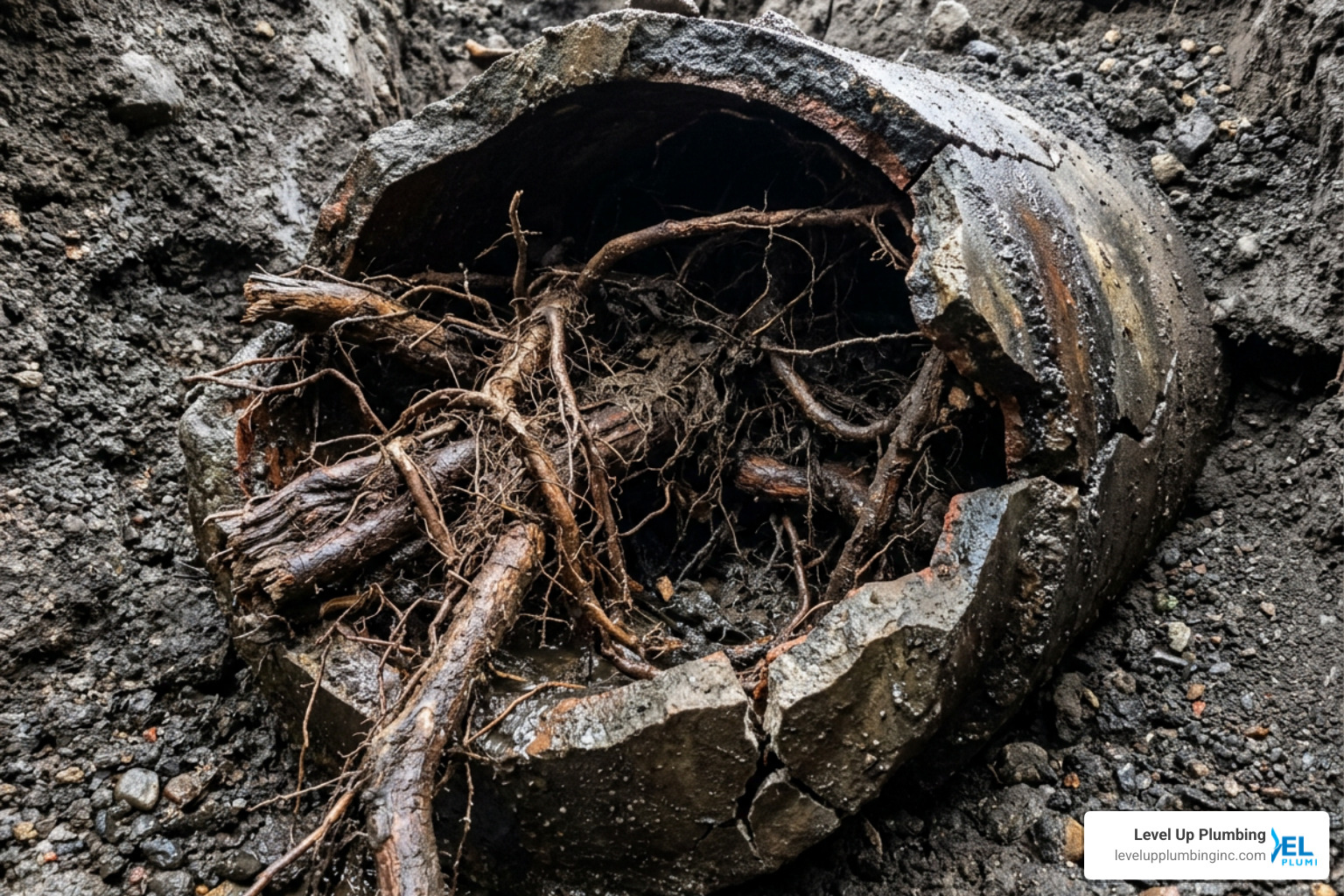
Before the widespread adoption of Camera Inspection technology, diagnosing a broken underground line was a destructive guessing game. Plumbers would have to dig trenches across yards or jackhammer concrete slabs just to find the source of a leak.
By utilizing Huntington Beach camera inspection services, property owners can bypass the stress, mess, and unnecessary expenses of traditional diagnostics.
Major Benefits of Non-Invasive Diagnostics
- No Destructive Excavation: We inspect your entire main line through a single existing cleanout. Your manicured lawn, driveway, and pristine landscaping remain completely untouched.
- Unrivaled Diagnostic Accuracy: There is no substitute for seeing. A camera inspection shows us the exact nature of the problem—whether it is a bellied pipe, a thick root intrusion, or a forgotten toy flushed by a toddler.
- Cost-Effective Solutions: By knowing the exact issue and its precise location, we can plan targeted repairs. You only pay to fix the damaged section rather than replacing the entire line.
- Proactive Preventative Maintenance: Catching a hairline crack or a minor root intrusion early allows you to address it with simple maintenance (like hydro-jetting) before it turns into a catastrophic mainline backup that floods your home.
Common Pipe Issues Found Underground
Our sewer cameras routinely capture a subterranean world of wear and tear. Some of the most common issues we identify include:
- Tree Root Intrusion: Tree roots are naturally drawn to the warmth and moisture of sewer lines. They can slip through microscopic cracks in pipe joints, expanding over time until they completely choke off the flow of water.
- Pipe Cracks and Fractures: Ground shifting, soil erosion, and old age can cause pipes to crack, allowing water to escape and soil to enter the line.
- Corrosion and Deterioration: Older cast iron and galvanized steel pipes corrode over time, creating rough interiors that snag debris and eventually rust through.
- Collapsed or Broken Lines: Severe soil shifting or heavy vehicle traffic overhead can cause older, weakened pipes (like clay or Orangeburg) to collapse completely.
- Sags and Bellies: If the soil beneath a pipe settles, a section of the line can sink, creating a “belly” that collects water and waste, leading to chronic, recurring clogs.
- Misaligned Pipe Joints: Shifting ground can push pipe connections out of alignment, creating offsets where waste catches and roots easily enter.
When to Schedule, Costs, and System Comparisons
Knowing when to call for a Camera Inspection can save you from a major plumbing emergency. We highly recommend scheduling an inspection if you experience any of the following warning signs:
- You have multiple slow-draining sinks, tubs, or showers.
- Your toilets frequently clog or overflow without an obvious cause.
- You smell a persistent sewer gas odor in your home or yard.
- You notice unexplained lush, green patches in your lawn (a classic sign of an underground sewer leak acting as fertilizer).
- You are planning to buy a home and want to avoid inheriting a multi-thousand-dollar sewer disaster.
If you are a local property owner, keeping your home compliant with local standards is also crucial. For example, understanding Huntington Beach building inspection requirements or checking the City of Garden Grove inspection services can help ensure your property remains up to code during renovations or sales.
Key Indicators and Average Costs
While we avoid quoting specific pricing numbers due to the unique variables of every property, it is helpful to understand what factors influence the cost of a Camera Inspection.
The overall price of an inspection is typically determined by:
- The length of the pipe run: Longer mainlines require more time and longer camera reels.
- Accessibility: If your home lacks an outdoor cleanout, we may need to remove a toilet or access a roof vent, which requires extra labor.
- The complexity of the system: Commercial properties or multi-unit buildings with complex branch lines take longer to map out.
Investing in a professional diagnostic report—complete with video footage—is always highly cost-effective when compared to the blind excavation alternative. If you are dealing with chronic issues, scheduling a Cypress camera inspection or a Garden Grove camera inspection will give you the exact answers you need to make an informed decision.
Push Cameras vs. Motorized Camera Inspection Systems
Not all camera systems are built for the same job. Depending on the size of the pipe and the nature of the inspection, we choose between manual push cameras and advanced motorized crawler systems.
| Feature | Manual Push Cameras | Motorized Crawler Systems |
|---|---|---|
| Typical Pipe Diameter | 1.5″ to 8″ | 8″ to 48″+ |
| Movement Method | Manually pushed via rigid fiberglass rod | Self-propelled via motorized wheels/tracks |
| Best Used For | Residential drains, sewer mainlines, pool lines | Municipal sewers, storm drains, industrial mains |
| Camera Head Control | Fixed or manual pan/tilt | Remote-controlled motorized pan, tilt, and zoom |
| Portability | High (portable reels and compact monitors) | Low (often requires a dedicated control rig) |
To give you an idea of the diverse technology available in the industry:
- Industrial Powerhouses: Systems like the PCE-PIC 120 Condition Monitoring Camera utilize massive 120-meter fiber optic push cables and motorized camera heads to inspect large-diameter industrial channels.
- Handheld & DIY Inspection Tools: On the smaller end, tools like the Teslong WF200 Wireless Inspection Camera or the Autel MaxiVideo MV108S offer ultra-compact, app-enabled probes. These are perfect for tight spots, such as looking behind drywall, inside HVAC ducts, or checking automotive engines, but are not designed for deep underground sewer mainlines.
Professional Training, Certifications, and Marketing Tips
Offering high-quality Camera Inspection services requires more than just buying the equipment. Professional plumbers undergo rigorous technical training to properly operate these systems.
Operators must learn to identify different pipe materials—such as clay, cast iron, orangeburg, and PVC—and recognize the unique ways they degrade. They also master the use of Sonde locators and learn how to generate clear, professional reports for homeowners and insurance companies.
For plumbing businesses, marketing these services effectively often involves building strong relationships with local real estate agents. Offering reliable sewer scope inspections during the escrow phase is a fantastic way to generate consistent referrals while protecting homebuyers from unexpected post-closing plumbing disasters.
Frequently Asked Questions About Pipe Inspections
How long does a typical sewer scope take?
A standard residential sewer scope inspection is surprisingly quick. In most cases, the physical inspection takes between 30 and 45 minutes. If the cleanout is easily accessible and there are no major blockages blocking the camera’s path, we can often complete the run, locate any problem areas, and wrap up the digital report in under an hour.
Can a camera inspection clear a clogged drain?
No, the camera itself is purely a diagnostic tool. It cannot clear clogs or clean pipes. However, it is the crucial first step in a two-part process.
Once the camera identifies the exact cause of the clog, we can deploy the correct tool to resolve it. If we find a soft clog of grease or hair, we might use a professional plumbing snake or hydro-jetting. If we find tree roots, we can use mechanical root cutters or hydro-jetting to safely clear the line. We then run the camera a second time to verify the pipe is completely clean and undamaged.
Is a sewer camera inspection necessary when buying a home?
Yes, we highly recommend it! A standard home inspection rarely covers the underground sewer line because it is buried out of sight.
If you are looking at properties, checking out Yelp home inspectors in Cypress CA is a great starting point for your general inspection. However, adding a specialized sewer scope to your due diligence checklist is the only way to ensure you aren’t buying a home with a collapsed main line. Replacing an underground sewer line can cost thousands of dollars, making a pre-purchase camera inspection one of the smartest financial decisions you can make.
Conclusion
When you are dealing with underground plumbing issues, guesswork is your enemy. A professional Camera Inspection takes the mystery out of drain repairs, protecting your yard, your home, and your budget from unnecessary digging.
At Level Up Plumbing, we are proud to be a premier woman-owned plumbing company serving Orange County, CA. With over 21 years of local expertise and award-winning customer service, we combine state-of-the-art diagnostic technology with a warm, friendly approach to keep your home’s plumbing running flawlessly.
Whether you need a proactive checkup on an older property or are dealing with a stubborn, recurring clog, we are here to help. Schedule a professional camera inspection with Level Up Plumbing today, and let us give you the clarity and peace of mind you deserve!