
Why Toilet Repair Is Worth Tackling Sooner Rather Than Later
Toilet repair doesn’t have to mean calling a plumber right away. Most common toilet problems — a running toilet, a leak at the base, a weak flush — can be fixed with basic tools and a little know-how.
Here are the most common toilet problems and their quick fixes:
| Problem | Most Likely Cause | Quick Fix |
|---|---|---|
| Toilet runs constantly | Worn flapper | Replace the flapper (~$10) |
| Leaking at the base | Failed wax ring or loose bolts | Reseat toilet with new wax ring |
| Weak or slow flush | Low water level or clogged jets | Adjust float or clean rim jets |
| Toilet won’t stop filling | Faulty fill valve | Clean or replace fill valve |
| Handle feels loose | Broken or disconnected chain | Reconnect or replace chain/handle |
Here’s the thing: a toilet that sounds like it’s always running isn’t just annoying — it’s wasting up to 200 gallons of water per day. That adds up fast on your water bill, especially in Southern California where every drop counts.
The EPA estimates that 1 in 5 toilets in the US is running right now. And in roughly 65% of those cases, the culprit is a single worn-out rubber flapper — a part that costs about $10 and takes minutes to swap out.
This guide from Level Up Plumbing walks you through everything: how your toilet works, which problems you can fix yourself, what tools you need, and when it’s time to call a pro.
How a Toilet Works and Common Problems
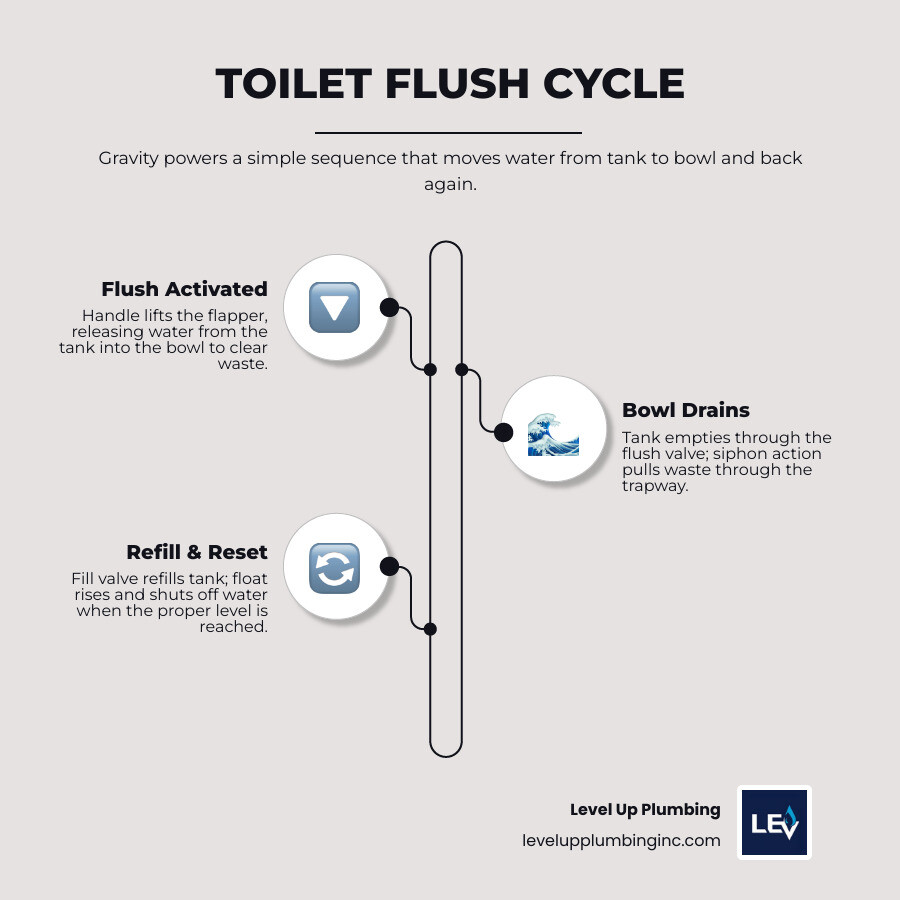
Before you grab a wrench and start twisting parts, it helps to understand the physics happening inside that porcelain box. A toilet is essentially a gravity-powered machine.
When you press the flush handle, it pulls up a lift chain. This chain lifts the flapper (a rubber seal at the bottom of the tank). Once the flapper is raised, gravity pulls the tank water down through the flush valve and into the toilet bowl. This sudden rush of water pushes the waste through the curved trapway and down into your home’s main drain line.
As the water level in the tank drops, the flapper falls back down, sealing the flush valve opening so the tank can hold water again. Meanwhile, the float mechanism (which drops along with the water level) opens the fill valve. Fresh water begins rushing into the tank through the fill valve, while a small tube sends water down the overflow pipe to refill the toilet bowl. As the tank fills, the float rises. Once the float reaches a pre-set level, it shuts off the fill valve, ending the cycle.
When this system breaks down, you will typically experience one of three major issues:
- The Running Toilet: Water constantly trickles from the tank into the bowl. This is usually caused by a warped flapper, a misadjusted float, or a failing fill valve.
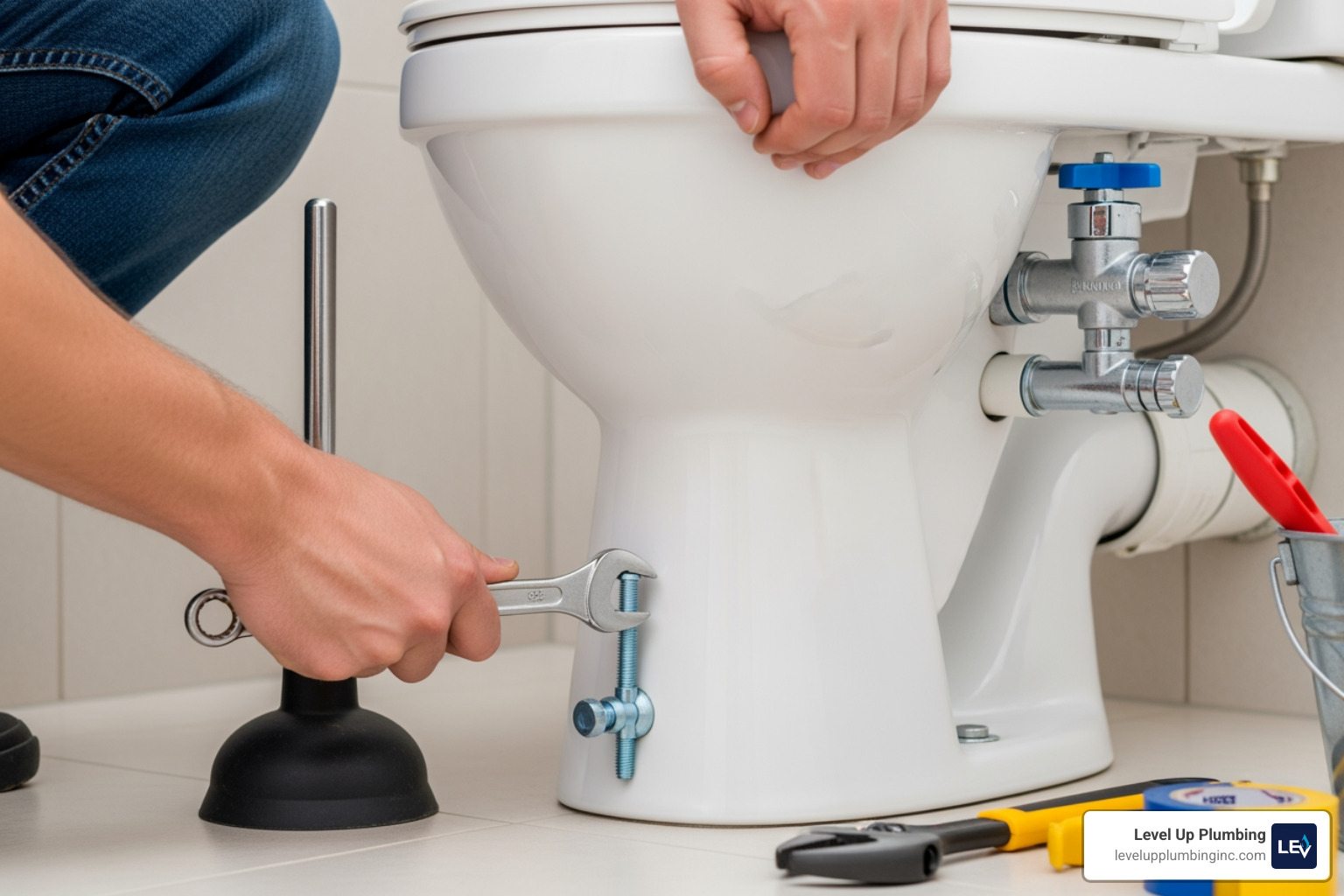
- The Base Leak: Water pools on the bathroom floor around the bottom of the toilet. This is almost always caused by a failing wax ring or loose floor bolts.
- The Stubborn Clog: Water rises in the bowl and threatens to overflow. While a simple plunger often does the trick, deeper clogs might require advanced methods. You can read more about clearing tough blockages in our guide to DIY Drain Cleaning.
If you are dealing with a tank that has multiple worn-out parts, you might want to perform a complete overhaul. To learn how to strip down and replace all the internal mechanisms at once, check out this step-by-step guide on Learn how to rebuild a toilet tank.
One-Piece vs. Two-Piece Toilets
When shopping for replacement parts, you must know what kind of toilet you have.
- Two-Piece Toilets: This is the most common design. The tank and the bowl are two separate pieces of porcelain bolted together. If you look closely, you can see a clear seam where the tank sits on top of the bowl.
- One-Piece Toilets: The tank and bowl are molded together as a single, solid piece of porcelain. These toilets have a sleek, modern look and are easier to clean because there is no seam to collect grime.
Why does this matter for toilet repair? Compatibility. Many universal repair kits and flush valves are designed specifically for two-piece toilets. One-piece toilets often require specialized, low-profile fill valves or unique flappers. Before heading to the hardware store in Cypress or Garden Grove, take a quick photo of the inside of your tank so you can match the parts exactly.
Essential Tools and Preparation for DIY Toilet Repair
You don’t need a massive toolbox to fix most toilet issues. In fact, you probably already have most of these tools lying around your garage.
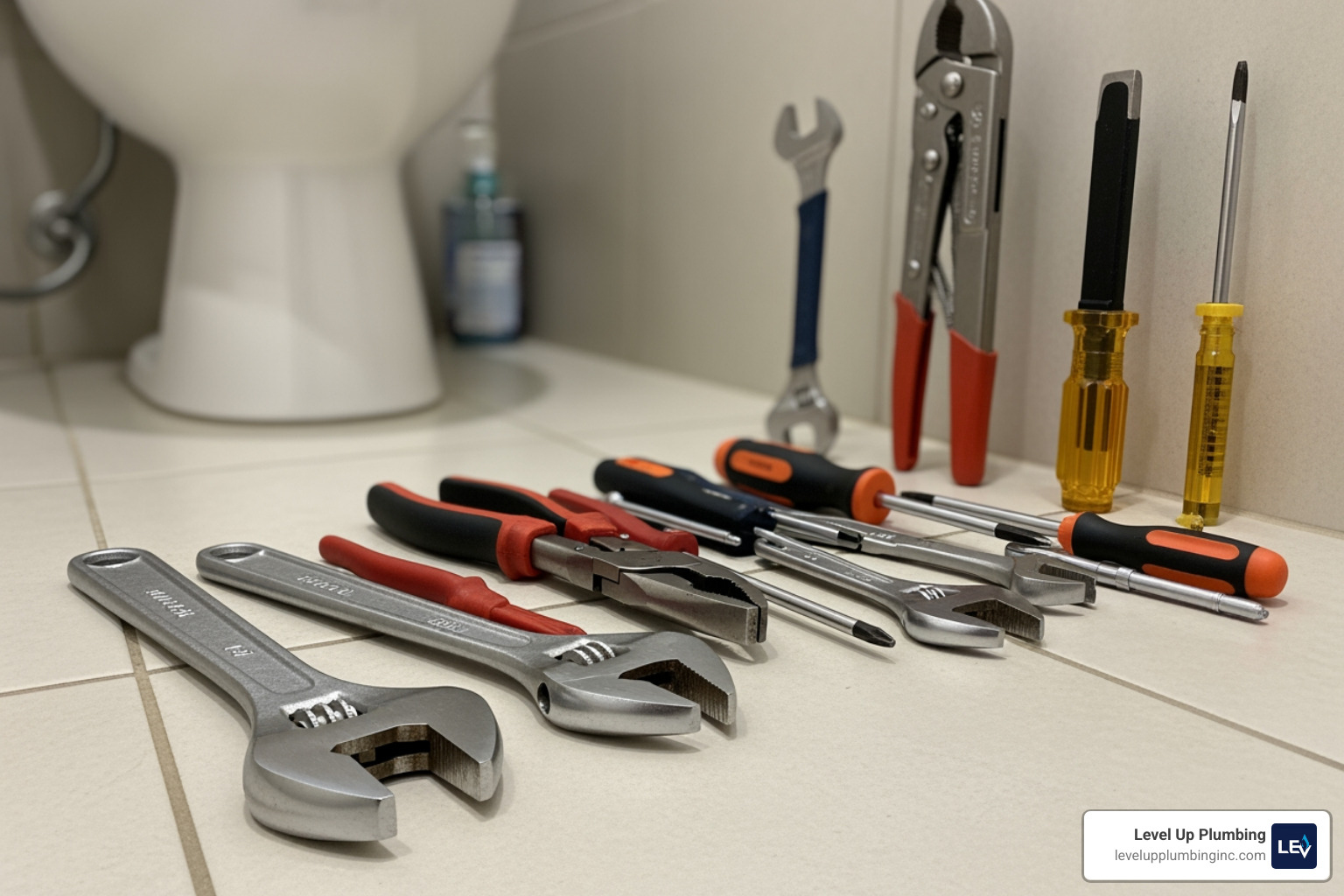
The DIY Toilet Repair Tool Checklist:
- Adjustable wrench: For loosening and tightening supply line connections and tank bolts.
- Channel-lock pliers: Great for gripping plastic locknuts under the tank.
- Flathead and Phillips screwdrivers: To secure tank bolts and adjust float screws.
- Sponge and bucket: Essential for soaking up leftover water before removing parts.
- Replacement parts: A new flapper, fill valve, or wax ring depending on your diagnosis.
Safety First: Preparing for the Repair
Before you touch a single bolt, you must isolate the water. Locate the shutoff valve (also called the angle stop) on the wall behind or beneath the toilet tank. Turn the handle clockwise until it stops. If the valve is old and stubborn, do not force it with pliers — you could snap the stem and cause a major flood. If it won’t budge, apply a small spritz of WD-40, wait a few minutes, and try again.
Once the water is off, flush the toilet and hold the handle down to drain as much water as possible from the tank. Use a sponge to soak up the remaining inch of water at the bottom of the tank and squeeze it into a bucket.
To keep your home’s entire system running smoothly beyond just the bathroom, take a look at our guide on Master Plumbers 5 Secrets to Keeping Your Plumbing in Top Shape.
Step-by-Step Guide to Common Toilet Repair Tasks
Now that your work area is dry and prepared, let’s tackle the three most common repairs.
Task 1: Replacing a Worn Flapper
If your toilet is running and you have diagnosed a flapper leak, replacing it is incredibly simple. For a quick overview of how to handle this in under ten minutes, check out this guide on How to Fix a Running Toilet in 10 Minutes.
- Remove the old flapper: Disconnect the lift chain from the flush handle lever. Slip the rubber ears of the flapper off the plastic pegs on the sides of the overflow tube.
- Buy the right size: Most toilets use either a 2-inch or a 3-inch flapper. Bring your old flapper to the hardware store to ensure an exact match.
- Install the new flapper: Slip the new flapper’s ears onto the overflow tube pegs. Hook the chain back onto the handle lever.
- Adjust the chain: Leave a tiny bit of slack in the chain. If the chain is too tight, the flapper won’t seal fully. If it is too loose, the flapper won’t lift high enough when you push the handle.
Task 2: Replacing the Fill Valve
If water is constantly spilling into the overflow tube, or if the tank takes forever to refill, it is time for a new fill valve. We highly recommend using a high-quality, durable kit like the 2X Long Life Universal Complete Toilet Repair Kit.
- Disconnect the supply line: Place a bucket under the fill valve shank under the tank. Unscrew the water supply line coupling nut.
- Remove the old valve: Unscrew the plastic locknut securing the fill valve to the bottom of the tank. Lift the old fill valve assembly out of the tank.
- Adjust the height of the new valve: Many modern fill valves are adjustable. Twist the valve body so its height matches the height of your old valve.
- Install the new valve: Place the new valve into the tank opening, ensuring the rubber washer sits flat against the inside bottom of the tank. Tighten the plastic locknut underneath by hand, then snug it slightly with pliers (do not overtighten, or you will crack the plastic).
- Connect the refill tube: Clip the small rubber refill tube to the top of the overflow pipe. Reconnect the water supply line, turn the water back on, and test the flush.
Task 3: Replacing a Failed Wax Ring (Fixing a Base Leak)
If you have water pooling around the bottom of your toilet, the wax ring seal has failed.
- Drain and disconnect: Turn off the water, flush, and sponge out all water from both the tank and the bowl. Disconnect the water supply line.
- Remove the toilet: Unscrew the two floor bolts (tee bolts) at the base of the toilet. Gently rock the toilet back and forth to break the wax seal, lift the toilet straight up, and set it on its side on an old towel.
- Clean the flange: Use a plastic putty knife to scrape the old, sticky wax off the floor flange and the bottom of the toilet bowl.
- Install the new wax ring: Place the new wax ring over the floor flange. Ensure the tee bolts are upright in the flange slots.
- Reset the toilet: Lower the toilet straight down over the flange, using the bolts as guides. Press down firmly with your body weight to compress the wax ring. Tighten the floor bolts alternately. Stop tightening as soon as they are snug — overtightening will crack the porcelain bowl.
When to Call a Professional for Toilet Repair
While DIY repairs are highly rewarding, some plumbing scenarios require professional expertise. Attempting to fix complex issues without the right training can result in severe water damage or broken fixtures.
We recommend calling us at Level Up Plumbing if you encounter:
- Cracked Porcelain: If you notice a crack in the toilet bowl or tank, the structural integrity is compromised. It can rupture unexpectedly, causing catastrophic flooding.
- Sewer Line Backups: If water bubbles up into your shower or sink when you flush the toilet, the clog is deep in your main sewer line, not the toilet itself.
- A Loose, Rusted Flange: If the metal or plastic flange in your floor is broken or completely rusted out, the toilet cannot be secured safely to the floor.
- Persistent Leaks: If you have replaced the wax ring and the toilet still leaks at the base, there may be a hidden crack or an issue with your subfloor.
If you are staring at a plumbing problem and feeling overwhelmed, it is always safest to step back. Read more about protecting your home in our guide: When in Doubt Call a Plumber.
Cost Analysis: DIY vs. Professional Plumbing Services
Taking care of minor repairs yourself can save you a significant amount of money. However, for complex jobs, hiring a professional ensures the work is done right the first time and is backed by a warranty.
Here is a general breakdown of what you can expect to spend on common toilet repairs in the Orange County area:
| Repair Type | Average DIY Cost (Parts Only) | Average Professional Cost (Parts & Labor) | Difficulty Level |
|---|---|---|---|
| Flapper Replacement | $10 – $15 | $50 – $100 | Very Easy |
| Fill Valve Replacement | $20 – $40 | $100 – $180 | Easy |
| Wax Ring & Bolt Replacement | $15 – $30 | $150 – $300 | Moderate |
| Clog Removal (Snake/Auger) | $10 (Plunger) – $40 (Snake) | $85 – $350 | Easy to Moderate |
| Complete Toilet Installation | $150 – $300 (Toilet cost) | $200 – $450 (Labor only) | Difficult |
While DIY saves on upfront labor, a professional plumber brings specialized diagnostic tools, carries liability insurance, and can spot secondary issues like dry rot in your subfloor before they turn into multi-thousand-dollar disasters.
Frequently Asked Questions about Toilet Maintenance
How do I diagnose a constantly running toilet?
The easiest and most reliable way to diagnose a running toilet is the food coloring test.
Remove the lid of your toilet tank and add 5 to 10 drops of dark food coloring (or a couple of dye tablets) into the tank water. Do not flush the toilet. Wait about 10 to 15 minutes. If you see colored water creeping into the toilet bowl, your flapper is leaking and needs to be replaced. If the bowl water remains completely clear, your flapper is fine, and the issue is likely a misadjusted float or a failing fill valve that is letting water spill into the overflow tube.
What causes a toilet to leak at the base?
A toilet leaking at its base is almost always caused by a compromised wax ring. The wax ring sits between the bottom of the toilet bowl and the floor flange, creating a gas- and water-tight seal. Over time, if the toilet becomes loose and rocks back and forth, the wax seal will break.
Other causes include loose tee bolts holding the toilet to the floor, or a cracked toilet bowl. If you need to replace the entire unit to resolve a persistent leak, follow the industry-standard steps outlined in this guide on How to Install a Toilet.
How often should I replace my toilet flapper?
On average, a toilet flapper will last four to five years.
However, its lifespan depends heavily on your local water quality and whether you use chemical drop-in tank cleaners. Chlorine and other harsh chemicals inside bleach tablets will rapidly deteriorate the rubber, causing it to warp, harden, or dissolve in as little as a year. To extend the life of your flapper, avoid using chemical cleaners inside the toilet tank.
Conclusion
Taking care of your home’s toilets doesn’t have to be a stressful chore. Armed with a basic understanding of toilet mechanics, a couple of simple tools, and a little patience, you can tackle most common issues like running tanks and simple clogs on your own.
However, if you run into a stubborn leak, a cracked bowl, or a sewer line issue, you don’t have to go it alone. At Level Up Plumbing, we are a proud, woman-owned business with over 21 years of local expertise serving Orange County, Cypress, and Garden Grove. We are dedicated to providing award-winning customer service and getting your plumbing back in perfect working order.
If you are dealing with a tricky plumbing issue or need a professional installation, Schedule service in Huntington Beach with us today!