
Why Low Water Pressure in Huntington Park Is More Than Just an Annoyance
If you’re dealing with low water pressure in Huntington Park, here’s a quick summary of the most common causes and first steps:
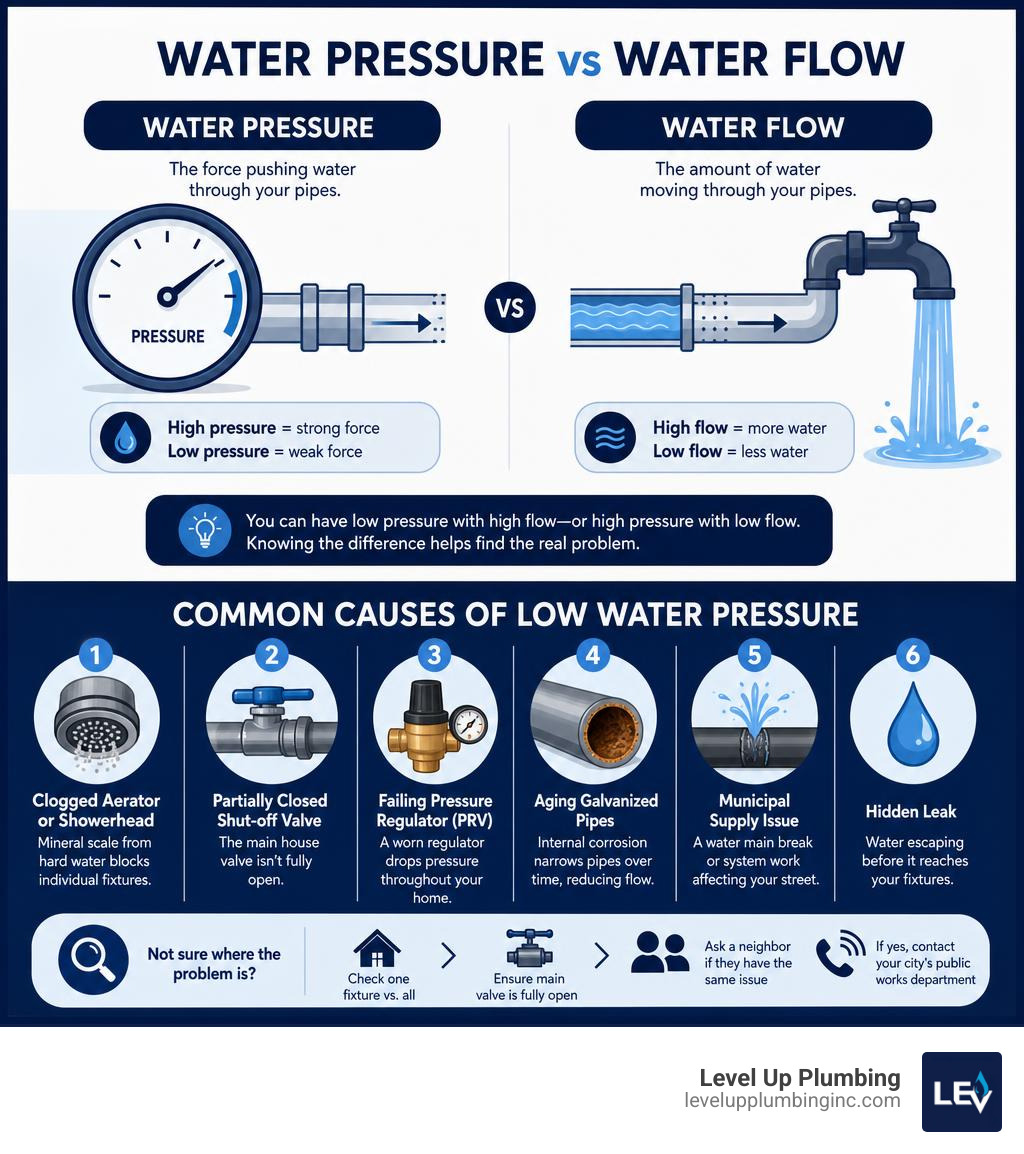
Quick Answer — Most Common Causes of Low Water Pressure in Huntington Park:
- Clogged aerator or showerhead — mineral scale from hard water blocks individual fixtures
- Partially closed shut-off valve — the main house valve isn’t fully open
- Failing pressure regulator (PRV) — a worn regulator drops pressure throughout your home
- Aging galvanized pipes — internal corrosion narrows pipes over time, reducing flow
- Municipal supply issue — a water main break or system work affecting your street
- Hidden leak — water escaping before it reaches your fixtures
First steps to take right now:
- Check whether the low pressure affects one fixture or every tap in the house
- Make sure your main shut-off valve is fully open
- Ask a neighbor if they’re experiencing the same issue
- If yes, contact the City of Huntington Park Public Works at (323) 584-6274
A weak trickle from your kitchen faucet or a disappointing shower isn’t just frustrating — it can be a warning sign. Low water pressure can point to hidden leaks, corroded pipes, or a failing pressure regulator. Left unaddressed, these problems tend to get worse and more expensive.
Huntington Park’s water comes from a mix of local groundwater wells and surface water sourced from the Colorado River and the State Water Project. The city’s infrastructure, like much of the greater LA area, includes older plumbing systems that are prone to mineral buildup and corrosion — both of which directly impact water pressure inside your home.
The good news: many causes of low pressure are diagnosable in minutes, and some can be fixed without calling a plumber at all.
This guide walks you through exactly how to find the source of the problem — and what to do about it.
Understanding Low Water Pressure Huntington Park
To tackle low water pressure in Huntington Park, we first have to understand the unique local factors at play. From the mineral content of our tap water to the materials used in our neighborhood grid, several environmental and structural issues directly impact the force of your water.
The Hard Water Headache
Huntington Park relies heavily on groundwater pumped from deep local wells, blended with surface water imported by the Metropolitan Water District. According to the city’s water quality reports, local groundwater averages a Total Dissolved Solids (TDS) level of around 374 mg/l. This high mineral concentration means we deal with classic Southern California hard water.
As hard water heats up and flows through your plumbing, it leaves behind calcium and magnesium deposits. Over time, this mineral scale acts like cholesterol in your home’s pipes, forming a chalky white crust that narrows the pathway for water. This restriction slowly chokes your water flow and lowers your usable pressure. If you want to know how to handle this chalky menace, check out our guide on What to Do About Hard Water.
Aging Pipes and Galvanized Steel
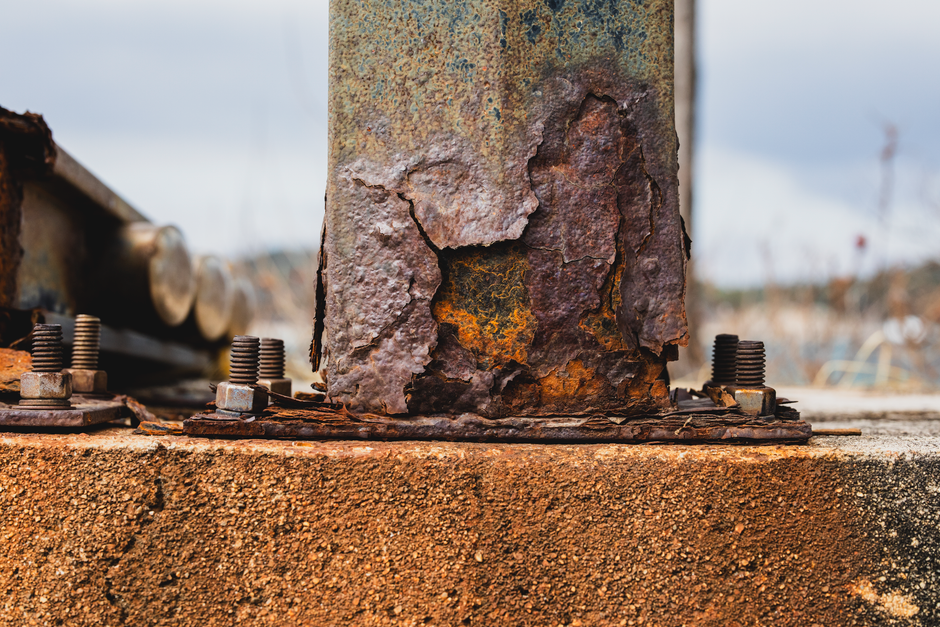
If your home was built before the 1980s, there is a very high chance it still contains galvanized steel pipes. While these pipes were the gold standard decades ago, they have a major design flaw: they rust from the inside out.
As galvanized steel ages, internal corrosion creates a rough, flaky buildup. This internal rust not only restricts water flow but also catches loose mineral scale, accelerating the clogging process. Eventually, the pipe’s internal diameter becomes so narrow that getting a decent stream of water out of your shower feels like a miracle.
Municipal Infrastructure and Main Leaks
Sometimes, the problem isn’t inside your walls at all. Huntington Park’s water main distribution lines are managed by the local Water & Sewer Division | The Official Site of Huntington Park, CA!. While the city works hard to maintain the system, aging water mains occasionally develop leaks or complete breaks. When a major municipal pipe leaks underground, the water pressure on your entire block can drop instantly.
How to Diagnose Your Water Pressure Issues
Before you grab your wrench or call in a professional, you can easily narrow down the cause of your water woes. Diagnosing low water pressure in Huntington Park requires a systematic approach to separate a localized issue from a whole-home plumbing failure.
The Step-by-Step Diagnostic Checklist
- Test the Static Pressure with a Gauge: Purchase a simple, inexpensive water pressure gauge from a local hardware store. Screw it onto an outdoor hose bib (make sure it is a direct line that doesn’t go through a pressure regulator if you want to test the street pressure, or test a backyard bib to check your regulated home pressure). Turn the tap on fully. A healthy home pressure should sit comfortably between 50 and 70 PSI. If your reading is consistently below 40 PSI, you have a whole-home pressure issue.
- Perform a Water Meter Leak Test: Turn off every single faucet, appliance, and irrigation line on your property. Go outside and locate your water meter box (usually near the sidewalk). Lift the lid and look at the dial. If the small low-flow indicator (often a red triangle or a small star-shaped wheel) is spinning, or if the digital numbers are climbing while all your taps are off, you have a hidden plumbing leak.
- Verify the Main Shut-Off Valve: Locate your home’s main water shut-off valve. This is usually located where the main water line enters your house or in a box near the street. If you’ve had recent utility work or plumbing repairs, the valve might have been left partially closed. Ensure the handle is turned fully to the open position.
Diagnosing Localized vs. Whole-Home Low Water Pressure Huntington Park
Is the weak stream affecting every faucet, or is it isolated to a single spot? This is the easiest way to narrow down your troubleshooting.
- The Single-Fixture Foe: If only your kitchen sink or master shower has weak pressure, the issue is highly localized. The most common culprit is a clogged faucet aerator or showerhead screen. Hard water scale can completely block these tiny mesh filters.
- The Hot-Water-Only Drop: If your cold water flows beautifully but your hot water barely trickles, the issue points directly to your water heater. Over time, sediment settles at the bottom of the water heater tank. This sediment can block the hot water outlet valve or fill the tank itself, restricting hot water delivery to the rest of the house.
- The Whole-House Drop: If every fixture—hot and cold—is suffering, you are likely looking at a faulty main pressure regulator (PRV), a major pipe obstruction, a massive hidden leak, or a municipal supply issue.
Troubleshooting Municipal Causes of Low Water Pressure Huntington Park
If your diagnostic tests point to a whole-home pressure drop, it is time to check if the issue is coming from the city’s side of the meter.
- The Neighbor Comparison: Step outside and chat with your neighbors. If they are also experiencing a sudden drop in water pressure, the city is likely dealing with a water main break, hydrant maintenance, or localized construction.
- Elevation Factors: If you live on a hill or an elevated street, your home will naturally have slightly lower static pressure than homes situated on flat terrain.
- Outages and Utility Operations: If you are served by adjacent municipal grids or have concerns about regional main lines, you can check the interactive outage maps or contact the Water Pressure | Los Angeles Department of Water and Power for general local water grid status updates.
DIY vs. Professional Solutions for Water Pressure
Once you have diagnosed the issue, you can decide whether to roll up your sleeves or call in the professionals.
Easy DIY Fixes
- The Vinegar Soak (For Localized Clogs): If a single faucet or showerhead has lost its punch, unscrew the aerator or remove the showerhead. Submerge the parts in a bowl of plain white vinegar for a few hours. The vinegar’s mild acid will dissolve the hard water mineral scale. Give it a quick scrub with an old toothbrush, rinse, and reinstall.
- Flushing Your Water Heater: To resolve hot-water-only pressure issues, flush your water heater tank annually. This clears out accumulated sediment that restricts hot water flow. For more details on maintaining your home’s drainage and overall water flow systems, check out our Drain Preventative Maintenance Tips to Keep Your Plumbing Running Smoothly.
- Adjusting Your Pressure Regulator (PRV): If your home has a bell-shaped Pressure Reducing Valve installed on the main line, you might be able to adjust it. Loosen the locknut on top, and turn the bolt clockwise to increase the pressure. Warning: Only adjust this in tiny increments (half-turns) and check your pressure gauge after each turn. Never set your home’s pressure above 75 PSI, as high pressure will damage your appliances and pipe joints.
When to Call a Professional Plumber
While cleaning a faucet is a quick DIY project, several water pressure problems require professional expertise:
- Replacing a Failing PRV: If turning the adjustment bolt on your pressure regulator does nothing, the internal spring or diaphragm has likely failed. Replacing a PRV requires cutting into the main line and soldering or threading a new valve in place.
- Slab Leak Detection and Repair: If your meter test indicated a leak but you don’t see water pooling inside your home, the leak is likely hidden underground or beneath your concrete slab. Professional plumbers use specialized acoustic listening equipment to pinpoint and repair these hidden leaks without tearing up your entire yard.
- Whole-House Repiping: If your home is plagued by corroding galvanized steel pipes, the only permanent solution to your low water pressure is a repipe. Replacing old steel lines with modern, scale-resistant PEX or copper plumbing will instantly restore your home’s water pressure to its optimal level.
Frequently Asked Questions About Huntington Park Water Services
How do local water restrictions affect my home’s water pressure?
The City of Huntington Park enforces Level 2 mandatory water restrictions due to ongoing regional conservation efforts. These regulations limit residential outdoor irrigation to no more than 2 days per week during the spring and summer, and just 1 day per week during the fall and winter.
While these conservation rules do not directly lower the pressure delivered to your home by the city, running your sprinkler systems simultaneously with indoor appliances can cause temporary, noticeable pressure drops. To learn more about local conservation schedules and how to stay compliant, visit the official Water Conservation | The Official Site of Huntington Park, CA! page.
What are the water service deposit rates in Huntington Park?
If you are establishing new water service or moving to a different property in the area, you will need to handle utility billing setup. The city requires water service deposits based on the property type:
- Single-Family Homes: $100 deposit
- Duplexes: $200 deposit
- Triplexes: $300 deposit
- Commercial / Industrial Properties: $1,000 deposit
- High-Volume Businesses / Laundromats: Up to $2,500 deposit
To set up your account or review current fixed monthly charges based on meter size, check out the Utility Billing | The Official Site of Huntington Park, CA! portal.
When is a water pressure regulator required by local codes?
Under local building and plumbing codes, a residential water pressure regulator (PRV) is strictly required if the municipal main water pressure can exceed 80 PSI. Because municipal water mains must maintain high pressure to supply multi-story buildings and fire hydrants, the pressure at your street connection can easily climb past 90 or 100 PSI.
Unregulated water pressure over 80 PSI will quickly destroy your washing machine valves, damage your water heater, and cause noisy, rattling pipes (known as water hammer). If your street pressure is high, a regulator must be installed to bring the pressure down to a safe, comfortable 50 to 70 PSI.
Conclusion
Dealing with low water pressure in Huntington Park doesn’t have to be a guessing game. By starting with simple diagnostic steps—checking individual fixtures, testing your static PSI with a gauge, and verifying your main valves—you can quickly determine if you are facing a simple hard water clog or a more complex pipe issue.
When DIY fixes like vinegar baths and valve adjustments aren’t enough to restore your flow, we are here to help. At Level Up Plumbing, our woman-owned team brings over 21 years of local Southern California plumbing expertise and award-winning customer service straight to your door. Whether you need a quick PRV replacement, professional leak detection, or a complete home repipe, we have the specialized tools to get your water flowing strong and clean.
Want to keep your home’s plumbing in peak condition year-round? Join Level Up Plumbing’s Perks Membership Program for regular maintenance, priority scheduling, and exclusive discounts.
Don’t settle for a weak shower any longer. Schedule professional water pressure repair services today and let our expert team level up your home’s plumbing!