
Is a Heat Pump Water Heater Worth Installing? Here’s What to Know First
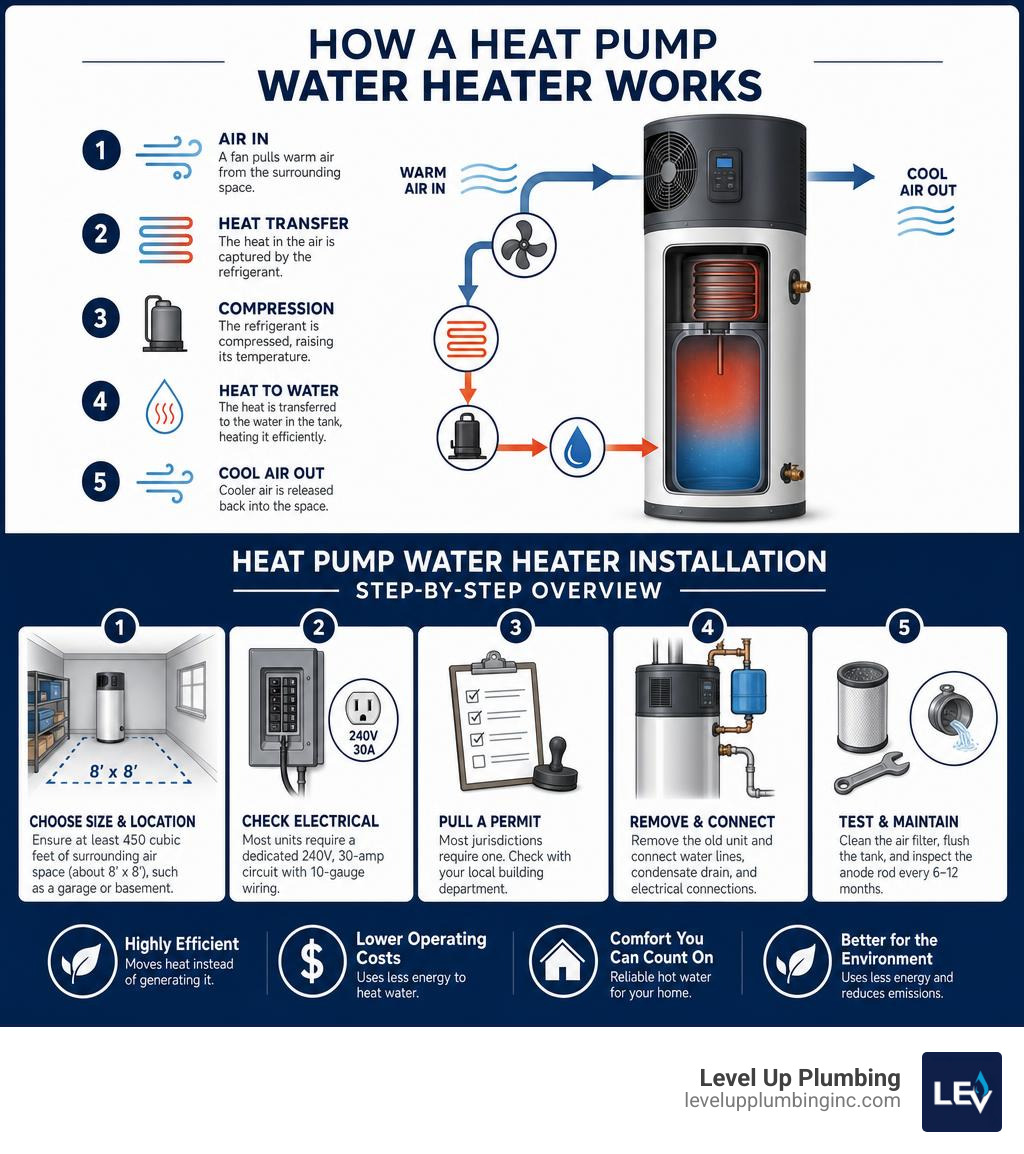
Heat pump water heater installation is one of the smartest upgrades a Southern California homeowner can make. These units move heat from surrounding air into your water tank instead of generating heat directly — making them roughly three times more efficient than standard electric or gas models.
Here’s a quick overview of what the installation process involves:
- Choose the right size and location — You need at least 450 cubic feet of surrounding air space (roughly an 8′ x 8′ area), like a garage or basement.
- Check your electrical setup — Most units require a dedicated 240V, 30-amp circuit with 10-gauge wiring.
- Pull a permit — Most jurisdictions require one. Check with your local building department before starting.
- Remove the old unit and connect the new one — Water lines, a condensate drain, and electrical connections all need to be properly set up.
- Test and maintain — Clean the air filter, flush the tank, and inspect the anode rod every six months to a year.
Water heating accounts for nearly 20% of the average home’s energy use. If your water heater is aging, inefficient, or causing headaches, replacing it with a heat pump model is a practical fix — not just an eco-friendly one.
The rest of this guide walks you through every step of the process, from planning and sizing to installation and long-term maintenance.
Planning Your Heat Pump Water Heater Installation
Before you order a shiny new hybrid water heater, you need to do some prep work. Because heat pump water heaters (HPWHs) operate differently than traditional models, you can’t just slide one into a tiny, unventilated closet and call it a day. Proper planning is essential to ensure long-term efficiency, safety, and performance.
To help guide your planning process, we recommend reviewing the Best Practices for Retrofit Installation. This document highlights industry-standard guidelines for retrofitting older homes with high-efficiency heat pump systems.
Sizing and Location for Heat Pump Water Heater Installation
When choosing a hybrid water heater, sizing involves looking at both the physical footprint of the unit and its performance metrics. Unlike traditional electric tanks, heat pump models are typically taller and wider because the heat pump compressor sits right on top of the tank.
Sizing with the First-Hour Rating (FHR)
To make sure your household doesn’t get a freezing surprise mid-shower, you need to calculate your peak hot water demand. This is measured by the first-hour rating (FHR), which is the number of gallons of hot water the unit can reliably supply in its first hour of continuous operation.
- A typical shower uses about 20 gallons of hot water.
- A clothes washer uses between 7 and 13 gallons.
- A dishwasher uses 4 to 7 gallons.
We recommend choosing a unit with an FHR that easily matches or exceeds your household’s peak hour of water usage.
Location and Airflow Requirements
Because a heat pump extracts heat from the surrounding air, it requires a constant supply of warm air to operate efficiently.
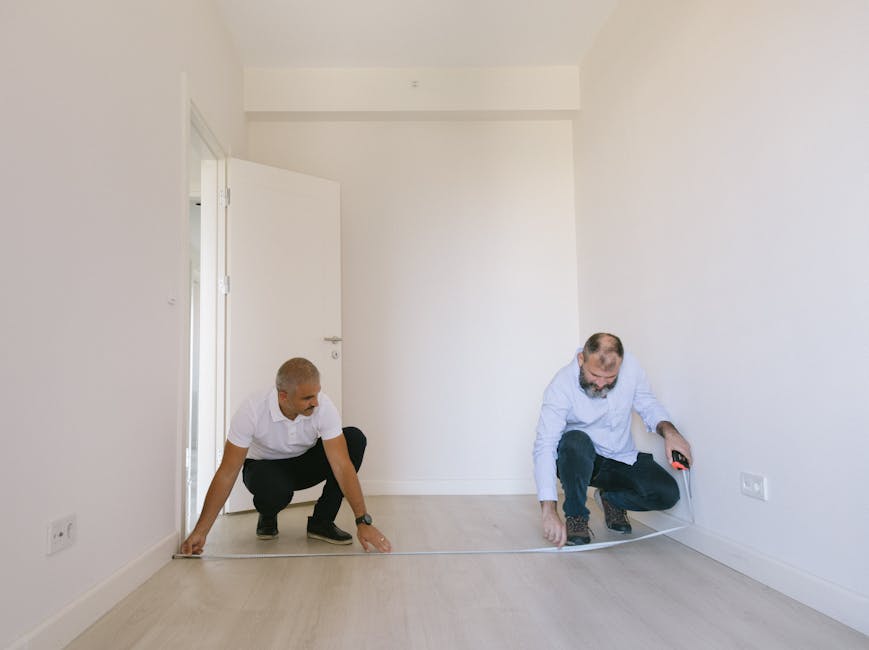
- Minimum Space Requirement: A hybrid water heater needs at least 450 cubic feet of surrounding air space (which is roughly equivalent to an 8’ x 8’ room). Some manufacturers recommend up to 700 cubic feet for optimal performance unless the space is properly ducted.
- Ideal Locations: In Orange County, CA, unconditioned or semi-conditioned spaces like garages are the absolute best locations. Basements are rare in our neck of the woods, but a spacious laundry room or utility room can work if you install louvered doors to allow air to circulate.
- Cool Exhaust and Dehumidification: As the heat pump runs, it exhausts cool, dry air back into the room. This makes your garage slightly cooler and less humid—a fantastic side benefit during our warm Southern California summers! However, you must ensure the ambient temperature in the room stays above 37°F year-round so the heat pump can function without relying entirely on backup electric resistance coils.
Electrical and Permit Requirements for Heat Pump Water Heater Installation
The electrical requirements for a heat pump water heater installation depend entirely on the model you select:
- Standard 240V Hybrid Models: Most units require a dedicated 240-volt, 30-amp circuit wired with 10-gauge wire. If you are replacing an old electric resistance water heater, this wiring is likely already in place.
- 120V “Plug-In” Models: If you are transitioning from a gas water heater and want to avoid the expense of running a new 240V line from your main electrical panel, manufacturers like Rheem offer 120V models. These can plug directly into a standard, shared 120V outlet.
Do You Need a Permit?
Absolutely. In Orange County cities like Huntington Beach, Cypress, and Garden Grove, local building codes require a permit for any water heater replacement. This ensures that electrical connections, plumbing lines, and safety features like temperature and pressure (T&P) relief valves are installed in compliance with California building standards. Before starting your project, check with your local city hall or municipal website to download the permit application and review specific local amendments.
Gas vs. Electric Replacement: Cost and Complexity
Are you replacing an existing electric tank, or are you converting from a gas water heater? The answer to this question completely changes the scope, complexity, and overall cost of your project.
| Installation Factor | Replacing an Electric Water Heater | Replacing a Gas Water Heater |
|---|---|---|
| Upfront Complexity | Low to Moderate | High |
| Electrical Work Required | Usually none (uses existing 240V circuit) | High (requires running new 240V line or using 120V plug-in) |
| Gas Line Work | None | Requires capping and sealing the existing gas line |
| Venting Changes | None | Requires capping off old exhaust flue venting |
| Condensate Drainage | Must install new drain line | Must install new drain line |
Converting from gas to electric is more complex, but it eliminates combustion emissions in your home, improving indoor air quality and helping you transition toward a fully electrified, eco-friendly household. If you are curious about how these systems compare to other options on the market, take a look at our detailed guide, Exploring the World of Water Heaters.
Step-by-Step DIY Installation Guide
If you are a handy homeowner with some basic plumbing and electrical experience, taking the DIY route can save you an estimated $500 to $750 in labor costs. However, you are dealing with pressurized water, high-voltage electricity, and building codes. If at any point you feel out of your depth, it is always best to call in a professional.
For a comprehensive manufacturer-specific overview, you can also refer to the Complete Heat Pump Installation Guide.

Required Tools and Materials
Before shutting off your water supply, gather all the tools and materials you will need. Having everything on hand can turn a potential multi-day headache into a smooth, half-day project (typically taking about 4 to 5 hours).
Tools:
- Pipe cutter or hacksaw
- Non-contact electrical current tester
- Plumber’s pipe wrench and crescent wrenches
- Screwdrivers and pliers
- Torpedo level
- Hand truck (for moving the heavy tanks)
- Garden hose (for draining the old tank)
- Bucket and towels (for spills)
Materials:
- Push-to-fit connectors (like SharkBite) or approved flexible water lines
- PVC pipe and fittings (for the condensate line)
- Thermostatic mixing valve (TMV)
- Pipe insulation wrap
- Drain pan
- Teflon tape or pipe joint compound
Piping, Condensate Drainage, and Mixing Valves
Once your old water heater is drained and removed, place the new hybrid unit in position. Make sure the control panel is easily accessible and that you have at least 6 inches of clearance at the top to clean the air filter.
Connecting the Water Lines
We highly recommend using approved flexible water lines to connect your home’s copper pipes to the water heater. In earthquake-prone Southern California, flexible lines are actually a code requirement in many areas because they allow for minor movement without snapping. They also significantly reduce the transmission of compressor vibrations into your home’s walls.
Handling Condensate Drainage
Because heat pumps dehumidify the air as they extract heat, they produce condensate (water). This moisture must go somewhere!
- Locate the condensate drain ports on the side of the heat pump unit.
- Route a PVC drain line from the ports to a nearby floor drain, laundry sink, or directly outside.
- If a gravity drain is not accessible in your garage, you must install a small condensate pump to push the water up and out of the space.
The Magic of the Thermostatic Mixing Valve (TMV)
We strongly advocate for installing a thermostatic mixing valve on every hybrid water heater.
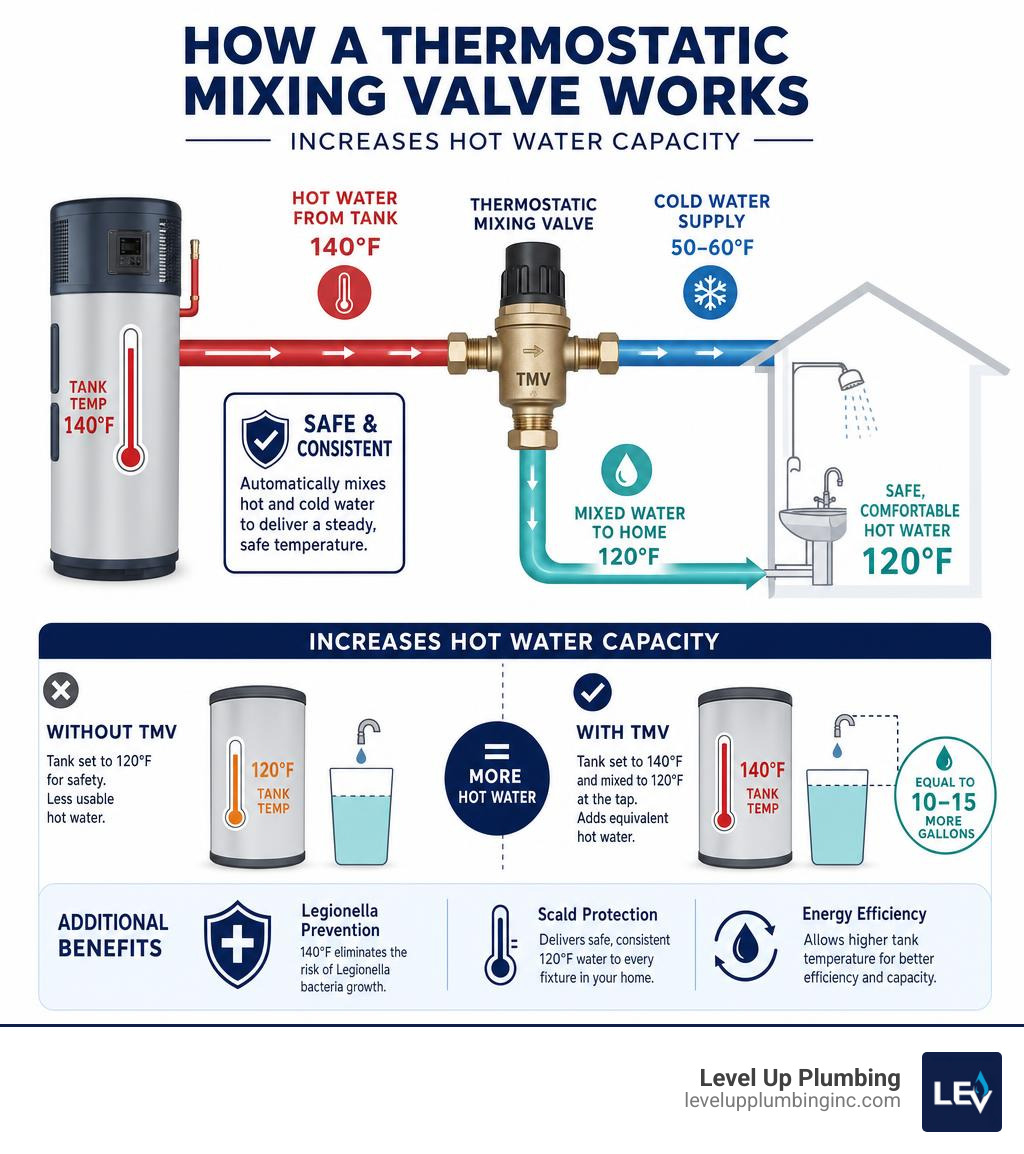
A TMV allows you to safely increase the temperature inside your storage tank to 140°F. This high temperature serves two major benefits:
- Legionella Prevention: Keeping water at 140°F completely eliminates the risk of Legionella bacteria growth.
- Increased Hot Water Capacity: Heating the tank to 140°F and mixing it with cold water down to a safe 120°F at the valve adds an equivalent amount of hot water as increasing your tank capacity by 10 to 15 gallons!
Best Practices for Insulation, Heat Traps, and Drain Pans
To squeeze every drop of efficiency out of your new system, follow these plumbing best practices:
- Pipe Insulation: Insulate both the hot and cold water lines continuously for at least the first 8 feet from the tank using foam pipe wrap. This prevents standby heat loss and meets modern energy code requirements.
- Heat Traps and Check Valves: Install heat traps or check valves on the inlet and outlet connections. These loops or valves prevent warm water from rising naturally into your pipes when no faucets are running, stopping “thermal siphoning” in its tracks.
- Drain Pan: Always place a heavy-duty drain pan under the water heater, especially if it is located near finished walls or storage. Run a drain line from the pan to a safe disposal point to prevent structural water damage in the event of a future leak.
Post-Installation Maintenance and Rebates
Congratulations, your new hybrid water heater is up and running! To protect your investment and ensure it operates at peak efficiency for its entire 15-year lifespan, you must perform regular maintenance.
- Clean the Air Filter: The heat pump on top of your unit draws in air constantly, meaning it will collect dust. Check and clean the filter every six months. Simply slide it out, rinse it in the sink, let it dry, and slide it back in.
- Flush the Tank Annually: Over time, sediment settles at the bottom of the tank, reducing heating efficiency. Connect a garden hose to the drain valve once a year to flush out the sediment. For more tips on this, read about The Importance of Annual Maintenance to Your Water Heater.
- Inspect the Anode Rod: The anode rod protects your steel tank from rusting. Check it every 2 to 3 years and replace it when it becomes heavily corroded.
Maximize Your Savings with Rebates and Tax Credits
Because hybrid water heaters are incredibly energy-efficient, they qualify for fantastic financial incentives in 2026.
- Federal Tax Credits: Under the Inflation Reduction Act, you can claim a 30% federal tax credit (up to a maximum limit) on your tax return for installing an Energy Star-certified heat pump water heater. Learn more in our guide on how to Maximize Your Savings with Energy Star Water Heater Tax Credits.
- Local Utility Rebates: Southern California Edison (SCE) and local gas-to-electric transition programs offer generous rebates that can significantly offset your initial installation costs.
Frequently Asked Questions About Heat Pump Water Heaters
How much space does a heat pump water heater need?
A hybrid water heater requires a minimum of 450 cubic feet of surrounding air space to operate efficiently. This is roughly the size of an 8’ x 8’ room. If you must install the unit in a smaller utility closet, you can bypass this requirement by installing louvered doors to pull air from the adjacent room, or by purchasing a ducting kit to vent the intake and exhaust air outside.
How much can I save by switching to a hybrid water heater?
The average home can expect to save between $200 and $550 annually on their utility bills by switching to a heat pump water heater. In fact, many homeowners see their median annual water heating costs drop from around $230 to just $90—a massive 60% reduction in energy consumption! Over the unit’s 15-year lifespan, those savings translate into thousands of dollars back in your pocket.
Do heat pump water heaters make a lot of noise?
Because they use a compressor and a fan, hybrid water heaters do make some noise when the heat pump is running. They typically operate at around 49 decibels, which is very similar to the gentle hum of a modern kitchen dishwasher. If installed in a garage, basement, or utility room, you will likely never notice the sound inside your main living spaces.
Conclusion
Upgrading to a hybrid water heater is one of the most impactful ways to slash your monthly utility bills and reduce your home’s carbon footprint. While a DIY heat pump water heater installation is achievable for experienced homeowners, handling high-voltage electrical lines, code-compliant plumbing, and local permits can quickly become overwhelming.
If you would rather leave the heavy lifting to the experts, Level Up Plumbing is here to help. As a proud, woman-owned business with over 21 years of local plumbing experience in Orange County, CA, we serve homeowners across Huntington Beach, Cypress, Garden Grove, and the surrounding areas. We are committed to providing award-winning customer service and ensuring your new system is installed safely, efficiently, and perfectly up to code.
Ready to start saving? Schedule Professional Water Heater Installation with Level Up Plumbing today, or call us to discuss the best energy-efficient solutions for your home!