
Why a Dripping Faucet Is a Bigger Problem Than It Looks
When you need faucet leak repair from a licensed plumber, here’s what you should know right away:
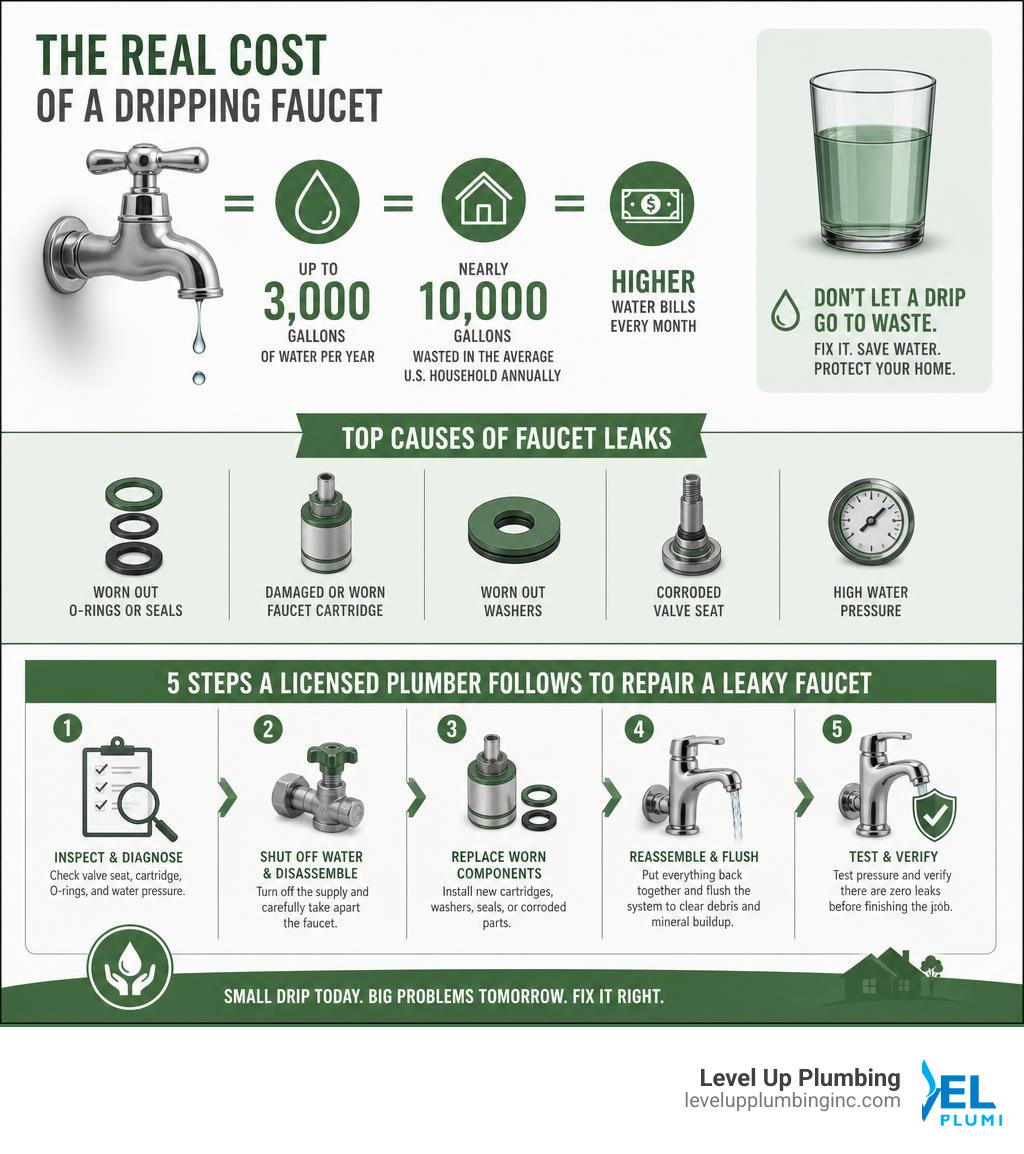
Quick Answer: 5 Steps a Licensed Plumber Takes to Fix a Leaky Faucet
- Inspect and diagnose the faucet — valve seat, cartridge, O-rings, and water pressure
- Shut off the water supply and carefully disassemble the faucet
- Replace worn components — cartridges, washers, seals, or corroded parts
- Reassemble and flush the system to clear debris and mineral buildup
- Test pressure and verify there are zero leaks before leaving the job
According to the EPA WaterSense program, a single dripping faucet can waste up to 3,000 gallons of water per year. Across a typical U.S. household, leaking fixtures add up to nearly 10,000 gallons of wasted water annually. That’s not just an environmental problem — it’s a direct hit to your water bill every month.
For Southern California homeowners, where water costs are already high, even a slow drip adds up fast.
And the damage doesn’t stop at wasted water. Left alone, faucet leaks can lead to:
- Mold and mildew growth behind walls and under sinks
- Warped cabinetry and wood rot
- Higher utility bills that keep climbing
- Bigger plumbing failures down the road
The tricky part? Most faucet leaks look simple but aren’t. Over 40% of residential plumbing service calls involve faucet or fixture leaks — and many of those calls come after a DIY fix made things worse.
A licensed plumber doesn’t just stop the drip. They find why it’s dripping and fix it correctly the first time.
Why You Need a Faucet Leak Repair Licensed Plumber
It’s tempting to grab a wrench and search for a quick video tutorial when a faucet starts acting up. However, modern plumbing fixtures are surprisingly complex. In June 2026, standard fixtures feature highly specialized internal engineering designed to conserve water while maintaining strong pressure. Missteps during a self-repair can easily turn a tiny drip into an active indoor flood.
Hiring a faucet leak repair licensed plumber ensures your home remains protected against hidden water damage. Slow leaks often creep into subfloors or behind drywall long before you spot pooling water under the cabinet. Over time, this constant moisture invites toxic mold growth, which is both expensive to remediate and dangerous for your family’s health.
Furthermore, professional plumbers adhere strictly to local California plumbing codes. These regulations exist to protect municipal water supplies and ensure safety. A licensed expert understands the specific vacuum-breaker and backflow-prevention requirements across Orange County, CA. If you run into tricky pipe configurations or unexpected pressure drops, trying to handle it yourself can violate local codes or void your homeowner’s insurance. To understand why cutting corners on your home’s pipes is never a good idea, read up on When in Doubt, Call a Plumber.
Signs Your Fixture Needs Professional Attention
How do you know if your faucet is simply having a bad day or if it’s on the verge of a major breakdown? Keep an eye out for these common warning signs:
- Low Water Pressure: If your kitchen or bathroom faucet has lost its spray power, mineral deposits or a failing internal valve may be restricting the flow.
- Corrosion and Rust Buildup: Visible green or white crusty buildup around the joints and spout base indicates slow, ongoing leaks that are eating away at the metal.
- Squeaking or Stiff Handles: If turning your faucet on or off feels like a workout, the internal cartridge or stem is likely worn down and needs replacement.
- Strange Noises: Clicking, whistling, or loud thumping sounds when you turn off the tap can point to a pressure problem (often called “water hammer”) or severe internal component wear.
- Persistent Dripping Sounds: Even if you can’t see the water pool, a constant, rhythmic ticking sound from your drain is a surefire sign of a slow leak.
DIY vs. Hiring a Faucet Leak Repair Licensed Plumber
Many homeowners assume that changing a washer is a foolproof weekend project. However, modern faucets are no longer built with simple compression screws. Today’s fixtures utilize ball valves, ceramic discs, and advanced cartridge systems.
Without specialized tools — like cartridge pullers, valve seat wrenches, and custom hex keys — you risk stripping the delicate brass threads inside the fixture. If that happens, a simple repair instantly turns into an expensive, mandatory faucet replacement.
When you hire a licensed plumber, you benefit from:
- Diagnostic Accuracy: A professional doesn’t just swap parts blindly. They check the incoming water pressure, examine your home’s supply lines, and find the root cause.
- Warranty Protection: Professional repairs are backed by service guarantees. If something goes wrong shortly after the fix, the plumber returns to make it right at no extra charge.
- Avoidance of Costly Mistakes: A single cracked pipe connection under the sink can cause thousands of dollars in water damage to your cabinetry and floor.
If you’re weighing whether to tackle a fixture project on your own, you can learn more about the complexities involved by reviewing our guide on DIY Faucet Install. For more clarity on common household plumbing misconceptions, check out Plumbing Myths and Facts: Common Misconceptions About Plumbing.
5 Key Steps in Professional Faucet Leak Repair
To give you an inside look at how the pros handle a dripping fixture, here is the exact step-by-step process a licensed plumbing technician follows during a service visit.
Step 1: Comprehensive Inspection and Diagnosis
Before touching a single tool, a licensed plumber conducts a thorough visual and physical evaluation of the fixture. They will test the water flow, feel for play in the handles, and inspect the surrounding cabinet for hidden leaks.
The goal is to determine exactly where the failure lies. Is the leak originating from a degraded O-ring at the base of the spout? Is the internal cartridge worn out? Or has high water pressure cracked the valve seat? By verifying the water pressure throughout your home, the plumber ensures that a larger system issue isn’t the true culprit behind your failing fixtures.
Step 2: Water Supply Shutoff and Disassembly
Once the diagnostic phase is complete, the technician shuts off the water supply. In most cases, this is done using the localized shutoff valves located directly beneath the sink. If those older valves are frozen or corroded, the plumber will safely shut off the main water valve to the home.
Next, the disassembly begins. The plumber carefully removes decorative handle caps, unscrews the handle assemblies, and removes the retaining clip or nut holding the cartridge or stem in place. They will also remove and inspect the aerator at the tip of the spout, which is a frequent collection point for pipe debris and mineral scale.
Step 3: Component Replacement or Faucet Leak Repair Licensed Plumber Solutions
With the faucet disassembled, the plumber can access the damaged internals. Depending on the faucet type, they will execute the appropriate repair:
- Cartridge Replacement: For modern single-handle faucets, the plumber pulls the old cartridge out and inserts an exact OEM (original equipment manufacturer) replacement to ensure a perfect, watertight seal.
- O-Ring and Washer Swap: In multi-handle compression faucets, worn rubber washers and O-rings are replaced with high-quality, durable silicone or rubber parts.
- Valve Seat Grinding: If the metal valve seat has become corroded or uneven, the plumber uses a seat-dressing tool to smooth it out, allowing the new washer to seal properly.
- Corrosion Cleanup: Any mineral scaling or rust buildup inside the faucet body is cleared away to prevent premature wear on the new parts.
Step 4: Reassembly and System Flushing
Once the new components are securely in place, the plumber carefully reassembles the fixture. They apply specialized, food-grade plumber’s grease to moving parts and thread sealants where necessary.
Before tightening everything down, the plumber flushes the lines. Over time, tiny bits of rust, solder, or mineral deposits can break loose inside your pipes. If the faucet is turned back on with the aerator installed, this debris will clog the new cartridge or aerator immediately. Flushing the system ensures a clean, steady stream of water.
Step 5: Final Pressure Testing and Leak Verification
The final step is the most critical: testing the repair under real-world operating conditions. The plumber slowly restores the water supply and turns the faucet on and off multiple times, checking both hot and cold lines.
They will carefully inspect the spout, handle bases, and connections beneath the cabinet using a dry cloth or flashlight to check for even the smallest trace of moisture. This meticulous testing guarantees that the leak is fully resolved and that your home is safe from future water damage.
What to Expect and Cost Factors of Professional Repair
When scheduling a professional service, transparency is key. Every home’s plumbing setup is unique, and several variables influence the overall scope of a faucet repair or replacement.
| Service Type | Key Factors Influencing Cost | Typical Duration |
|---|---|---|
| Basic Faucet Repair | Accessibility of shutoff valves, faucet brand, availability of replacement cartridges | 30 to 60 minutes |
| Complex Leak Repair | Under-sink pipe corrosion, multiple leaking fixtures, wall-mounted faucet access | 1 to 2 hours |
| Full Faucet Replacement | Sink mounting configuration (single-hole vs. widespread), custom finishes, new supply line installation | 1 to 2 hours |
The primary factors that determine the final cost of your faucet service include:
- Fixture Accessibility: Standard deck-mounted sinks are quick to service. Wall-mounted faucets or specialty shower valves may require accessing pipes behind drywall, which increases labor time.
- Parts Availability: Standard faucet brands (like Moen, Delta, or Kohler) have widely available parts. High-end, imported, or vintage fixtures may require custom-ordered cartridges or specialty seals.
- Condition of Existing Plumbing: If the shutoff valves under your sink are heavily corroded and unable to close, they will need to be replaced alongside the faucet repair to ensure a safe installation.
When you are ready to put an end to annoying leaks and high water bills, you can easily Schedule your professional faucet repair service today with our expert team.
Frequently Asked Questions About Faucet Repair
Why is my faucet still dripping after I changed the washer?
If you replaced the rubber washer and the faucet is still dripping, the issue is likely a corroded valve seat. The valve seat acts as the seal connection point inside the faucet body. Over time, mineral deposits in hard water can roughen or pit the metal of the valve seat. When this happens, even a brand-new rubber washer cannot form a tight seal, allowing water to slip past.
Another common cause is using the wrong size or thickness of washer, or a cracked internal cartridge that requires a full replacement rather than a simple seal swap.
How can I maintain my faucet after a professional repair?
Keeping your faucet in excellent shape doesn’t take much effort, but it goes a long way toward preventing future leaks.
- Clean the Aerator Regularly: Unscrew the aerator at the tip of the spout every few months and soak it in white vinegar to dissolve mineral buildup.
- Use a Gentle Touch: Avoid slamming or forcing the faucet handles off. Modern cartridges seal with very light pressure; forcing them strips the internal plastic gears.
- Wipe Down the Base: Keep the base of the spout dry to prevent standing water from corroding the outer seals and finish.
For more insider advice on preserving your entire home’s plumbing system, check out our guide on Master Plumbers 5 Secrets to Keeping Your Plumbing in Top Shape.
What warranties do licensed plumbers offer on faucet repairs?
Reputable, licensed plumbing companies stand behind their work. Typically, a professional repair includes a warranty on both the newly installed parts and the labor performed. This means if the same leak returns within the warranty period, the plumber will return to resolve the issue at no additional cost to you.
Working with a licensed professional gives you peace of mind that DIY fixes simply cannot match. To learn more about how professional plumbing services keep your home running smoothly day in and day out, read our article on how Plumbers Are Unsung Heroes for Our Homes.
Conclusion

A leaking faucet might start as a minor annoyance, but it quickly grows into a costly problem that wastes thousands of gallons of water and risks damaging your home. By choosing a professional faucet leak repair licensed plumber, you ensure that your fixtures are repaired safely, efficiently, and in full compliance with local building codes.
If you live in Huntington Beach, CA, Cypress, CA, Garden Grove, CA, or the surrounding Orange County, CA communities, Level Up Plumbing is here to help. As a proud woman-owned plumbing company with over 21 years of local expertise, we pride ourselves on providing award-winning customer service and reliable, long-lasting plumbing solutions.
Don’t let a dripping faucet drain your wallet. Schedule your professional faucet repair service today and experience the Level Up difference!